Best time to trek to Everest Base Camp: a month-by-month guide
Weather, trail conditions and crowds for every month

by The Adventure People on 22nd October 2026
Would you like to write for our blog? Please send an email to hello@theadventurepeople.com we'd love to hear your ideas!
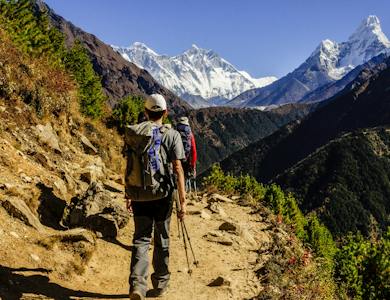
There is no wrong month to trek to Everest Base Camp, only different ones. Our top-rated 14-day All-Inclusive Everest Base Camp trek departs almost every week of the year, and each month brings its own mix of weather, views, trail conditions and crowds.
Autumn and spring are the classic seasons, with the clearest skies and the busiest trails. Winter is cold but quiet and often beautifully clear. The summer monsoon brings cloud and rain lower down, but also green valleys, wildflowers and lodges almost to yourself.
This guide breaks the year down month by month, using long-term weather records for the Khumbu region. You'll find what the trail is like, how likely you are to see rain, snow or clear skies, and what to pack. Our local guides, who walk this trail all year round, also share their favourite months and why.
The quick answer
For the clearest skies, go in October or November. For warmer days and spring colour, go in April or May. For quiet trails, go in December to February, or June to August if you don't mind cloud and rain on the lower trail. Most of our local guides pick September or October as their favourite.
- Clearest mountain views: October to December, when skies are most reliably dry and settled.
- Warmest trekking with views: April and May, with blooming rhododendrons lower down and expedition tents at base camp.
- Fewest trekkers: December to February and June to August.
- Coldest nights: December to February, well below freezing above Namche.
- Wettest months: July and August, when most of the year's rain falls.
Month | Season | Weather in brief | Trail traffic | Best for |
|---|---|---|---|---|
January | Winter | Cold, dry, mostly clear; windiest month up high | Very quiet | Solitude and crisp views |
February | Winter | Cold, dry, clear; occasional snow | Very quiet | Quiet trails, Sherpa New Year (Losar) |
March | Spring | Warming, mostly clear; snow possible up high | Busy | Early spring with fewer crowds than April |
April | Spring | Mild and mostly clear; afternoon cloud builds | Very busy | Rhododendrons and expedition season |
May | Spring | Warmest pre-monsoon month; hazier, more showers | Busy | Warmth and the buzz of summit season |
June | Monsoon | Monsoon arrives; cloud and rain most afternoons | Quiet | Green valleys and empty lodges |
July | Monsoon | Wettest month; views often hidden | Very quiet | Wildflowers and solitude |
August | Monsoon | Very wet; trails muddy lower down | Very quiet | Lush scenery, cultural focus |
September | Autumn | Monsoon fades; clearer and drier as the month goes on | Busy by late month | Fresh, green landscapes and returning views |
October | Autumn | Dry, settled, very clear | Busiest of the year | Classic views and festival season |
November | Autumn | Dry, clear, calm, getting colder | Busy | Sharp views and calmer winds |
December | Winter | Driest month, very clear, cold | Quiet | Clear skies without the crowds |
Rain and snow through the year
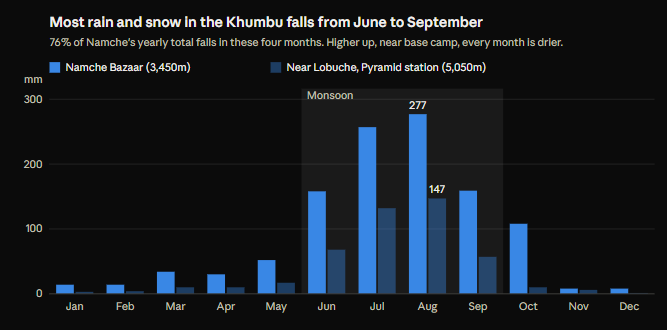
The pattern is the same all along the trail: a long dry season from October to May, then a wet monsoon. The higher you climb, the less falls, so the final days to base camp are drier than the forests around Namche.
Our guides' favourite months
Our local guides know this trail in every season, so we asked them a simple question: which month do you love trekking to Everest Base Camp most, and why? Most of them chose September or October, when the monsoon has washed the air clean, the valleys are still green and the big peaks come back into view.
Prakash Khatiwada, 15 years guiding in the Khumbu
Favourite month: October
"In October the weather is crystal clear with beautiful skies and beautiful mountain views."
Ramchandra Khatiwada, 13 years guiding in the Khumbu
Favourite month: November
"November is my favourite month because of the clear blue skies, stunning mountain views, fresh snow (occasionally), and peaceful trails. Everest looks absolutely magical!"
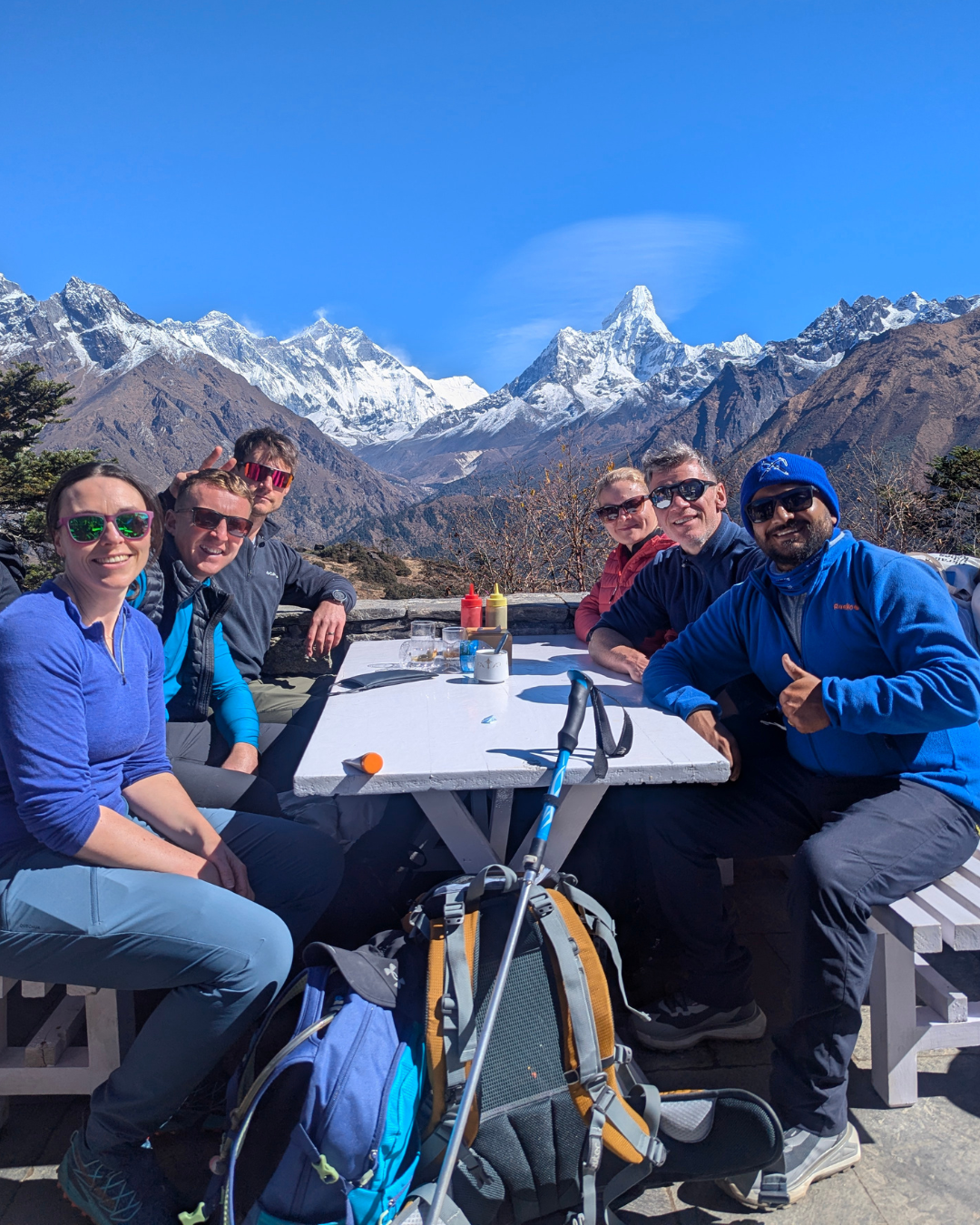 Ramchandra and group of trekkers on the EBC trek
Anish Adhikari, 4 years guiding in the Khumbu
Favourite month: September
"The monsoon rains have passed, leaving the atmosphere incredibly clear. The weather is much more stable and predictable."
But for other guides, the quieter monsoon months have a greater appeal.
Dikesh Basnet, 13 years guiding in the Khumbu
Favourite month: May
"In May, the colourful flowers are in full bloom, and I have seen trekkers feeling very happy and excited to enjoy the beautiful flowers. That is why I really enjoy trekking during this month."
Pooja Giri, 8 years guiding in the Khumbu
Favourite month: July
"It’s my favorite time. The first thing is the trail will be quiet. There will be lots of wild flowers blooming and it’s green everywhere. There might be rainfall but it won’t be so heavy. People think spring and autumn are the best time to come. But if you want to see something different, you won't regret coming in the months of June or July. We will have Scotland's style of weather at that time over here in the mountains!"
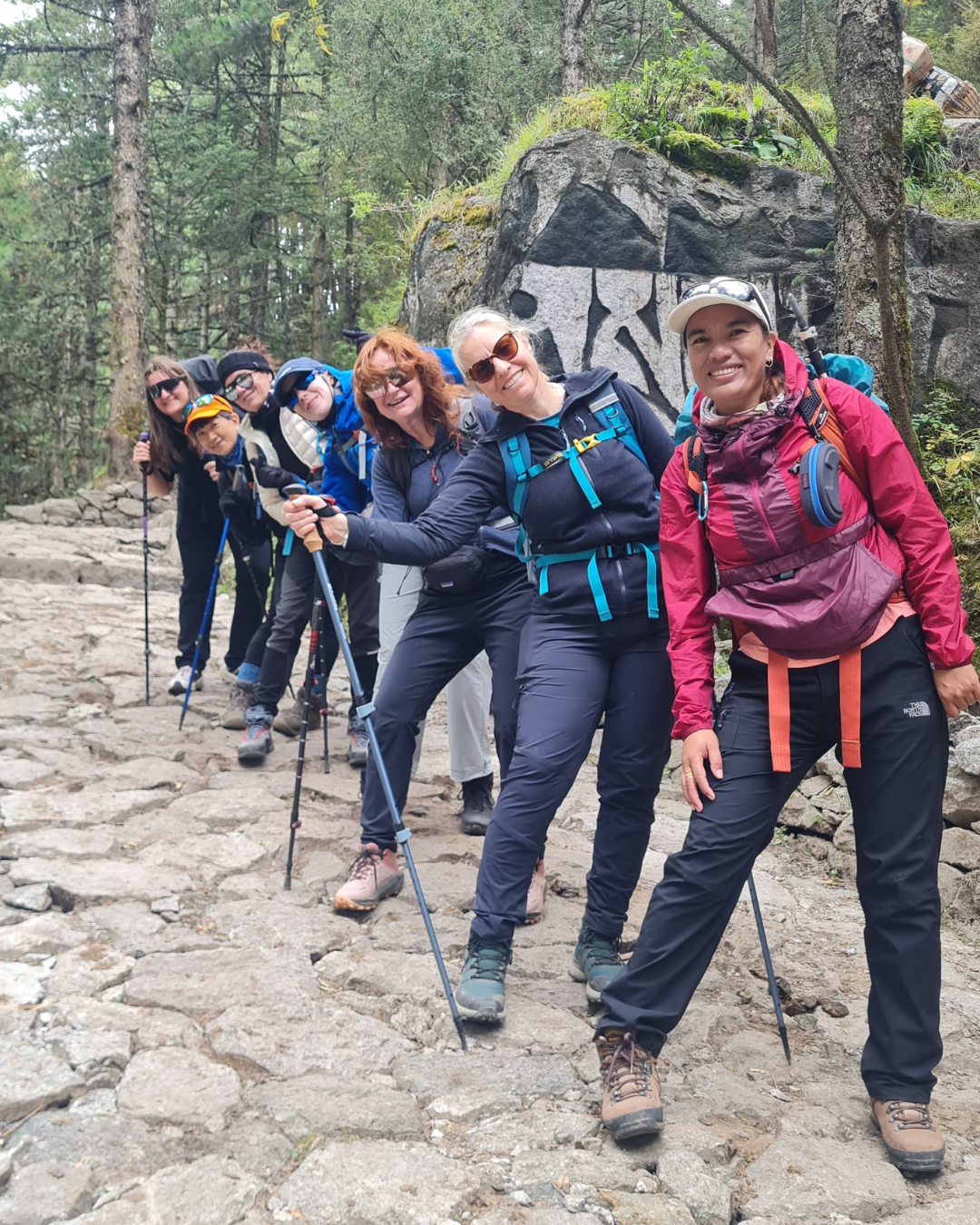 Pooja leading a group on the Everest Base Camp trek
Everest Base Camp weather and trail conditions, month by month
Each month below starts with the key numbers: the average temperature in Namche Bazaar (3,450m), typical daytime highs and night-time lows near Lobuche (5,050m) on the final push to base camp, the number of days with some rain or snow, and average daily sunshine. Temperatures come from long-term records published by Nepal's Department of Hydrology and Meteorology and the Pyramid research station; rain days and sunshine are long-term averages from UK Met Office and University of East Anglia climate data.
As a rule of thumb, it gets about 6–7°C colder for every 1,000m you climb, so nights at Gorak Shep (5,164m) are colder still.
January
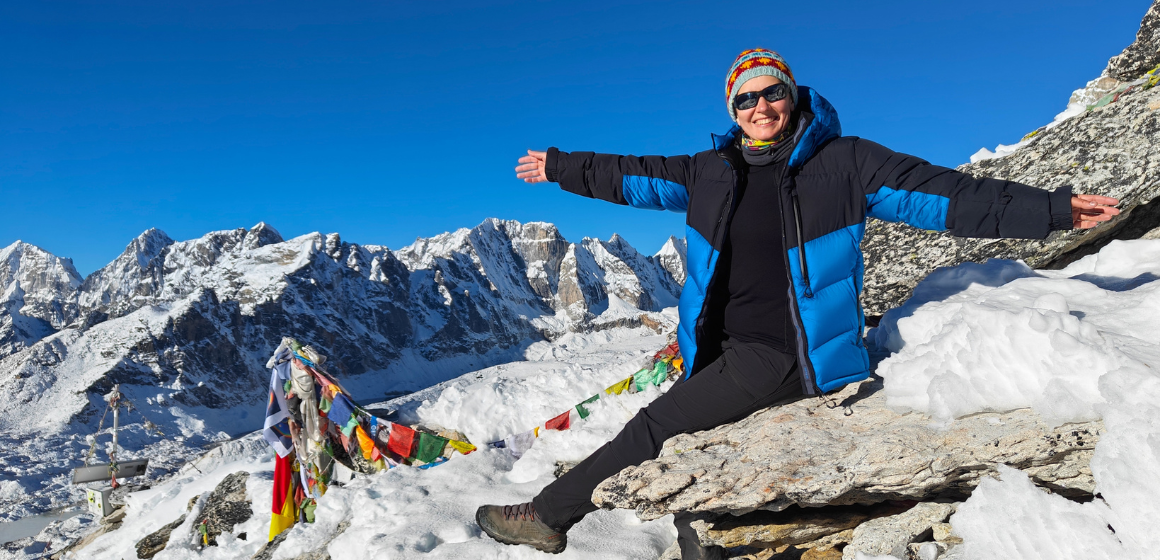
At a glance: Namche average −1°C · Near base camp: highs around −3°C, lows around −14°C · Days with rain or snow: about 3 (roughly 1 day in 10) · Sunshine: around 7 hours a day
January is deep winter and one of the driest, clearest months of the year. Skies are often a crisp, cloudless blue, with superb views of Everest, Lhotse and Ama Dablam. It is also the windiest month high up, so the final days to base camp can feel brutally cold.
The trail itself is usually dry and firm, though shaded sections can be icy first thing. Some lodges higher up run with fewer staff, and it's the quietest time on the trail.
Pack and plan: a down jacket and a sleeping bag rated to around −15°C or lower, a windproof shell, insulated gloves plus liners, a warm hat and a buff. Microspikes are useful on icy patches. Sleep with your water bottle and phone or camera batteries inside your sleeping bag so they don't freeze.
February
At a glance: Namche average 1°C · Near base camp: highs around −4°C, lows around −14°C · Days with rain or snow: about 3 (roughly 1 day in 10) · Sunshine: around 7 hours a day
February is still firmly winter, and near base camp it is often the coldest month of all. Days are mostly dry and clear, but a passing storm can drop fresh snow on the upper trail. Snow on the peaks makes for dramatic photos.
Trails stay quiet, which means relaxed teahouse evenings around the stove and more time with your guide. Sherpa New Year (Losar) usually falls in February or early March, when you may see celebrations in villages along the way.
Pack and plan: the same cold-weather kit as January. Good sunglasses (category 3 or 4) matter too: sunlight reflecting off snow at altitude is intense.
March
At a glance: Namche average 4°C · Near base camp: highs around 1°C, lows around −10°C · Days with rain or snow: about 4 (roughly 1 day in 8) · Sunshine: around 7 hours a day
March marks the start of spring. Days warm up noticeably and the weather is generally settled and clear, though late snowfall is still possible above Dingboche. Higher sections can be snowy or icy early in the month.
Trekker numbers pick up through the month but stay well below April levels, making March a good balance of decent weather and space on the trail. Rhododendrons start to flower in the lower forests by late March.
Pack and plan: layers that work across a wide range, from a light fleece for sunny afternoons in the valleys to full winter kit for nights above 4,000m. Bring high-factor sunscreen and lip balm: UV levels at this altitude are extreme by March.
April
At a glance: Namche average 7°C · Near base camp: highs around 1°C, lows around −9°C · Days with rain or snow: about 5 (roughly 1 day in 6) · Sunshine: around 8 hours a day
April is peak spring and one of the most popular months on the trail. Mornings are usually clear, with cloud often building around the peaks in the afternoon and the occasional shower or light snow. Forests between Phakding and Tengboche glow red and pink with rhododendron blossom.
It's also the start of the Everest climbing season. From around early April, a colourful tent city of expedition teams grows at base camp, adding a real sense of occasion to your arrival. Expect busy trails and lively teahouses.
Pack and plan: start walking early to make the most of clear mornings. Bring a waterproof jacket for afternoon showers, and sun protection for long, bright days.
May
At a glance: Namche average 9°C · Near base camp: highs around 6°C, lows around −4°C · Days with rain or snow: about 9 (roughly 3 days in 10) · Sunshine: around 7 hours a day
May is the warmest month before the monsoon, and nights near base camp are far milder than in winter. Pre-monsoon haze and afternoon cloud become more common, so views are best early in the day. Showers increase towards the end of the month as the monsoon approaches.
It's summit season on Everest, so base camp is at its busiest with climbing teams, and you may hear news of summit pushes as you trek. Trails are busy in the first half of the month, then begin to quieten.
Pack and plan: lighter layers for walking, but keep a warm jacket for evenings and nights above 4,000m. A waterproof jacket and a pack cover are worth bringing for late-May showers.
June
At a glance: Namche average 11°C · Near base camp: highs around 8°C, lows around 1°C · Days with rain or snow: about 16 (roughly 1 day in 2) · Sunshine: around 6 hours a day
The monsoon usually reaches the Khumbu in June. Rain tends to fall in the afternoons and overnight, often leaving mornings clearer. The higher you go, the drier it gets, as the big peaks block much of the rain from the north.
The lower trail between Lukla and Namche becomes wet and muddy, and leeches can appear in the forests. Cloud can delay Lukla flights, so a spare day at the end of your trip is wise. In return, trails are quiet and the valleys turn a deep green.
Pack and plan: a fully waterproof jacket and trousers, a pack liner or dry bags, quick-drying clothes and spare socks. Waterproof boots with good grip help on slippery stone steps. Leech socks or insect repellent are useful lower down.
July
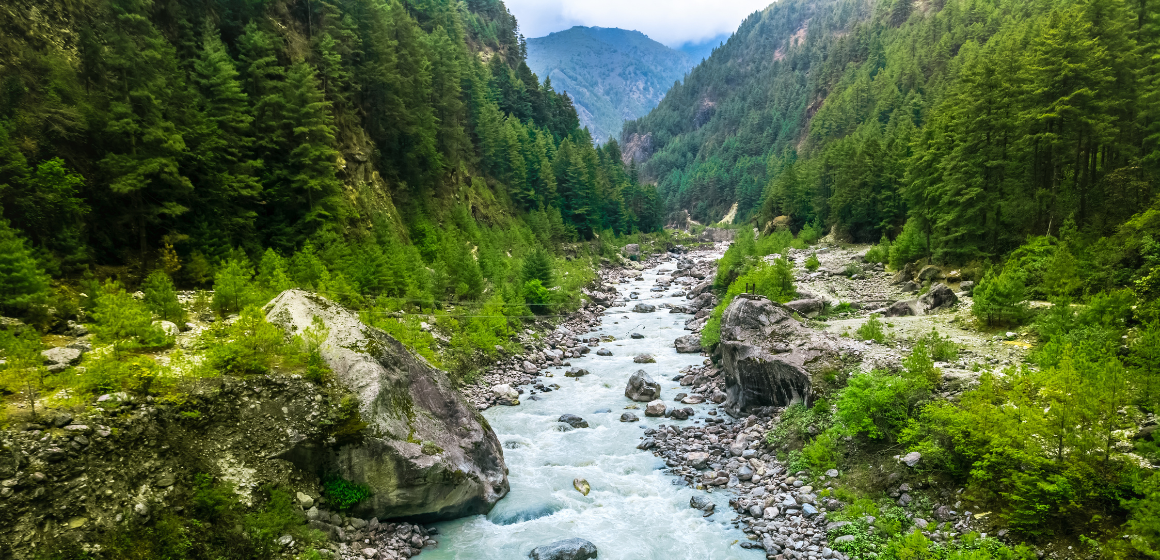
At a glance: Namche average 12°C · Near base camp: highs around 8°C, lows around 2°C · Days with rain or snow: about 22 (roughly 7 days in 10) · Sunshine: around 4 hours a day
July is the heart of the monsoon and the wettest month in much of the Khumbu. Views of the high peaks come and go between the clouds, so you'll need patience for that classic Everest shot. Temperatures are at their mildest, and nights near base camp hover around freezing.
This is the quietest month of the year on the trail. You'll often have lodges almost to yourself, alpine meadows are full of wildflowers, and you'll see daily village life without the crowds.
Pack and plan: the same wet-weather kit as June. Pack your sleeping bag and dry clothes in waterproof bags, and keep a dry set for evenings. Allow a buffer day for Lukla flights.
August
At a glance: Namche average 12°C · Near base camp: highs around 7°C, lows around 1°C · Days with rain or snow: about 22 (roughly 7 days in 10) · Sunshine: around 4 hours a day
August is still very wet, especially on the lower trail, though the monsoon usually starts to ease late in the month. Rivers run high and some trail sections can be muddy or affected by small landslides, which our guides monitor closely.
Crowds remain very low. The green terraces, waterfalls and misty forests give the trek a completely different character from the dry seasons.
Pack and plan: waterproofs, dry bags and quick-drying layers. Trekking poles help with balance on wet, uneven ground. Treat any clear spell as a bonus and have your camera ready.
September
At a glance: Namche average 11°C · Near base camp: highs around 6°C, lows around −1°C · Days with rain or snow: about 15 (roughly 1 day in 2), falling sharply through the month · Sunshine: around 5 hours a day
September is a month of two halves. Early on, the monsoon is still hanging on, with cloud and showers. By the second half, the rain usually eases off and the skies start to clear, revealing peaks that look freshly washed after months of rain. The valleys are at their greenest.
Trekker numbers climb quickly as the autumn season begins. Park records for 2024 show only 1,331 trekkers entering the Khumbu from mid-August to mid-September, against 8,902 in the following month. So early September is still pleasantly quiet.
Pack and plan: bring waterproofs for early-month showers alongside warm layers for clearing nights, which turn colder as the month goes on. If you can, choose a departure in the second half of September for the best chance of clear views.
October
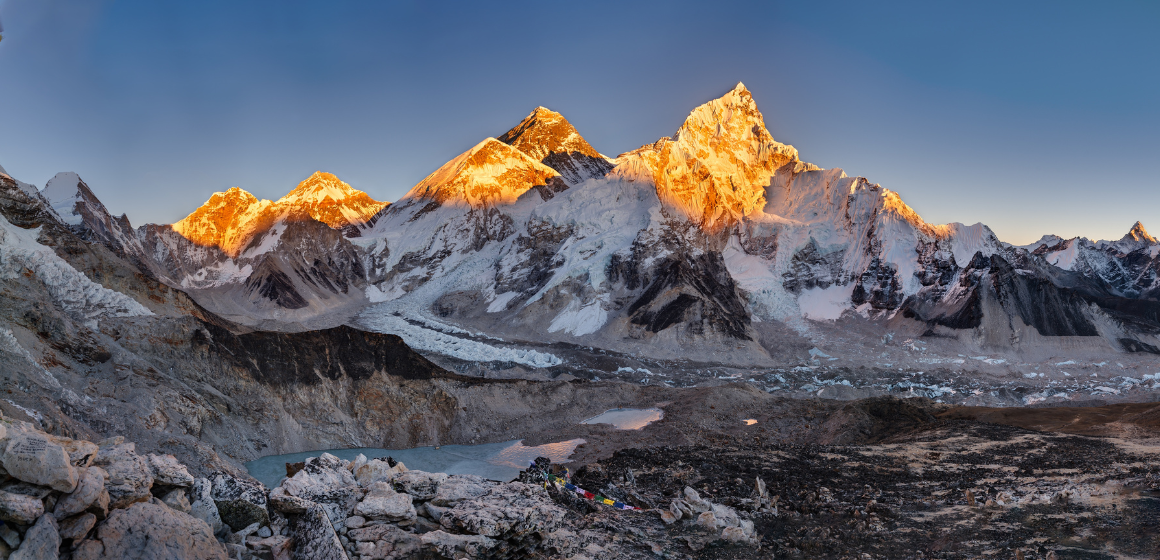
At a glance: Namche average 8°C · Near base camp: highs around 3°C, lows around −6°C · Days with rain or snow: about 5 (roughly 1 day in 6), mostly early in the month · Sunshine: around 6 hours a day
October is the classic month to trek to Everest Base Camp. The monsoon has gone, humidity drops sharply and the air is clear and stable, giving long-range views from Kala Patthar. Days are pleasantly mild for walking, though nights above 4,000m are well below freezing.
It is also the busiest month of the year. Sagarmatha National Park reports around 1,000 visitors entering the park daily at peak season, so teahouses and Lukla flights fill up early. The Mani Rimdu festival at Tengboche Monastery, with its masked dances, usually falls in October or November.
Pack and plan: a warm down jacket and a sleeping bag rated to around −10°C, plus sun protection for bright days. Book early, as October departures are the first to sell out.
November
At a glance: Namche average 4°C · Near base camp: highs around 0°C, lows around −11°C · Days with rain or snow: about 2 (roughly 1 day in 15) · Sunshine: around 7 hours a day
November brings some of the most reliable weather of the year. Skies are typically dry and crystal clear, and long-term records at the Pyramid station near Lobuche show it is the calmest month for wind high up. Temperatures drop steadily through the month, especially at night.
Trails stay busy in early November, then quieten as the month goes on. Late November is a great choice if you want autumn's clear views with fewer people around.
Pack and plan: full cold-weather kit for the upper trail, including a down jacket, warm gloves and a hat. Mornings and evenings are cold, but the sun is strong in the middle of the day, so layers you can easily add and remove are key.
December
At a glance: Namche average 1°C · Near base camp: highs around 0°C, lows around −12°C · Days with rain or snow: about 1 · Sunshine: around 7 hours a day
December is the driest month in the Khumbu and often has superb, uninterrupted views. Cold is the main challenge, particularly at Lobuche and Gorak Shep, where nights are deeply frozen. Days are short, so walking finishes earlier.
The trail is much quieter than in autumn, and the teahouse atmosphere becomes cosy and relaxed. For many trekkers, December offers the best mix of clear weather and peace and quiet.
Pack and plan: full winter kit, as for January. Hand and toe warmers are a nice extra for early starts to Kala Patthar. Keep batteries warm, as cold drains them quickly.
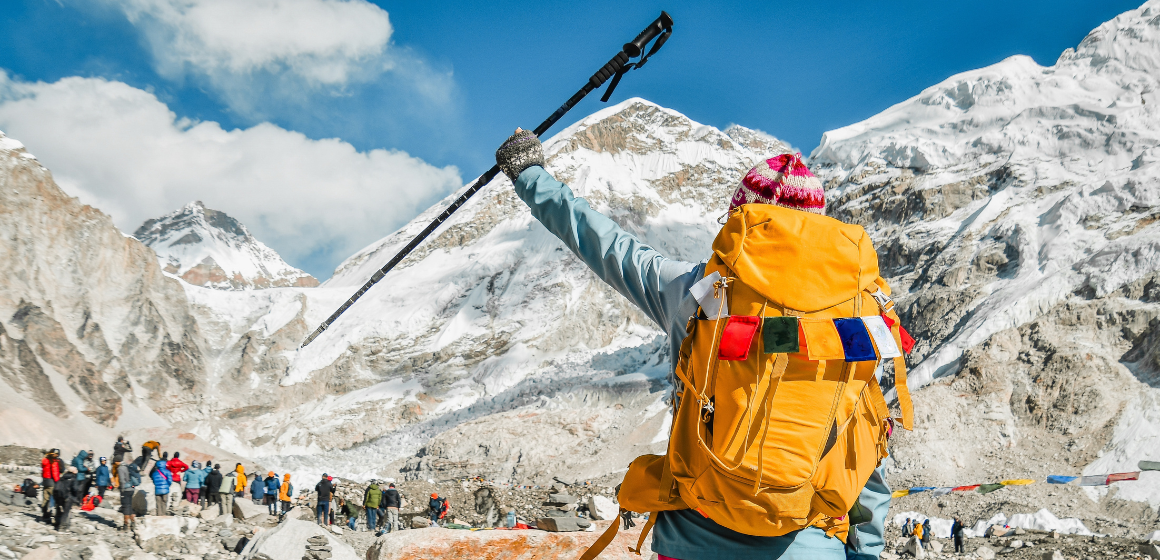
What to pack for each season
Your core kit stays the same all year: broken-in walking boots, a layering system, a warm sleeping bag, sun protection and a refillable water bottle. What changes is how much warmth and waterproofing you need. Here's what to add for each season.
Season | Months | Conditions to plan for | Extra kit to bring |
|---|---|---|---|
Winter | December–February | Very cold nights, strong wind high up, icy patches | Sleeping bag rated to −15°C or lower, heavy down jacket, windproof shell, insulated gloves and liners, microspikes, hand warmers |
Spring | March–May | Mild days, cold nights, afternoon cloud and showers | Mid-weight down jacket, sleeping bag rated to around −10°C, light waterproof, high-factor sunscreen, sunhat |
Monsoon | June–August | Daily rain lower down, mud, leeches, flight delays | Waterproof jacket and trousers, pack liner and dry bags, quick-dry clothing, spare socks, leech socks or repellent, a buffer day |
Autumn | September–November | Dry, clear days; nights turning colder through the season | Warm down jacket, sleeping bag rated to around −10°C (colder for November), category 3–4 sunglasses, light waterproof for early September |
Whatever the month, bring sunglasses, sunscreen and lip balm with SPF. Sun at altitude is strong year-round, even when it's freezing.
Frequently asked questions
Can you trek to Everest Base Camp all year round?
Yes. Our 14-day all-inclusive Everest Base Camp trek departs almost every week of the year. Each season brings different weather, crowds and views, so the best month depends on what matters most to you.
What is the best month to trek to Everest Base Camp?
October and November offer the most reliable clear skies, and April is the favourite spring month. Most of our local guides choose September or October. If you prefer quieter trails, December is often clear and much calmer.
What is the least crowded month on the Everest Base Camp trek?
July is usually the quietest month, followed by the rest of the monsoon and the winter months of December to February. Park records show trekker numbers rise sharply from mid-September.
Is it worth trekking to Everest Base Camp during the monsoon?
It can be, if you're happy to trade guaranteed views for green valleys, wildflowers and near-empty trails. Rain falls mainly on the lower trail, and conditions get drier as you climb. Pack good waterproofs and allow a spare day for flight delays.
How cold is Everest Base Camp in winter?
Very cold. Long-term records from near Lobuche (5,050m) show average night-time lows of around −14°C in January and February, with daytime highs below freezing. Skies are usually clear and dry, so with the right kit winter trekking is very rewarding.
When are there expedition tents at Everest Base Camp?
Expedition teams set up at base camp for the spring climbing season, usually from around early April to late May. Outside these months, base camp is a quiet, rocky glacier landscape marked by prayer flags.
When is the Mani Rimdu festival?
Mani Rimdu is held at Tengboche Monastery each autumn, usually in October or November. The exact dates follow the Tibetan lunar calendar and change each year.
Ready to book your Everest Base Camp adventure?
Check out our full range of Everest Base Camp treks and book your preferred departure.
Further Reading
Continue your preparation for the Everest Base Camp trek with these handy articles on our website:
- Everest Base Camp packing list
- How dangerous is the Everest Base Camp trek?
- How fit do I need to be for Everest Base Camp?
- Carry Me Back: tackling waste on the Everest Base Camp trek
- Everest Base Camp FAQs