Everest Base Camp
Frequently Asked Questions
Everything you need to know before you go
Few adventures are as iconic as the trek to Everest Base Camp (EBC). Standing beneath the world’s highest peak at 5,364 metres is a moment that draws travellers from across the globe – hikers, dreamers, and adventurers alike. The journey to Base Camp isn’t just about reaching a destination; it’s about the challenge, the culture, and the connection with the mighty Himalayas.
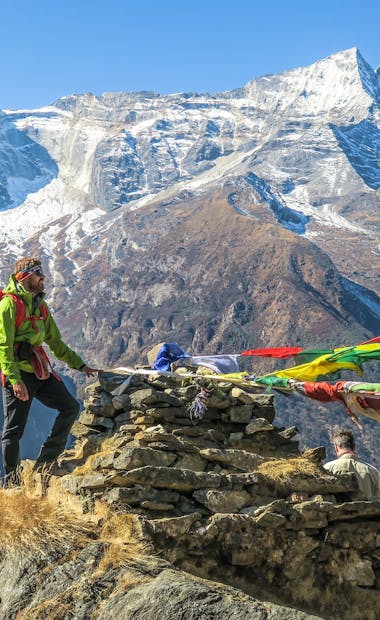
The trek to Everest Base Camp follows ancient trails through Sherpa villages, past fluttering prayer flags and Buddhist monasteries, across suspension bridges, and up into the heart of the Khumbu region. Along the way, trekkers experience the warmth of Nepalese hospitality, breathtaking mountain views, and the satisfaction of earning every step of the journey.
If you’re thinking about taking on this world-famous trek, this guide answers all the most common questions – from when to go and what to pack, to what the tea houses are really like.
When is the best time to go?
The two main trekking seasons are spring (March–May) and autumn (late September–November).
Spring offers mild weather, rhododendrons in bloom, and generally clearer mornings.
Autumn is known for crisp air, stable conditions, and incredible visibility after the monsoon clears.
Winter (December–February) is possible for experienced trekkers but expect cold nights and snow. Summer (June–August) is monsoon season, so trails can be wet and cloudy.
The trek is usually most busy in April and May, as this is also when people attempt to summit Everest.
Do I need to train before?
It's probably good to do a bit of training before you go. If you're of relatively good fitness you can most likely do the trek without training, but we always recommend going for long walks before. If nothing else to walk in your walking boots! Maybe 10-15km with an ascent, just to get your body a little more prepared for the trek.
How much will it cost?
For such a once in a lifetime adventure, it's actually quite reasonably priced. The trek is usually around 15 days and start around £800 and upwards, depending on when you go and accommodation etc. You can check out some of the different options here.
That pays for guides, porters and accommodation etc, and often also the flight from Kathmandu to Lukla is included. You stay in guest houses along the way where you can buy your meals.
What gear will I need?
A good packing list includes:
Clothing: moisture-wicking base layers, fleece or down jacket, waterproof shell, trekking trousers, gloves, hat, and thermal socks
Footwear: well-worn trekking boots with good ankle support, plus lightweight shoes for evenings
Gear: sleeping bag (rated to -10°C), trekking poles, water bottles, head torch, sunglasses, and sunscreen
Essentials: first-aid kit, blister plasters, hand sanitiser, lip balm, and water purification tablets
Your main duffel bag is carried by porters, while you only carry your daypack with daily essentials.
For a complete guide, check out our Everest Base Camp Packing List
How close do I get to Everest?
It will look very big but it will still be a few days of trekking away so not super close. You're as close as can be basically without going on an Everest summit!
How much do we trek each day?
Most trekking days range from 5 to 7 hours of walking with breaks along the way. The longest day of the trek is 15-18km. It may not sound like a lot but at that altitude, it will take up to double the time it would normally take you.
Some days are shorter to allow for acclimatisation, while others, such as the climb to Namche Bazaar or the hike to Kala Patthar, can feel more demanding due to altitude.
Your guide will pace the group sensibly to keep everyone comfortable and safe.
How fit do I need to be?
You don’t need to be an athlete, but a good base level of fitness and endurance is essential. The trek involves continuous uphill and downhill walking on uneven terrain at high altitude.
We recommend:
Regular hiking or hill walking before your trip
Cardiovascular exercise (running, cycling, swimming) several times a week
Practice hikes carrying a daypack
With proper preparation, most people in good health can complete the trek.
For more advice on fitness, check out our guide: How fit do I need to be for Everest Base Camp?
Will I get altitude sickness?
Altitude sickness (AMS) can affect anyone, regardless of age or fitness.
Common early symptoms include:
Headache
Nausea or loss of appetite
Fatigue
Dizziness or disturbed sleep
Most treks include acclimatisation days at Namche Bazaar (3,440m) and Dingboche (4,410m).
If symptoms worsen, guides will ensure you descend and receive proper care. Staying hydrated, ascending slowly, and avoiding alcohol help prevent AMS.
When is the best time to go?
Good question. If you want fewer people then around the winter months, if you want nice weather then the summer months. Of course trekking in hot weather has its pros and cons as does trekking cold weather! Prices don't really move around so much pending when you go.
How much spending money do I need?
You'll need money for your meals and tipping money for porters and transfers.
We recommend between £20 and £40 per day while on the trek itself, though it really depends how much you eat and drink and where you eat.
In Kathmandu you can get cash from cash machines. If in doubt take US dollars as they're widely accepted.
What happens to my luggage?
Your main luggage is kept safe in Kathmandu at the operators base. You will carry a 5kg to 10kg pack per day and any extra luggage by the porters. It is a good idea to check the details of the trip.
Where do we eat?
You'll eat at tea houses along the way. The guides are of course very experienced and know the good places to go. All tea houses will offer different flavours of tea, not to be missed. Breakfasts are usually toast and eggs with some potatoes (yes) as well of course as porridge. 'Sherpa Stew' is common, a veggie stew mostly and each tea house has its own version. There are also noodles, pasta, rice, lentils soup and more. Maybe not a 5 star experience but not bad considering where you are!
I am vegetarian, will I be OK food wise?
Yes, in fact we'd suggest avoiding meat anyway as it's often carried for a few days and while that's fine for locals, anyone from the UK may suffer a little so you're much better sticking to the delicious vegetarian food.
Meals are simple but filling, with a mix of Nepali and Western dishes. Typical options include:
Dal Bhat: rice, lentil soup, and vegetable curry (the Nepali staple)
Noodles, pasta, fried rice, or potatoes
Pancakes, eggs, and porridge for breakfast
Hot drinks – tea, coffee, lemon ginger honey – are available everywhere.
What are the toilets like at base camp?
Well you actually stay in a lodge or tea-house so will have a private toilet of good standard. If you're worried about going in a hole in the ground don't be because you won't be doing that!
Do we actually camp at base camp?
That depends upon which adventure you've booked so check the details. Most adventures on our website are actually lodge-based rather than tents and camping.
How many people are in the group?
The average number of people in a group is 10 to 12 - small enough for personal attention yet sociable for shared experiences. Groups are often a mix of male and female and typically more than half are solo travellers. If you'd like to find out the mix of a group please contact us and we can tell you.
Private and tailor-made departures are also available for couples, families, or friends who prefer to trek at their own pace.
Are our flights included?
Your international flights are not included in the prices but your internal flights from and to Kathmandu are included, but please check each trip for details.
Is there Wi-Fi on the trek?
Yes, though don’t expect it everywhere.
Many tea houses offer Wi-Fi for a small fee, powered by solar or satellite connections. It can be slow and unreliable, especially at higher altitudes. Mobile data (NCELL or NTC) may work intermittently up to Tengboche or Dingboche.
Most trekkers use the opportunity to unplug and enjoy the mountains.
How do I wash my clothes?
You don't really. You'll take enough to be OK. Washing is cold but possible.
Can I get money along the route?
Not on the route really so make sure you take enough from Kathmandu.
What if the weather is bad?
The Himalayas are unpredictable. Weather can change quickly, especially at higher elevations.
Rain, snow, or wind can occasionally delay flights to Lukla or alter trekking plans, but your local guides are experienced in adjusting itineraries safely. Flexibility is key – and sometimes, cloudy days can make the mountains look even more dramatic.
What are the tea houses like?
Tea houses are simple, family-run lodges found along the route. They provide:
Basic but comfortable rooms with twin beds and shared bathrooms
Common dining areas with wood stoves for warmth
Plenty of hot tea, hearty meals, and friendly hospitality
In lower villages, you’ll find cosy lodges with electricity and Wi-Fi. Higher up, facilities become more basic – but that’s part of the charm.
What permits do I need?
Two main permits are required:
Sagarmatha National Park Entry Permit
Khumbu Pasang Lhamu Rural Municipality Permit
These are usually arranged by your local operator or guide before or during the trek.
Do I need travel insurance?
Yes – it’s essential.
Your insurance must cover high-altitude trekking (up to 5,500m) and emergency evacuation by helicopter. Always carry a printed copy of your policy and emergency contact details.
Can I charge my phone or camera?
Yes, most tea houses have charging points (for a small fee). Bring a universal adaptor and power bank – electricity can be limited, especially higher up.


Still have questions?
Can't find the answer you're looking for? Please chat to our friendly team.