Tanzania Camping Safari - 7 Days
From £1,587£227 per daySave 26%

Trip Snapshot

Genders

  • Female69%
  • Male31%

Average age

38
12 Min100 Max

Start / End

  • Nairobi
  • Arusha

Physical rating

2/5

Group size

1 - 14

Meals included

15

Highlights

  • Photograph incredible wildlife on safari drives
  • Interact with the Maasai people
  • Savour a traditional lunch in a local community
Recommended

Free Brochure

Uncover insider tips, see a packing list and view a detailed itinerary and accommodation information.

Summary

Witness wildlife on open savannah and experience the beauty of the Rift Valley. Led by a certified safari guide, you'll journey to Tanzania in search of phenomenal wildlife in its natural habitat. Full-service camping will bring you closer to the region’s wildlife and is an economical way to gain insight about local culture in a short amount of time. Our vehicles minimize drive times and improve your chances of snapping that perfect shot of one of Africa’s elusive "big five."

Itinerary

  • Day 1

    Nairobi

    Arrive at any time. There are no planned activities until an evening welcome meeting.

  • Day 2

    Nairobi/Arusha

    Spend the day travelling to Tanzania. Journey across the border into Tanzania, arriving in the picturesque town of Arusha in the afternoon. Spend some time exploring the town and its bustling markets, and have another night in the comfort of a hotel. Upon arrival into Arusha, you may be joined by other the tour operator travellers starting the Tanzania portion of the trip.

  • Day 3

    Arusha/Mto wa Mbu

    Experience the Mto wa Mbu community with a guided cultural walk and traditional lunch with a local family. Take a wildlife safari drive in Lake Manyara NP. Travel to Mto wa Mbu and take part in a cultural walk to learn about life in the area. Meet the women who run the rural town's tours and enjoy a delicious home made traditional lunch.

    Spend the afternoon viewing wildlife along the main road that winds through a lush cool forests of Lake Manyara National Park, overgrown with ficus trees and covered with bromeliads.

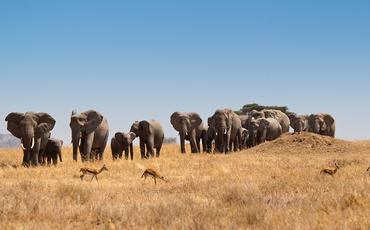
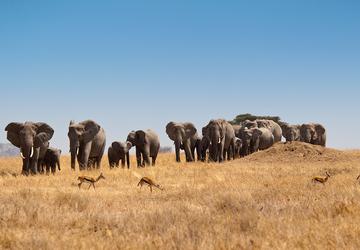
    This area is truly stunning, as the western wall of the Rift Valley escarpment provides a gorgeous backdrop. Search for the phenomenal birdlife, tree-climbing lions, elephants, giraffes, and hippos.

  • Day 4

    Mto wa Mbu/Serengeti National Park

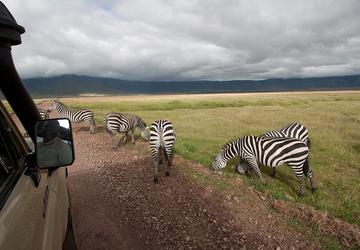
    Enjoy a wildlife safari drive en route to the central Serengeti. Drive through the Ngorongoro Conservation Area and on to Serengeti National Park. En route marvel at the sheer vastness of this territory, and spot the multitude of animal and birdlife while cruising through this acacia-accented savanna.

  • Day 5

    Serengeti National Park

    Rise early for a full-day wildlife safari drive in the Serengeti. Enjoy a picnic lunch in the bush and continue the search for the "big five" while taking in the vastness of the Serengeti plains.

  • Day 6

    Serengeti National Park/Ngorongoro

    Take a morning wildlife safari drive as you depart the Serengeti, then continue wildlife viewing in the Ngorongoro Crater, before getting a spectacular view of the crater from your campsite on its rim. The rich pasture and permanent water of the Crater floor supports a resident population of more than 20,000 to 25,000 large mammals.

  • Day 7

    Ngorongoro/Arusha

    Visit an authentic Maasai village and the the tour operator-supported Clean Cookstove Project, then return to Arusha where the tour ends on arrival. Onward flights can be booked from 6pm, or extend your stay in Arusha by a night, or two.

What's Included

  • Accommodation

    Simple hotels (2 nts), full-service camping (4 nts).

  • Meals

    Breakfasts: 6, Lunches: 5, Dinners: 4

    Vegetarian options are available on all meals throughout the adventure.

    Vegetarian options available

  • Local Guide

    Guided

    This adventure is led by a local guide throughout. The main language of this adventure is English. Please contact us for other languages available.

  • Wifi

    Wifi is available during the adventure. In some areas and / or accommodation / transport Wifi may be free.

Dates & Prices

  • Jun 2026

    from £1,587
  • Jul 2026

    from £1,587
  • Aug 2026

    from £2,116
  • Sep 2026

    from £2,018
  • Oct 2026

    from £2,155
  • Nov 2026

    from £2,155
  • Dec 2026

    from £2,253
  • Jan 2027

    from £2,155
  • Feb 2027

    from £2,008
  • Mar 2027

    from £2,008
  • Apr 2027

    from £2,008
  • May 2027

    from £2,008
  • Jun 2027

    from £2,253
  • Jul 2027

    from £2,253
  • Aug 2027

    from £2,253
  • Sep 2027

    from £2,155
  • Oct 2027

    from £2,155
  • Nov 2027

    from £2,155
  • Dec 2027

    from £2,253
  • Save 2%
    Friday 3 Jul 2026to Thursday 9 Jul 2026
    🔥2 spaces of 14 leftGuaranteed Departure
    £2,159£2,116
  • Save 2%
    Sunday 12 Jul 2026to Saturday 18 Jul 2026
    Guaranteed Departure
    £2,159£2,116
    Solo Room from +£97
  • Save 2%
    Friday 17 Jul 2026to Thursday 23 Jul 2026
    🔥2 spaces of 14 leftGuaranteed Departure
    £2,159£2,116
    Solo Room from +£97
  • Save 26%
    Sunday 19 Jul 2026to Saturday 25 Jul 2026
    6+ spaces of 14 leftGuaranteed Departure
    £2,159£1,587
    Best offer
    Solo Room from +£97
  • Save 2%
    Friday 24 Jul 2026to Thursday 30 Jul 2026
    🔥2 spaces of 14 leftGuaranteed Departure
    £2,159£2,116

Customer reviews & ratings

(4.79 out of 5)
Based on 87 reviews
  • I am glad l went on this trip. It was recommended by friends who had gone on this very trip 5 years previously. It was all l had hoped for. The meals were great. Our leader Edward was great. The driver was a very safe driver. All the staff were friendly. The driver and Edward could spot animals in a distance. They also took us to places that they believed there would be animals there.

    Doris Oct, 2024 Verified
  • Mind blowing! The best and more. Emmilian, Roshi, Iddy, Jeromy, Musa and Laiser went above and beyond for us, we saw incredible wildlife beyond our dreams, had the best guides with exceptional knowledge. All while sleeping under the stars with amazing food, I can't recommend this experience enough and I'll treasure our adventure. The exceptional guides and team at G, they make the trip and have expert knowledge. A G tour also takes away the hassle of travel logistics to ensure you enjoy your adventure.

    Jennifer Sep, 2024 Verified

Essential trip information

Our Important Notes and Packing List cover all essentials, from necessary equipment to inclusions, ensuring you're fully equipped and informed for this extraordinary adventure and more.

Frequently asked questions

  • What type of accommodation is provided during the tour?

    The tour includes 2 nights in simple hotels and 4 nights of full-service camping.
  • What are the camping facilities like?

    Camping is a full-service experience where tents are pitched, meals prepared, and washing up handled by staff. Dome tents and camp mattresses are provided. Campsites are generally basic; in Serengeti National Park and Ngorongoro Crater rim, facilities may include long-drop latrines, simple cold showers, and no electricity. Camps are open to the natural environment.
  • Are meals included in the tour price?

    Yes, 6 breakfasts, 5 lunches, and 4 dinners are included. Camp meals are prepared from fresh local produce.
  • What if I have dietary restrictions?

    Vegetarian meals and other dietary requirements can be accommodated if specified prior to arrival.
  • Is drinking water provided during the tour?

    No, bottled drinking water is at your own expense, but can be bought locally.
  • What kind of vehicles are used for safaris and transport?

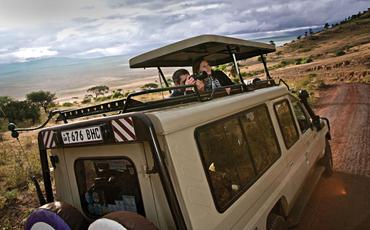
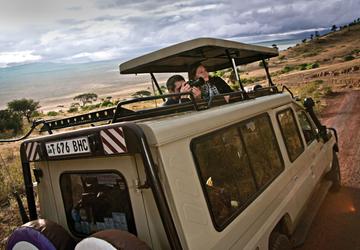
    For wildlife viewing within Tanzania, private 7-seat 4x4 Land Cruiser vehicles with sliding windows and pop-up roofs are used. If there is a large group, two vehicles may be utilized. The journey between Kenya and Tanzania is done via a public shuttle (mini-buses).
  • Who will be leading the tour?

    You will be accompanied by a Chief Experience Officer (CEO) throughout the trip. In Arusha, an expert driver/guide and a camp cook will join the team.
  • What kind of wildlife can I expect to see?

    You will search for phenomenal birdlife, tree-climbing lions, elephants, giraffes, hippos, and have opportunities to spot Africa's elusive 'big five' (lion, leopard, elephant, rhino, buffalo) during safari drives in various national parks and the Ngorongoro Crater.
  • Are there any cultural experiences included?

    Yes, the tour includes a guided cultural walk and traditional lunch with a local family in Mto wa Mbu, and a visit to an authentic Maasai village and the Clean Cookstove Project.
  • Are there any optional activities available?

    Yes, an optional Serengeti Balloon Safari is available. Other optional activities in Nairobi include the Bomas of Kenya Tour, The Carnivore Restaurant, National Museum, and Karen Blixen Museum.
  • What are the age restrictions for this tour?

    The minimum age for this tour is 12 years and the maximum age is 100 years.
  • What is the typical group size?

    The tour accommodates a minimum of 1 and a maximum of 14 participants.
  • Is this tour suitable for solo travelers?

    Yes, single travelers joining group trips are paired in twin or multi-share accommodation with someone of the same sex, and no single supplement is charged for group trips.
  • What currencies are accepted and what should I bring for spending money?

    The local currencies are Kenyan Shilling (KES) and Tanzanian Shilling (TSH). US Dollars (notes newer than 2006), British Pounds, and Euros can be exchanged. A combination of foreign currency (USD is recommended for visas) and debit/credit cards for cash advances is best, as ATMs can be unreliable and credit cards are not widely accepted. An emergency fund of at least USD $200 is recommended.
  • What are the tipping guidelines for the tour staff and local services?

    Tipping is expected and appreciated. Recommended guidelines per person are: CEO: $5 USD/day, Driver: $5 USD/day, Supply crew: $2-5 USD/day, Local guides: $1 USD/couple of hours, Restaurant/café servers: 10% of the bill.
  • Are there any vaccination requirements for this tour?

    A valid Yellow Fever Certificate is compulsory if traveling from a Yellow Fever endemic country. It is recommended to consult your family physician or local travel clinic for the most up-to-date health information and recommended inoculations.
  • What should I know about Malaria for this trip?

    Malaria is present in some regions. It is recommended to speak to your doctor about preventative medication (prophylaxis) and use insect repellent spray/cream.
  • What if I have a medical condition?

    It is strongly recommended to advise your tour leader of any medical condition that may affect you while traveling with the group. Medical facilities in these countries are basic.
  • What is the physical rating of this tour?

    The tour has a physical rating of 2, indicating that an average level of fitness and mobility is required. Travelers must be able to walk unaided, climb 3-4 flights of stairs, step on and off small boats, and carry their own luggage at a minimum.
  • Are there any luggage restrictions for the tour?

    Baggage should be one soft compact suitcase, sports bag, or backpack, no larger than 30cm(height) x 30cm(width) x 60cm(length), with a maximum weight of 15kg, plus a daypack. Luggage limits on airlines are strictly enforced, and due to limited vehicle capacity, excess luggage may incur additional costs. Storage facilities are available at the start hotel in Nairobi for excess luggage if you are returning there later.
  • What is the electricity supply like at the accommodations?

    The power supply in Kenya and Tanzania is nominally 240VAC, 50Hz, but variable voltage, spikes, and sporadic power cuts can be expected. There are no charging facilities at the Serengeti and Ngorongoro campsites; portable chargers can be charged in the vehicle while it is in motion.
  • Does this tour combine with other trips?

    Yes, this tour combines with other tours, so the staff and some travel companions on your tour may have previously been traveling together or may continue on another tour after your trip concludes.
  • What kind of accommodation can I expect on this safari?

    The tour includes 2 nights in simple hotels and 4 nights of full-service camping. All camping equipment, except a sleeping bag, is supplied, including canvas dome tents with insect nets and comfortable 4cm thick mattresses. Campsites inside and near national parks can be basic, with limited facilities like long-drop latrines and cold showers, and no electricity in some locations.
  • Are meals included in the tour, and can dietary requirements be accommodated?

    Yes, 6 breakfasts, 5 lunches, and 4 dinners are included. Camp meals are prepared from fresh local produce. Vegetarian and other dietary requirements can be accommodated if specified prior to arrival. Bottled drinking water, ice, and firewood are not provided but can be bought locally.
  • What are the age requirements for this safari?

    Travelers must be at least 18 years old to travel unaccompanied. For minors traveling with a guardian over 21 years old, the minimum age is 12.
  • What is the typical group size for this tour?

    The maximum group size is 14 travelers, with an average group size of 10.
  • Is there an extra cost for solo travelers?

    No, our group trips are designed for shared accommodation without a single supplement. Solo travelers are paired in twin or multi-share accommodation with someone of the same sex. If you book the "My Own Room/Tent" option, you will receive a single room/tent for all night stops.
  • What level of physical fitness is required?

    A minimum of an average level of fitness and mobility is required. Travelers must be able to walk unaided, climb 3-4 flights of stairs, step on and off small boats, and carry their own luggage. If you have a pre-existing medical condition, a medical questionnaire signed by your physician is required. The tour has a Physical Rating of 2 (Generally Light).
  • What kind of transportation will be used during the safari?

    Transportation includes public minibus/shuttle for travel between Kenya and Tanzania, and private 7-seat 4x4 Land Cruiser safari vehicles for wildlife viewing within the parks. These safari vehicles feature sliding windows and large pop-up roofs. Speed governors are set to 80kph, and seat belts are mandatory. Drivers are trained mechanics in case of vehicle breakdowns.
  • Who will be leading the tour, and what support staff are included?

    A Chief Experience Officer (CEO) will lead the entire journey. In Arusha, an expert certified driver/guide and a camp cook will join the team. The driver/guide has extensive regional and wildlife knowledge, and the cook prepares all camp meals.
  • What are the main highlights of the safari?

    Key highlights include photographing incredible wildlife on safari drives, interacting with the Maasai people, and savoring a traditional lunch within a local community. The tour visits Lake Manyara National Park, Serengeti National Park, and Ngorongoro Crater for extensive wildlife viewing.
  • Are there any optional activities available?

    Yes, optional activities include the Serengeti Balloon Safari, as well as various tours in Nairobi such as the Bomas of Kenya Tour, The Carnivore Restaurant, National Museum, and Karen Blixen Museum. These extras must be booked prior to departure.
  • Is tipping expected during the tour?

    Tipping is an expected, though not compulsory, part of the tour program and is an important source of income for those in the tourism industry. Recommended guidelines (per person, per day) are: CEO $5 USD, Driver $5 USD, Supply crew $2-5 USD. For local guides, $1 USD per couple of hours, and for restaurant/café servers, 10% of the bill.
  • What is the local currency, and what are the best methods for handling money?

    The local currency is Kenyan Shilling (KES) in Kenya and Tanzanian Shilling (TSH) in Tanzania. US Dollars are the easiest foreign currency to exchange (notes older than 2006 are not accepted). Bring USD cash for visas if purchasing at borders. Visa/Plus debit cards are most widely accepted. A combination of foreign cash and debit/credit cards for cash advances is best, and an emergency fund of at least $200 USD is recommended.
  • Are there any specific health considerations or vaccinations required?

    It is compulsory to show a valid Yellow Fever Certificate if traveling from or transiting through a Yellow Fever endemic country. Malaria is present in some regions, and it is recommended to speak to your doctor about preventative medication and use insect repellent. Always consult your family physician or local travel clinic at least one month before departure for up-to-date health information.
  • What are the visa and entry requirements for Kenya and Tanzania?

    All countries require a valid passport with a minimum of 6 months validity. For Kenya, an Electronic Travel Authorisation (eTA) is required for all nationalities as of January 1st, 2024. For Tanzania, a visa is required. It is strongly advised to pre-purchase visas before arrival to avoid delays.
  • What should I know about electricity and charging devices during the trip?

    The power supply in Kenya and Tanzania is nominally 240VAC, 50hz, but variable voltage, spikes, and sporadic power cuts can be expected. There are no charging facilities at the campsites in Serengeti and Ngorongoro. Travelers can charge portable power banks in the vehicle when it is in motion.
  • Can I do laundry during the trip?

    Hand washing of clothes can be done at most campsites, which offer simple facilities. It is recommended to bring non-polluting/biodegradable soap and a drying line. Hotels at the start/end points also offer laundry services for a fee.
  • What is the G Adventures Clean Cookstove Project?

    The tour includes a visit to the G Adventures-supported Clean Cookstove Project, which is part of the Planeterra International Foundation's initiatives to help local communities earn income from tourism and protect the environment. This project aims to make a difference in the quality of life for local people.
  • What should I know about safety and security while on the trip?

    It is recommended to use a neck wallet or money belt for valuables and to leave valuable jewelry at home. Many hotels have safety deposit boxes. While cities are generally safe during the day, it is advisable to stay in small groups and take taxis at night. Avoid lingering at protests/demonstrations. For specific safety advice for Nairobi and Arusha, and general travel safety, further details are provided in the trip notes. Water-based activities should only be undertaken with a guide.
  • Anna's profile
  • Petra's profile
  • Charlotte's profile

Still have questions?

Can't find the answer you're looking for? Please chat to our friendly team.

Get In Touch

Why book with us

  • Help Change The World

    We collaborate with local businesses and communities.

  • Best Price Guaranteed

    We won't be beaten on price. If you find this adventure at a lower price please get in touch!

  • You're In Good Hands

    We work with trusted tour operators around the world.

  • You're spoilt for choice

    We have the best choice of adventures on the market.

Similar adventures

Was this page helpful ?

If you need information about a tour or a booking, please contact us instead.