Journeys: Kenya & Tanzania Safari - 14 Days
From £6,913£494 per daySave 21%

Trip Snapshot

Genders

  • Female51%
  • Male49%

Average age

48
12 Min100 Max

Start / End

  • Nairobi
  • Arusha

Physical rating

2/5

Group size

1 - 6

Meals included

33

Highlights

  • Stay in a safari lodge in Lake Nakuru National Park
  • Learn about conservation from the Kenya Wildlife Service
  • Spot cheetahs and wildebeest in Masai Mara
  • Visit social enterprises supporting working mothers creating handicrafts
  • Get an up-close look at Serengeti National Park
  • Drive into the Ngorongoro Crater's wildlife-rich landscapes
Recommended

Download Trip Brochure PDF

Uncover insider tips, see a packing list and view a detailed itinerary and accommodation information.

Summary

On this epic journey, explore some of the finest national parks in East Africa, from Kenya’s Masai Mara to the incomparable Ngorongoro Crater in Tanzania. Keep your binoculars at hand on a trip to Lake Nakuru, a birder’s paradise; and seek out lions, leopards, and elephants in the wilds of the Serengeti. In between safaris, learn about local customs on a visit to a Maasai community and share a meal with a family in the vibrant Mto wa Mbu village.

Itinerary

  • Day 1

    Nairobi

    Arrive at any time. Arrival transfer is included. Our trips throughout Kenya and Tanzania have a maximum group size of six travellers in addition to an Expedition Leader and a driver who are both trained safari guides. That means everyone gets a window seat and twice the insight about the astounding wildlife all around you.

  • Day 2

    Nairobi/Lake Nakuru National Park

    Depart early for Lake Nakuru, known for harbouring flocks of pink flamingos and a rich variety of bird species. Arrive at our safari lodge inside Lake Nakuru National Park in time for lunch, and seek out the resident rhinos on a late afternoon wildlife drive.

  • Day 3

    Lake Nakuru National Park

    Set out on morning and afternoon safaris through the picturesque park, searching for buffalo, impalas, lions, and more; and drive along the salty shores of Lake Nakuru to discover a mind-boggling variety of birds.

  • Day 4

    Lake Nakuru National Park/Lake Naivasha

    This morning attend a talk given by a representative of the Kenya Wildlife Service (KWS)—a government institution dedicated to managing the country’s wildlife—about the issues surrounding poaching and wildlife conservation. Later head south through the Great Rift Valley to Lake Naivasha, a large freshwater lake surrounded by grassy banks and olive trees. Cruise the lake on a boat, watching for hippos and buffalo; and peer through your binoculars to spot lovebirds, ibis, and the African fish eagle. Step ashore at Crescent Island—a peaceful wildlife sanctuary located in the middle of the lake— and enjoy a guided stroll in search of wildebeest, zebras, and giraffes. The name Naivasha comes from the Maasai “Nai’posha”, which means “rough water”, though Lake Naivasha is generally calm as we watch for hippos and birdlife. Bring your binoculars and scan for lovebirds, ibis, and fish eagles, watch buffaloes wallow in the swamps and listen to colobus monkeys call from the treetops.

  • Day 5

    Lake Naivasha/Masai Mara

    Travel to the legendary Masai Mara National Reserve and settle into our comfortable tented camp, located in the heart of the reserve. Head out for an afternoon safari through vast, acacia-dotted plains, driving past throngs of wildebeest, zebra, and giraffes; and keep an eye out for lions, elephants, and the rest of the African “big five.” In the evening, relax at the camp and enjoy scenic views of the rolling plains. After breakfast, we depart for the world famous Masai Mara National Reserve. No trip to Kenya would be complete without a visit here. In the afternoon, we will arrive in the area, and get settled at our safari camp, our base for our time here. Then we’ll make our way into the reserve for an afternoon wildlife safari drive, with excellent chances of seeing the "big five": buffalo, elephant, leopard, lion, and rhino.

  • Day 6

    Masai Mara

    Venture out on an early morning safari to track the animals that traversed the savanna during the night. View ungulates like Thomson’s and Grant’s gazelles, topi and eland antelopes—as well as their stealthy predators—at one of their most active times of the day. Continue your exploration on a late afternoon safari, discovering the timeless landscapes of Masai Mara.

  • Day 7

    Masai Mara/Nairobi

    Witness a breathtaking sunrise over the savanna during your final safari in Masai Mara, and head back to Nairobi. Stop en route at Café Ubuntu, a the tour operator–supported Planeterra project that trains and employs local women and mothers of children with disabilities. Café Ubuntu is an oasis with delicious organic food, hospitable staff, and a relaxing atmosphere based in Maai Mahiu. It is a beacon for tourists who drive through the area each year on their way to the famous Maasai Mara conservancy. Learn about how the initiative empowers the community, visit the craft centre to meet some of the women who create the wares sold there, and then sit down for a delicious farm-to-table lunch. Options range from breakfast tacos, soups, and salads, to freshly made pizzas, curry dishes, and burritos. Rise early for a final morning wildlife safari drive, enjoying the African sun as it rises over the savannah of the Mara plains. Return to Nairobi in the late afternoon and opt to join the Expedition Leader in a farewell dinner.

  • Day 8

    Nairobi/Arusha

    Fly to Arusha, gateway to the Serengeti and the northern parks of Tanzania, and settle into your lodge. After your flight, transfer to the hotel. Take some time to explore Arusha before meeting your group back at the hotel for a second orientation meeting. Here, you will meet your Tanzanian Expedition Leader for this duration of the tour, and new travellers that may join you for the rest of your journey.

  • Day 9

    Arusha/Lake Manyara National Park

    This morning, make your way to Mto wa Mbu, a vibrant settlement of Tanzania’s diverse tribal groups. Take a guided walk through the rural town, visiting the local market and meeting artisans in their workshops; then sit down for a traditional lunch with a local family. Continue to the Rift Valley escarpment and settle into our safari camp, located at the edge of Lake Manyara National Park. Set out on our first safari drive to discover East Africa’s legendary wildlife, searching for lions, elephants, hippos, giraffes, and more. This western wall of the Rift Valley escarpment is truly stunning. It provides a backdrop for your search of the park's bird life, tree-climbing lions, elephants, hippos, and baboons. The afternoon is spent viewing wildlife along the main road that winds through a lush, cool forest that’s dominated by large ficus trees covered in bromeliads and ferns.

  • Day 10

    Lake Manyara National Park/Serengeti National Park

    Travel through the breathtaking Rift Valley en route to our safari camp in Serengeti National Park. Enjoy a stop along the way at the Olduvai Gorge Museum and Visitor’s Centre—located near the site where National Geographic archaeologists Louis and Mary Leakey discovered early hominid fossils and stone tools in 1960. From here, continue to the world-famous Serengeti National Park and head out on a late afternoon safari drive across the Serengeti Plain, keeping an eye out for grazing giraffes, lounging lions, and herds of antelope in the golden light.

  • Day 11

    Serengeti National Park

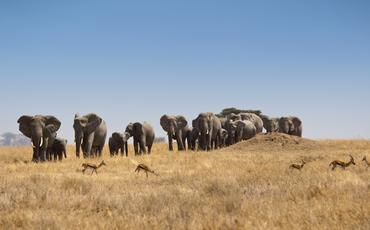
    Immerse yourself in the splendor of the Serengeti, one of Africa’s most celebrated wildlife reserves. Discover the park’s iconic creatures when you set out in a 4x4 on morning and afternoon safaris through the golden grasslands. With luck, spot all of Africa’s “big five”—lion, leopard, elephant, rhino, and buffalo. Later, visit the Serengeti Wildlife Research Centre, and enjoy a talk by one of the visiting researchers.

  • Day 12

    Serengeti National Park/Ngorongoro

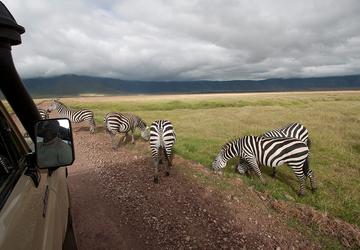
    Depart from the Serengeti early and travel across the vast savanna to the Ngorongoro Conservation area. Spanning more than 20 kilometres in diameter, the Ngorongoro Crater is the largest non-flooded caldera in the world and is inhabited by some 25,000 animals. Set out on a full-day safari drive into the Ngorongoro Crater and observe the biodiversity and resident wild animals in this incredibly important location to the conservation and protection of global wildlife. Enjoy a picnic lunch in the heart of the world’s largest caldera surrounded by Ngorongoro’s flora and fauna. Then, travel to our accommodations in Pembeni for dinner and a relaxing overnight stay in a pristine wilderness setting.

  • Day 13

    Ngorongoro/Arusha

    Leave Ngorongoro behind this morning and travel from our lodge in Pembeni to a Maasai village. Here, we learn about the the tour operator–supported Clean Cookstoves Project, dedicated to providing clean-burning cookstoves to Maasai communities throughout Tanzania. Enjoy a presentation by a Maasai woman on the impact of the project, and take a guided tour of the village, visiting traditional homes or bomas and helping build a new stove. Continue to Arusha stopping en route for lunch. Spend the remainder of the day in the safari capital city of Tanzania, at your own leisure.

  • Day 14

    Arusha

    Depart at any time.

What's Included

  • Accommodation

    Hotels – 4?nts, safari lodge – 4?nts, comfortable tented camps – 5?nts.

  • Meals

    Breakfasts: 13, Lunches: 11, Dinners: 9

    Vegetarian options are available on all meals throughout the adventure.

    Vegetarian options available

  • Local Guide

    Guided

    This adventure is led by a local guide throughout. The main language of this adventure is English. Please contact us for other languages available.

  • Airport Transfers

    Arrival Only

    An airport transfer to the start of the tour is included. Please contact our team if you require a quote for a return transfer.

  • Wifi

    Wifi is available during the adventure. In some areas and / or accommodation / transport Wifi may be free.

Dates & Prices

  • Jun 2026

    from £8,642
  • Jul 2026

    from £8,642
  • Aug 2026

    from £6,913
  • Sep 2026

    from £7,988
  • Oct 2026

    from £8,671
  • Nov 2026

    from £8,671
  • Dec 2026

    from £8,315
  • Jan 2027

    from £9,038
  • Feb 2027

    from £7,870
  • Mar 2027

    from £7,870
  • May 2027

    from £7,870
  • Jun 2027

    from £7,870
  • Jul 2027

    from £7,870
  • Aug 2027

    from £7,870
  • Sep 2027

    from £8,671
  • Oct 2027

    from £8,671
  • Nov 2027

    from £8,671
  • Dec 2027

    from £8,315
  • Jan 2028

    from £7,870
  • Feb 2028

    from £7,870
  • Mar 2028

    from £7,870
  • May 2028

    from £7,870
  • Jun 2028

    from £7,870
  • Jul 2028

    from £7,870
  • Aug 2028

    from £7,870
  • Sep 2028

    from £7,870
  • Oct 2028

    from £7,870
  • Nov 2028

    from £7,870
  • Dec 2028

    from £7,870
  • Save 1%
    Tuesday 4 Aug 2026to Monday 17 Aug 2026
    🔥2 spaces of 6 leftGuaranteed Departure
    £8,729£8,642
    Solo Room from +£1,682
  • Save 21%
    Saturday 8 Aug 2026to Friday 21 Aug 2026
    🔥1 space of 6 leftGuaranteed Departure
    £8,729£6,913
    Best offer
    Solo Room from +£1,682
  • Save 1%
    Tuesday 25 Aug 2026to Monday 7 Sep 2026
    🔥1 space of 6 leftGuaranteed Departure
    £8,729£8,642
    Solo Room from +£1,682
  • Save 1%
    Saturday 29 Aug 2026to Friday 11 Sep 2026
    🔥1 space of 6 leftGuaranteed Departure
    £8,729£8,642
    Book for£250 today, pay the rest later
    Solo Room from +£1,682

Customer reviews & ratings

(4.73 out of 5)
Based on 194 reviews
  • It was such an incredible trip, loved it and so many special moments. Just when you think one moment was special something else even more incredible happens. Overall it was a great trip

    Melissa Oct, 2024 Verified
  • Great adventure Little expensive but I?m glad I did it No regrets

    David Oct, 2024 Verified

Essential trip information

Our Important Notes and Packing List cover all essentials, from necessary equipment to inclusions, ensuring you're fully equipped and informed for this extraordinary adventure and more.

Frequently asked questions

  • What is the typical group size for this safari?

    The maximum group size for this safari is 6 travellers, with an average group size of 5. This ensures everyone gets a window seat and enhanced insights from the guides.
  • What types of accommodation are provided on this tour?

    The tour includes 4 nights in hotels, 4 nights in safari lodges, and 5 nights in comfortable tented camps. Hotels offer comfortable accommodations with en-suite bathrooms and WiFi, while tented camps are spacious with mosquito netting, comfortable bedding, en-suite bathrooms, and camping showers. Standards may vary from what you are used to at home.
  • Which meals are included during the safari?

    The tour includes 13 breakfasts, 11 lunches, and 9 dinners. Meals are provided at the hotels or lodges where you are accommodated, prepared from fresh local produce. Vegetarian options are available if specified in advance.
  • What is the physical rating of this tour?

    This tour has a physical rating of 2. While not physically demanding, it involves long drives and potentially poor road conditions, which can be bumpy.
  • Who will be leading the tour and what are their qualifications?

    You will be accompanied by a Chief Experience Officer (CEO) throughout the journey, who acts as the group manager and leader. Additionally, certified driver/guides (a Kenyan expert and a Tanzanian expert) will provide insights into the wildlife and local conditions.
  • What modes of transportation are used during the tour?

    Transportation includes private 7-seat 4x4 safari vehicles equipped with sliding windows and pop-up roofs for wildlife viewing, as well as a plane for the journey between Kenya and Tanzania. Boat trips and walking tours are also part of the itinerary.
  • What kind of wildlife can I expect to see on this safari?

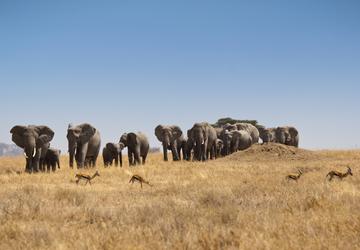
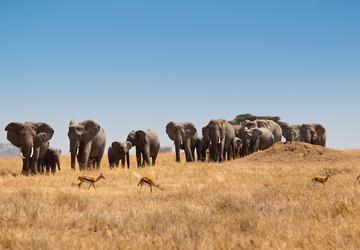
    You can expect to see a rich variety of wildlife, including flocks of pink flamingos and diverse bird species at Lake Nakuru. In Masai Mara and Serengeti National Park, you'll search for the African 'big five' (buffalo, elephant, leopard, lion, and rhino), as well as cheetahs, wildebeest, zebra, giraffes, hippos, impalas, and various antelopes.
  • Are there any cultural experiences included in the tour?

    Yes, the tour offers several cultural experiences. These include a visit to a Maasai community, a guided walk through the vibrant Mto wa Mbu village with a traditional lunch with a local family, and learning about 'The tour operator'-supported Clean Cookstoves Project. You will also visit Café Ubuntu, a social enterprise that supports local women.
  • What is the minimum age to join this trip?

    The minimum age for minors traveling with a guardian over 21 years old is 12. You must be 18 to travel unaccompanied.
  • What currency should I bring and are credit cards accepted?

    The local currencies are the Kenyan Shilling (KES) and Tanzanian Shilling (TSH). US dollars (notes newer than 2006), British Pounds, and Euros are easily exchangeable. While ATMs are available in major centers, they can be unreliable due to power outages or running out of cash. Credit cards are accepted in major cities but not widely, often incurring a 5-10% fee. It's recommended to carry a combination of foreign currency cash and debit/credit cards.
  • What are the health and vaccination requirements for this tour?

    It is compulsory to show a valid Yellow Fever Certificate if you are traveling from a Yellow Fever endemic country (Kenya and Tanzania are listed). Malaria is present, so prophylaxis and insect repellent are recommended. It is advisable to consult your physician or local travel clinic at least one month before departure for the most up-to-date health information and recommended inoculations.
  • Is travel insurance mandatory for this trip?

    Yes, travel insurance is compulsory for all participants. You will need medical coverage with a minimum of USD 200,000 for repatriation and emergency rescue. Personal liability, cancellation, curtailment, and luggage loss coverage are also strongly recommended.
  • Are international and local flights included in the tour price?

    International flights are generally not included in the tour price. However, any internal flights noted in the itinerary, such as the flight from Nairobi to Arusha, are included in the tour services.
  • What are the tipping guidelines for the tour?

    Tipping is expected and appreciated. Recommended guidelines (per person, per day) are: CEO $5-10 USD, Driver $5-10 USD. For local guides, $1 USD per couple of hours, and for Safari Supply Drivers, $3-5 USD per full day. For restaurant/café servers, 10% of the bill is suggested.
  • What is the electricity situation in the accommodations?

    While all lodges generally have electricity, many operate on generators with limited hours, typically shut off overnight from approximately 10 PM to 5 AM. Accommodations are generally not equipped with fans or air conditioning. Variable voltage and sporadic power cuts can be expected.
  • What are the safety considerations for this trip?

    It is recommended to use a neck wallet or money belt for valuables and leave expensive jewelry at home. Hotel safety deposit boxes are available. In cities like Nairobi and Arusha, avoid wandering alone at night and take taxis. Be cautious of individuals approaching with unusual offers. Photographing police stations, airports, military barracks, or government buildings is illegal.
  • What kind of accommodation can I expect on this trip?

    Hotels, safari lodges, and comfortable tented camps are used. Hotels offer comfortable rooms with en-suite bathrooms and Wi-Fi. Tented camps are spacious with mosquito netting, comfortable bedding, and en-suite bathrooms with flushing toilets and camping showers. Please note that most lodges and camps have limited electricity (generators often shut off overnight) and are not equipped with fans or air conditioning. Winter nights can be cold, so bring extra layers.
  • What modes of transportation are used on this trip?

    The primary modes of transport are private 7-seat 4x4 safari vehicles designed for wildlife viewing, with sliding windows and pop-up roofs. The journey between Kenya and Tanzania will be by plane. A public shuttle is available for return to Nairobi from Arusha if pre-booked. Vehicles have speed governors for safety, and drivers are trained mechanics in case of breakdowns.
  • Are international flights included in this trip?

    No, international flights are generally not included in the tour price. For combo tours between two countries, they might be included; please check with your booking agent.
  • Are local flights included in the cost of the trip?

    Yes, any flights noted on the tour operator itinerary for this tour are included in the tour services. Flight tickets are provided during the tour.
  • What health considerations should I be aware of before traveling?

    It is recommended to consult your physician or travel clinic at least one month before departure for up-to-date health information and recommended inoculations. A basic first-aid kit and hand sanitizers are advisable. Medical facilities are basic. A valid Yellow Fever Certificate is compulsory if traveling from a Yellow Fever endemic country to Kenya or Tanzania. Malaria is present, so discuss preventative medication and insect repellent with your doctor.
  • Is there a departure tax?

    A USD30 departure tax is usually included in most international air tickets.
  • Does the tour operator have an email newsletter?

    Yes, you can subscribe to their adventure travel e-newsletter for news, trip information, stories, and contests at www.gadventures.com/newsletters/. You can also sign up for Planeterra's monthly news to learn about their community investments.
  • Who should I contact in case of an emergency during the tour?

    In a dire emergency, first call the local representative or local office. For Nairobi airport transfers, contact Phelix at +254 729 692 653. For the Nairobi local office, call +254 727 208 832. If unable to reach them, contact the Sales team: North America: 1 888 800 4100; UK: 0344 272 0000; Germany: 0800 365 1000; Australia: 1 300 796 618; New Zealand: 0800 333 307; Other: +1 416 260 0999.
  • How much emergency money should I bring on this trip?

    It is recommended to have access to at least an additional USD $200 (or equivalent) as an emergency fund for unforeseen circumstances.
  • Who will be leading the group?

    A Chief Experience Officer (CEO) will accompany you throughout the entire journey, acting as the group manager and leader, providing assistance and general knowledge of the region and wildlife. Additionally, skilled and experienced drivers who are also certified safari guides will be part of the team, with separate Kenyan and Tanzanian drivers for their respective country sections.
  • What is the maximum group size for this tour?

    The maximum group size is 6 travelers, with an average of 5.
  • How much spending money do I need for my trip?

    Spending money requirements vary per traveler for drinks, shopping, and tipping. Please consider your personal spending habits.
  • What is the minimum age to join this trip?

    You must be 18 to travel unaccompanied. For minors traveling with a guardian over 21, the minimum age is 12.
  • What should I know about the Great Migration during this tour?

    The Great Migration is a continuous, year-round phenomenon, and the precise location of the animals varies annually. Observations will differ depending on the season, as their movements and river crossings are subject to natural forces.
  • Is this tour combined with other tours?

    Yes, this tour combines with other tours. As a result, some staff and travel companions may have traveled together previously or may continue on another tour after this trip concludes.
  • What are the travel conditions like on this safari?

    While not physically demanding, travel can involve long drives and poor road conditions in Kenya. Safaris require covering long distances and spending significant time viewing wildlife from the safari vehicle, meaning a lot of driving and sitting.
  • What should I know about electricity and power outlets?

    All lodges have electricity, often from generators with limited operating hours. Kenya's power supply is nominally 240VAC, 50Hz, with variable voltage and potential for unexpected power cuts. In Kenya, 3-pin square plugs are most common.
  • What if my luggage is delayed or lost upon arrival?

    Luggage delays on international flights into Nairobi can occur. Be prepared by keeping important documents, valuables, and a change of clothes in your hand luggage. If luggage is lost, it's recommended to buy essential items locally and seek assistance from your CEO or local representative to help retrieve and forward your luggage. Any costs incurred are generally not the tour operator's responsibility, so keep receipts for insurance.
  • Are there specific carry-on restrictions for flights through London-Heathrow to Nairobi?

    Yes, travelers connecting through London-Heathrow to Nairobi are typically limited to one carry-on piece and one small personal bag (purse, laptop bag, briefcases). It is advisable to check with your airline for the most up-to-date information.
  • Is there an extra cost for solo travelers?

    Group trips are designed for shared accommodation, and solo travelers are paired with someone of the same sex, so there is no single supplement. Some independent trips may require a single trip price for solo travelers.
  • Is travel insurance required for this trip?

    Yes, travel insurance is compulsory. You will need to show proof of medical coverage, with a minimum of USD 200,000 for repatriation and emergency rescue, to your Expedition Leader.
  • Are there specific Health & Safety Protocols for this tour?

    Yes, there are Health & Safety Protocols for National Geographic Journeys tours. These protocols may change, so travelers are advised to consult the tour operator's resources for the most current requirements.
  • What kind of meals are provided and can dietary requirements be accommodated?

    Meals are provided at hotels or lodges, prepared from fresh local produce. If an evening meal is not included, a restaurant will be available or a local establishment advised. Hotels cater to vegetarians; other dietary requirements must be specified prior to arrival. Bottled drinking water is at your own expense.
  • How many meals are included in the trip?

    13 breakfasts, 11 lunches, and 9 dinners are included.
  • What should I know about currency, credit cards, and exchanging money while on this tour?

    The local currencies are Kenyan Shilling (KES/KSH) and Tanzanian Shilling (TSH). US Dollars (post-2006 bills), British Pounds, and Euros are the easiest foreign currencies to exchange. Large US dollar notes ($50, $100) offer the best exchange rate but can be hard to change in some places. Bring USD cash for visas at borders. Traveler's checks are not recommended. Visa/Plus debit cards are widely accepted; Mastercard/Cirrus less so. ATMs are available in major centers but can be unreliable. Credit cards are accepted in major cities only, often with a 5-10% fee. A combination of foreign currency cash and debit/credit cards is best.
  • Will I get my own room if traveling solo?

    If you have booked the "My Own Room/Tent" option, you will receive your own single accommodation for all overnight stops.
  • Are there any optional activities available on this trip?

    No optional activities are explicitly listed for this trip.
  • Is tipping expected on this trip?

    Tipping is expected, though not compulsory, and serves as an appreciation for exceptional service. It's suggested for group members to contribute anonymously into an envelope and present it together. Guidelines per person: Expedition Leader: $5-10 USD/day; Driver: $5-10 USD/day; Local guides: $1 USD/couple of hours; Safari Supply Driver: $3-5 USD/full day; Restaurant/café servers: 10% of the bill.
  • What are the main highlights of this trip?

    Highlights include staying in a safari lodge in Lake Nakuru National Park, learning about conservation from the Kenya Wildlife Service, spotting cheetahs and wildebeest in Masai Mara, visiting social enterprises supporting working mothers, getting an up-close look at Serengeti National Park, and driving into the Ngorongoro Crater's wildlife-rich landscapes.
  • What are the specific safety considerations for this trip in Nairobi and Arusha?

    In Nairobi, keep valuables in a safe deposit, avoid flaunting expensive items, and do not wander alone at night; use taxis after sundown. In Arusha, be aware of beggars, street sellers, and safari touts, and politely decline. It is illegal to photograph police stations, airports, bus stations, border crossings, army personnel, or government buildings.
  • What general safety and security advice is provided for this trip?

    Check your government's travel advice. Use a neck wallet or money belt for valuables and leave expensive jewelry at home. Hotels often have safety deposit boxes; a lock for luggage is recommended. Your Expedition Leader can alter the itinerary due to safety and will accompany all included activities. For free time, use good judgment on optional activities, as their safety is not represented by the tour operator. Cities are generally safe by day, but at night, travel in groups and use taxis. Water-based activities should be done with a guide; swimming is at your own risk.
  • What is Planeterra and how does the tour operator support local communities?

    Planeterra International Foundation is a non-profit organization that helps local communities earn income from tourism by developing and supporting small community-owned businesses. The tour operator is Planeterra's largest corporate donor, covering all operating costs, ensuring 100% of donations go directly to projects. Travelers can participate in the Dollar-a-day Program to contribute to these initiatives.
  • What are the behavioral rules regarding illegal drugs and sex tourism on this trip?

    Illegal drugs are not tolerated; possession or use is against the law and puts the group at risk. Smoking marijuana and opium is unacceptable for travelers. The exploitation of people in the sex trade is strictly against the tour philosophy. Expedition Leaders have the right to expel anyone found with drugs or utilizing the services of paid sex workers.
  • What should LGBTQ+ travelers know about safety and travel considerations?

    The safety and well-being of all travelers, including the LGBTQ+ community, is a priority. Specific resources are available on the tour operator's LGBTQ+ page and through the Equaldex tool for safety and comfort.
  • What are the visa and entry requirements for Kenya and Tanzania?

    A valid passport (min. 6 months validity) is required. For Kenya, all travelers must apply for an Electronic Travel Authorisation (eTA) since January 1st, 2024. For Tanzania, visa information for online application requires host details: Host - the tour operator, Email - experience@gadventures.com, Mobile - +255 754 400 141, Address: P.O.Box 1912, Boma Road, Arusha. Always check with your local embassy/consulate for the most up-to-date requirements.
  • Are laundry facilities available on this trip?

    Laundry facilities are available at some hotels and lodges for a charge. It's best to plan for laundry at lodges where you stay for at least two days, such as in Masai Mara and Serengeti.
  • What is the climate like and what are the best times to visit?

    There are short rains (late October-November) and long rains (late March-early June). The best times to visit are late June to October (after rains, coolest air) or late December to early March (after short rains, warmest). January and February are the highest season. Even during rainy season, evenings can be cool, so warm clothing is recommended.
  • What are the official languages in Kenya and Tanzania?

    The official languages in both Kenya and Tanzania are Swahili and English, with numerous indigenous dialects spoken as well.
  • Anna's profile
  • Petra's profile
  • Charlotte's profile

Still have questions?

Can't find the answer you're looking for? Please chat to our friendly team.

Get In Touch

Why book with us

  • Help Change The World

    We collaborate with local businesses and communities.

  • Best Price Guaranteed

    We won't be beaten on price. If you find this adventure at a lower price please get in touch!

  • You're In Good Hands

    We work with trusted tour operators around the world.

  • You're spoilt for choice

    We have the best choice of adventures on the market.

Similar adventures

Was this page helpful ?

If you need information about a tour or a booking, please contact us instead.