The Inca Trail or The Lost City Trek?
How Peru and Colombia's Great Ancient City Treks Compare

by The Adventure People on 11th October 2018
Would you like to write for our blog? Please send an email to hello@theadventurepeople.com we'd love to hear your ideas!

Everybody has heard of the Inca Trail, and the image of Machu Picchu emerging from the morning mist is one of the most famous in travel. Colombia's Lost City, known locally as Teyuna or Ciudad Perdida, is far less familiar, yet it's one of South America's great adventures.
Both treks take several days on foot to reach an ancient city that can't be reached by road. Both are guided, both are physically demanding, and both end with a moment that stays with you for life. But they differ hugely in setting, altitude, crowds, how far ahead you need to plan and how they fit into a wider trip.
If you're already thinking about the Inca Trail, the Lost City Trek deserves a place on your shortlist. Here's how the two compare, to help you decide which is right for you.
Inca Trail vs Lost City Trek at a glance
Inca Trail | Lost City Trek | |
|---|---|---|
Country | Peru | Colombia |
Destination | Machu Picchu, built in the 15th century | Teyuna (Ciudad Perdida), built around 800 AD |
Setting | Andes mountains and cloud forest | Tropical jungle in the Sierra Nevada de Santa Marta |
Distance | Around 42km, one way | Around 46km, out and back on the same trail |
Duration | 4 days | 4–6 days |
Highest point | 4,215m (Dead Woman's Pass) | Around 1,200m |
Climate | Warm days, cold nights; rainy season November to March | Hot and humid all year; driest December to March |
Accommodation | Tents at set campsites | Hammocks or rustic bunks with mosquito nets |
Who carries your kit | Porters carry your main kit; you carry a daypack | You carry your own pack |
Crowds | Permits capped at around 500 people a day, including guides and porters | More than 8,000 visitors a year |
Booking | Permits sell out months ahead | Often bookable at shorter notice |
Closures | Every February | Usually for a month each year |
The treks compared
The Inca Trail: high-altitude history
Easily the most famous hike in South America, and perhaps the world, the Classic Inca Trail is walked by thousands of people of all ages every year. It follows original Inca paths for around 42km from the Sacred Valley, crossing high passes and descending through cloud forest to reach Machu Picchu.
The challenge is altitude. Day 2 climbs to Dead Woman's Pass at 4,215m, and much of the trail is made up of steep, uneven stone steps. You'll need two or three days in Cusco beforehand to acclimatise, as altitude sickness can affect anyone regardless of fitness. Read our guide: The Inca Trail: Am I Fit Enough?
Along the way you'll pass Inca sites such as Runkurakay, Sayacmarca and Wiñay Wayna, a terraced ruin built into a steep hillside, and walk through a tunnel carved from the rock. Camping doesn't get much better than unzipping your tent to ancient ruins and snow-capped peaks. Nights at the higher campsites can be close to freezing, while porters carry your main kit and set up camp.
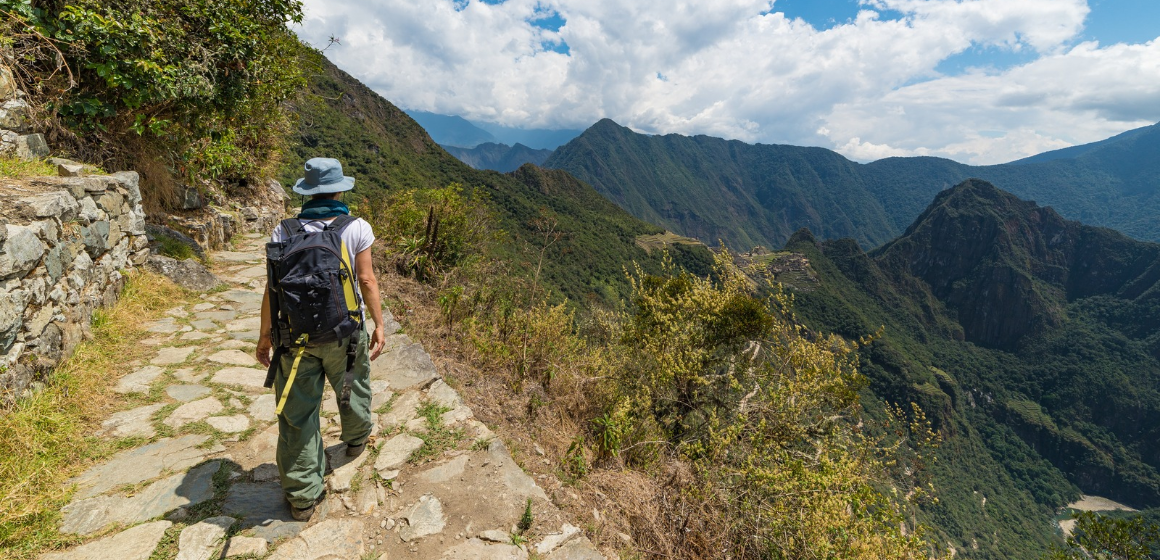 Scenery along the Inca Trail in Peru
The Lost City Trek: jungle, rivers and heat
The Lost City Trek runs for around 46km through the jungle of the Sierra Nevada de Santa Marta, on Colombia's Caribbean coast. You walk in to Teyuna and back out along the same trail, usually over four to six days.
Altitude isn't a concern here: the highest point is around 1,200m. Instead the challenge is heat, humidity and mud. The trail climbs and drops steeply over red-earth hills, crosses rivers on foot, and finishes with a climb of around 1,200 stone steps to the city itself. You'll sweat a lot, and in the wetter months the paths can be slippery.
The rewards are swimming in cool river pools after a hot day's walk, sleeping in hammocks with fireflies lighting up the night, and passing through the villages of the indigenous Wiwa, Kogi and Arhuaco communities, descendants of the city's builders who still live along the trail. Camps have toilets and cold showers, and locals sell snacks along the way. Unlike on the Inca Trail, you carry your own pack, so packing light matters.
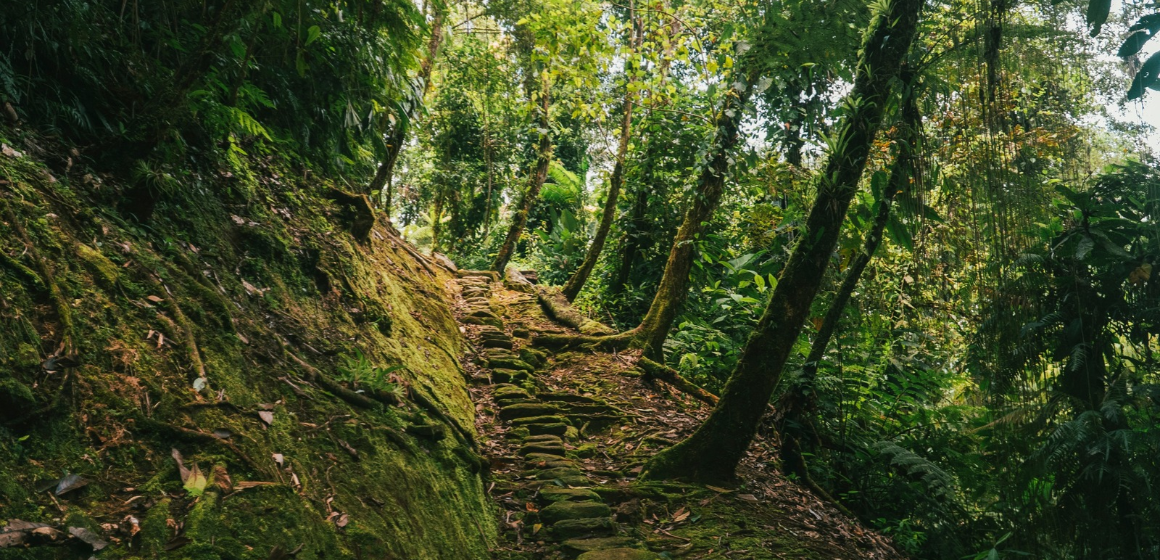 Stone paths and humid forests along the Lost City Trek in Colombia
Which trek is harder?
Neither is easy, and both need a good base of fitness. The Inca Trail is harder on the lungs because of the altitude; the Lost City Trek is harder on your body temperature and feet because of the heat, humidity and river crossings. If altitude worries you, the Lost City is the more comfortable choice. If you struggle in heat, the Inca Trail's cooler mountain air may suit you better.
Machu Picchu vs the Lost City: how the sites compare
Machu Picchu: a New Seven Wonder of the World
Machu Picchu is one of the most recognisable places on earth. Built in the mid-15th century as a royal estate for the Inca emperor Pachacuti, it was abandoned within about a century and brought to international attention in 1911. It's a UNESCO World Heritage Site, and in 2007 it was named one of the New Seven Wonders of the World in a global public vote.
The site itself is humbling. Precisely fitted stone temples, palaces and terraces sit on a ridge high above the Urubamba River, framed by steep, forested peaks. Arriving through the Sun Gate (Inti Punku) at dawn, as the cloud lifts to reveal the citadel below, is a moment few trekkers ever forget.
The trade-off is company. Machu Picchu welcomes well over a million visitors a year, most arriving by train and bus, so by mid-morning you'll share the site with large crowds. Entry runs on timed tickets and set circuits.
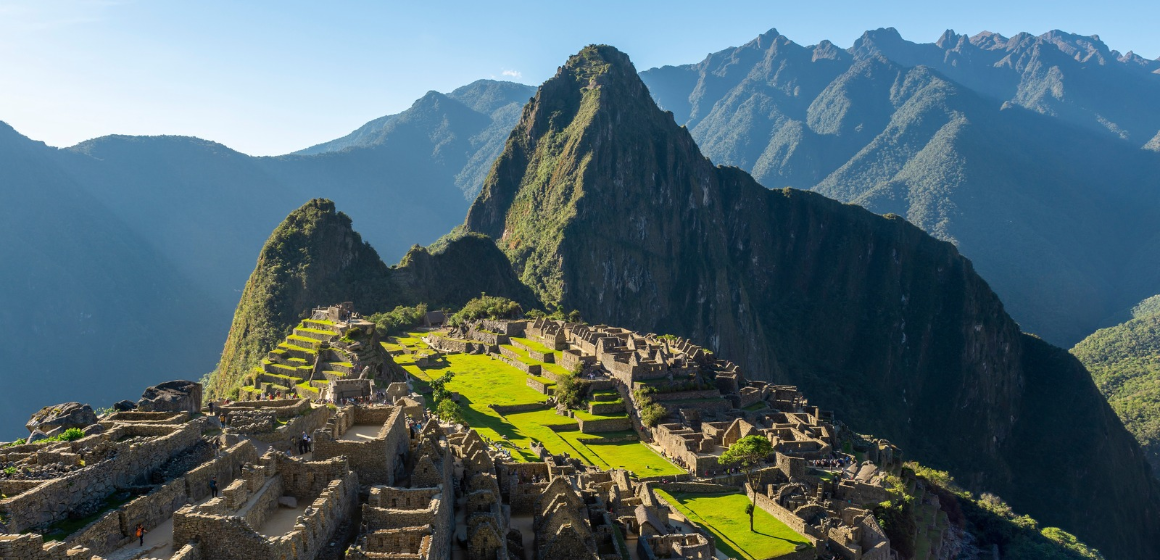 Machu Picchu on a clear, sunny day
Teyuna: older, wilder and almost empty
Teyuna was built by the Tayrona people around 800 AD, roughly 650 years before Machu Picchu, and is one of the largest pre-Columbian settlements in the Americas. It was abandoned during the Spanish conquest and swallowed by jungle, then found by treasure hunters in the early 1970s.
The Lost City was never really lost, though. It was only lost to the western world: the indigenous communities descended from the Tayrona always knew it was there, and it remains a sacred site to them today.
Rather than towering stone buildings, Teyuna is a series of circular stone terraces stepping up a jungle-covered ridge, linked by stairways and paths. The original wooden houses have long gone. What it lacks in architectural drama it makes up for in atmosphere: mist in the trees, birdsong, and often only your own group on the terraces.
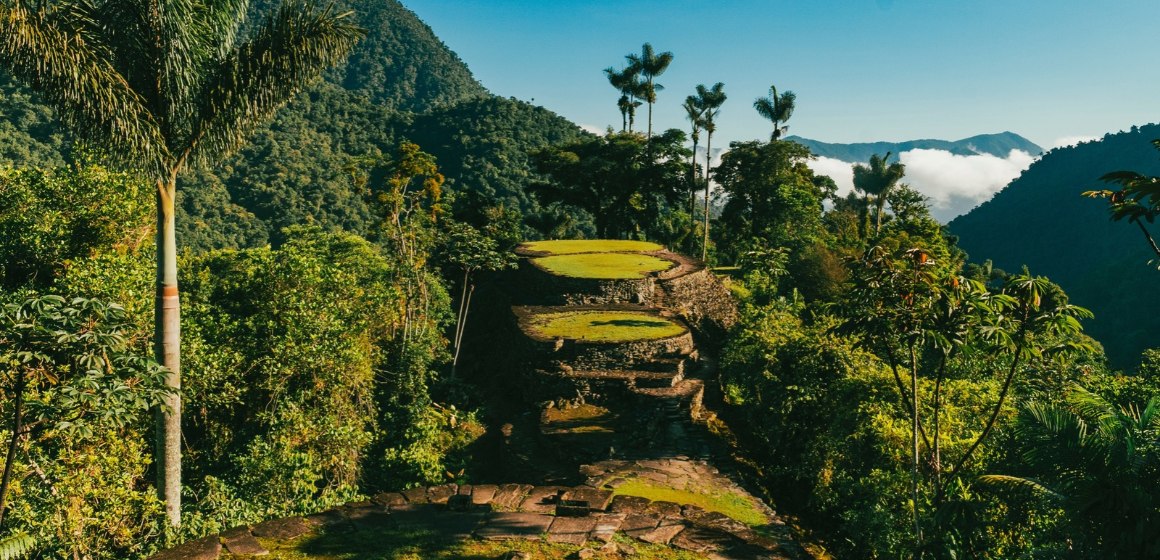 The ancient site of Teyuna in Colombia
In short
Machu Picchu is the more spectacular and complete site, with a status no other ruin in South America can match. Teyuna is older, more remote and far quieter, and the sense of discovery is greater. If ticking off a world wonder matters to you, choose Machu Picchu. If you'd rather have an ancient city almost to yourself, choose the Lost City.
Crowds and permits: how many other trekkers to expect
Inca Trail
Access to the Inca Trail is limited to around 500 people a day, and that includes guides, cooks and porters, so only around 200 permits a day go to trekkers. Permits are issued in your name, tied to a fixed start date and booked through licensed operators. Even with the cap, you'll walk with a steady stream of other groups, share campsites, and queue at the Sun Gate checkpoint on the final morning.
Lost City Trek
The Lost City sees far fewer people. Colombia's national parks authority puts visitor numbers at more than 8,000 a year, a fraction of the Inca Trail's annual total. There's no permit lottery: access is managed by four licensed operators, and every trekker must go with one of them. On the trail you'll meet other groups at the camps, but long stretches feel remote, and the people you're most likely to pass are local Wiwa and Kogi families going about their day.
Plan ahead or go last-minute?
The Inca Trail rewards planners. Because permits are capped, named and date-specific, the most popular months (May to September) often sell out months in advance. If you have fixed holiday dates, book your trek first and build the rest of your Peru trip around it. Last-minute Inca Trail availability is rare in peak season, and the trail is closed every February. If you've left it late, alternatives such as the Salkantay or Lares treks still end at Machu Picchu and don't need an Inca Trail permit.
The Lost City suits flexible travellers. With no permit cap, it's often possible to book a few days to a week ahead, which makes it a great option if you're travelling around Colombia without a fixed plan. Group trips can fill up in the busiest periods, so booking ahead is still wise if your dates are set. The trail also closes for around a month each year for indigenous ceremonies and to let the land recover, so check the closure dates before you travel.
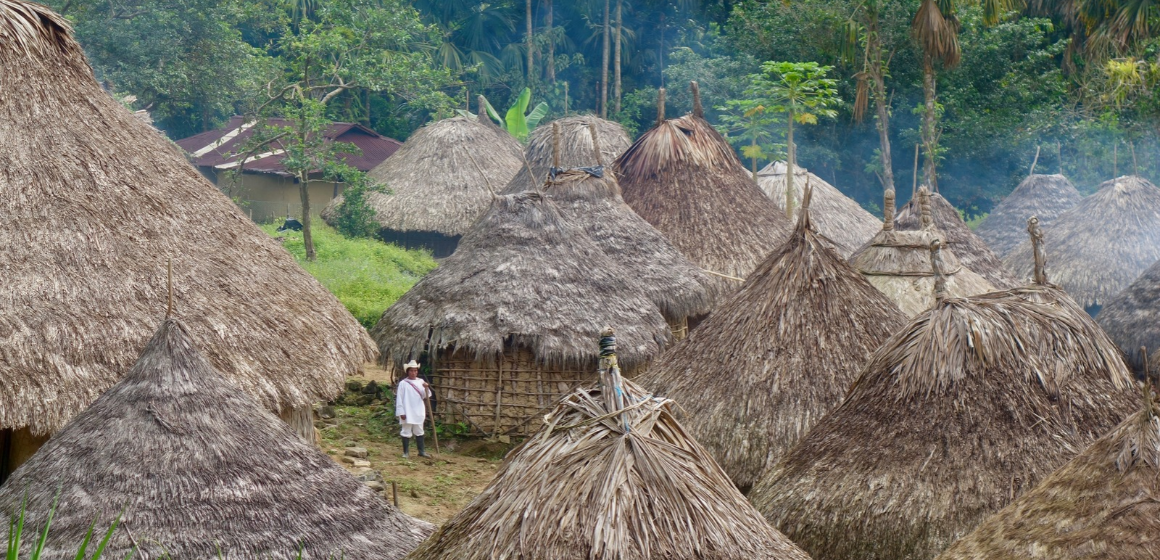 Photo by Sébastien Goldberg on Unsplash
Is the Lost City Trek safe?
It's a fair question, and one we're often asked. Colombia has changed enormously over the past two decades, and the Lost City Trek is now an established, well-run route walked by thousands of travellers every year.
The trek's reputation partly comes from its past. In 2003, a group of foreign trekkers was kidnapped on the route during Colombia's armed conflict. The trail has since been patrolled by the Colombian army, and you may see military posts along the way. Today the greater risks are the everyday ones of any jungle trek: slippery paths, river crossings, heat and insects.
A few things keep the trek well managed:
- Guided access only. You can't walk the trail independently. Every group goes with one of four licensed operators and local guides who know the route, the camps and the communities.
- Established camps. You'll stay at set camps with toilets, showers and cooks, used by every group on the trail.
- Local communities. The trail passes through indigenous land, and the communities are directly involved in how the trek is run and when it closes.
As with any trip, check the latest UK Foreign Office travel advice for Colombia before you book and take out travel insurance that covers trekking. Follow your guide's advice at river crossings, drink only treated water, and cover up against mosquitoes at dusk.
How each trek fits into a wider trip
The two treks sit in very different trips. The Inca Trail is the centrepiece of a journey through Peru's highlands, while the Lost City is one stop on a Caribbean-coast loop in a country best known for its cities, coffee and beaches.
Building a Peru trip around the Inca Trail
Most Peru itineraries revolve around Cusco, the former Inca capital and the base for the Inca Trail. Because Cusco sits at about 3,400m, the order of your trip matters: spend time at altitude before the trek, and save the lowlands for afterwards.
- Cusco and the Sacred Valley: Colonial streets, Inca ruins and markets. Allow two to three days here to acclimatise before the trek.
- Lake Titicaca: The world's highest navigable lake, with floating reed islands. Visiting before Cusco is a natural way to acclimatise.
- Arequipa and the Colca Canyon: A white-stone colonial city and one of the deepest canyons in the world, where Andean condors soar.
- The Amazon: Fly from Cusco to the rainforest for a few days of wildlife spotting and recovery after the trek.
- Lima: One of South America's great food cities, and the usual international gateway.
Two to three weeks covers the highlights comfortably. See our Machu Picchu Adventure - 8 Days and Journeys: Machu Picchu and the Amazon - 10 Days, or browse all our Inca Trail tours.
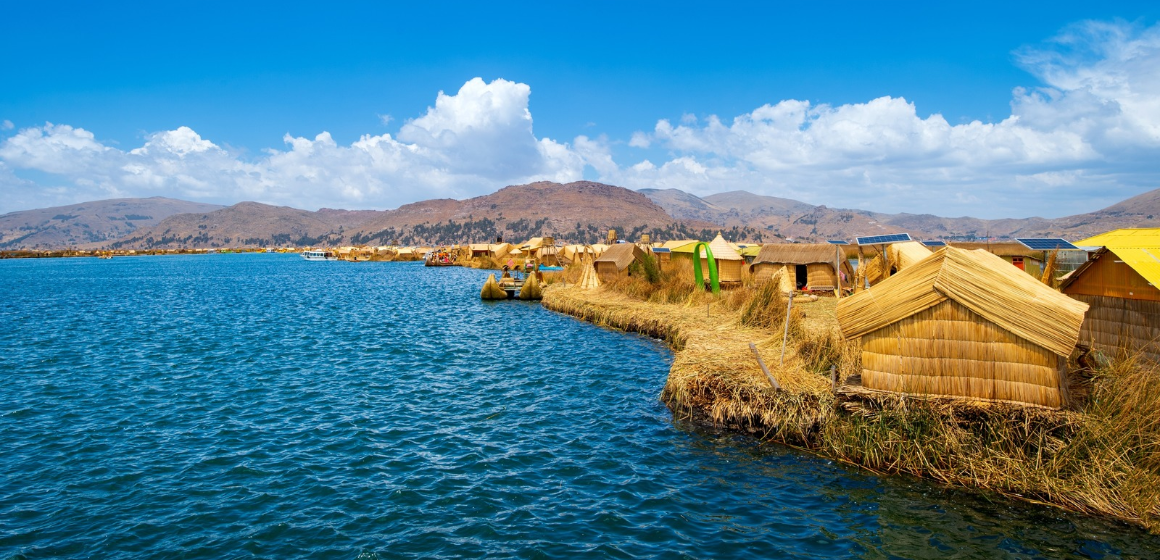 A floating reed village on Lake Titicaca in Peru
Building a Colombia trip around the Lost City
The Lost City Trek starts near Santa Marta on the Caribbean coast. It's low-altitude, so you can trek soon after arriving without acclimatising, and you'll be close to some of Colombia's best beaches when you finish.
- Cartagena: A UNESCO-listed walled city of colourful colonial streets and Caribbean sunsets.
- Santa Marta, Minca and Tayrona National Park: Jungle-backed beaches, coffee farms and waterfalls, all close to the trailhead. Ideal for recovering after the trek.
- Medellín: A vibrant, transformed city of cable cars, street art and spring-like weather.
- The Coffee Triangle: Rolling green hills, working coffee farms and the towering wax palms of the Cocora Valley near Salento.
- Bogotá: The high-altitude capital, with world-class museums and the historic La Candelaria district.
Two to three weeks lets you combine the trek with the coast, the coffee region and a city or two. See our Lost City Trekking in Colombia - 7 Days or the longer Colombia Adventure & Lost City Trek - 15 Days.
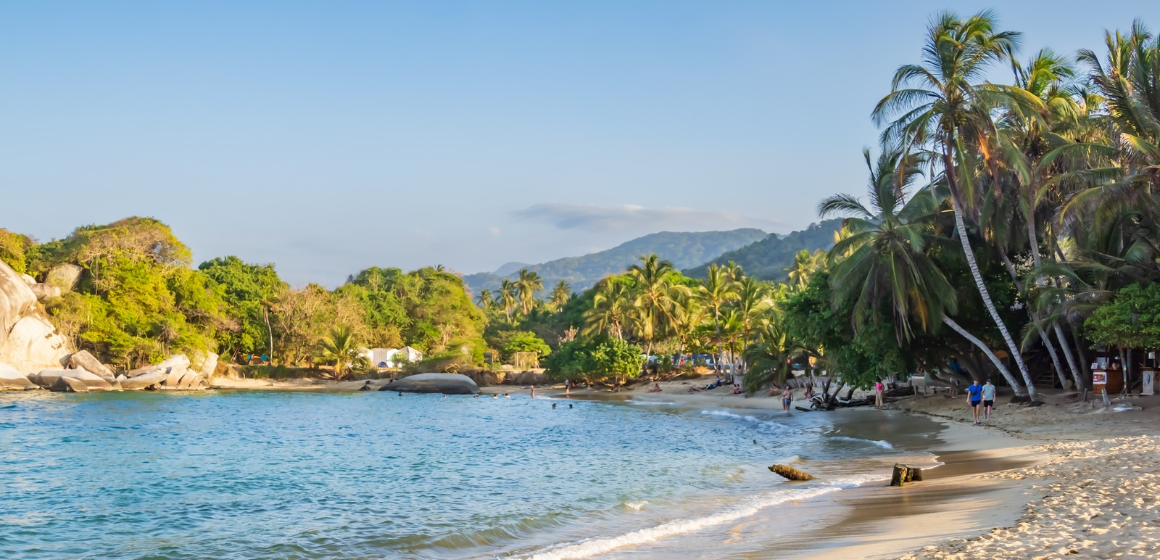
Cabo San Juan beach in Tayrona National Park in Colombia
The overall experience
A Peru trip built around the Inca Trail is a journey through Inca history, high mountains and Andean culture, with cool air, big landscapes and a world-famous finale. A Colombia trip built around the Lost City is warmer and more varied: jungle and indigenous culture on the trek, then Caribbean beaches, salsa, coffee country and lively cities. Peru is the classic bucket-list trip; Colombia feels more like discovering somewhere before everyone else does.
Which trek is right for you?
Choose the Inca Trail if you:
- Want to see a New Seven Wonder of the World and arrive at Machu Picchu on foot through the Sun Gate.
- Are happy to plan and book several months ahead.
- Prefer cool mountain air to jungle heat, and are prepared to acclimatise to altitude.
- Like the idea of porters carrying your main kit and a classic camping experience.
Choose the Lost City Trek if you:
- Want an ancient city with far fewer visitors, and a stronger sense of discovery.
- Are concerned about altitude sickness.
- Like to keep your plans flexible or book closer to departure.
- Are drawn to jungle, river swims and time with indigenous communities, followed by Caribbean beaches.
Travelling around South America? Do both!
If you're planning a longer, multi-country trip across South America, there's no need to choose. Lima and Bogotá are linked by a direct flight of around three hours, so the two treks combine easily into one journey.
For the smoothest trip, book your Inca Trail permit first and fix the rest around it, as the Lost City is far more flexible on dates. Doing the Lost City Trek first also helps: it builds trekking fitness at low altitude before you head up to Cusco.
Ready to start planning? Browse our Inca Trail tours, our Colombia adventures and our wider South America trips, or speak to our travel experts about combining the two.