Black Friday Deals - BOOK NOW →

Tanzania: Kilimanjaro's Machame Route & Serengeti Wildlife - 14 Days
From £4,009You save £40(1%)

Trip Snapshot

Age range

12 - 100

Start / End

  • Moshi
  • Arusha

Physical rating

5/5

Group size

1 - 14

Meals included

32

Highlights

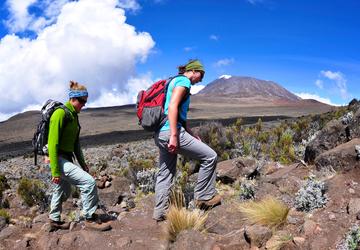
  • Conquering Kilimanjaro's Machame Route: Embark on an epic 6-day trek along Kilimanjaro's most scenic Machame Route. Traverse lush rainforests, lower alpine moorlands, and high-alpine deserts, culminating in an unforgettable sunrise from Uhuru Peak, Africa's highest point, offering breathtaking views.
  • Unforgettable Serengeti Wildlife Safaris: Experience the breathtaking vastness of the iconic Serengeti National Park on thrilling safari drives. Witness the 'stampeding glory' of its immense wildlife, encountering majestic lions, leopards, wildebeest, and zebras across the endless plains.
  • Descend into the Ngorongoro Crater: Journey into the awe-inspiring Ngorongoro Crater, the world's largest inactive, intact volcanic caldera. This natural sanctuary boasts an extraordinary concentration of African wildlife, providing unparalleled opportunities to spot the 'Big Five' in a truly spectacular setting.
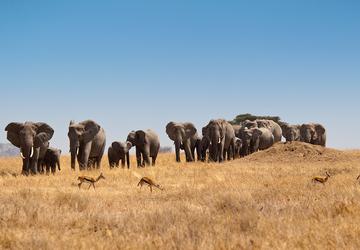
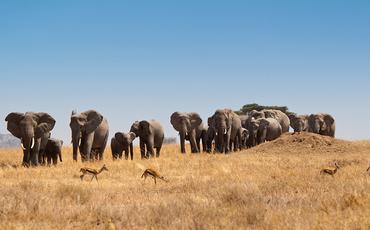
  • Discover Tarangire's Gentle Giants: Explore Tarangire National Park, renowned for its colossal baobab trees and magnificent elephant herds. Enjoy exhilarating safari drives, observing these gentle giants gather around the Tarangire River amidst a diverse ecosystem.
  • Engage with Local Tanzanian Communities: Connect authentically with the heart of Tanzania through meaningful G for Good Moments. Celebrate your Kilimanjaro achievement with the Moshi Women's Cooperative and immerse yourself in a fascinating coffee harvesting tour in Karatu, learning about local agriculture firsthand.
Recommended before you book

Everything you need to picture the adventure and pack with confidence — in one free PDF.

What's inside the PDF

  • Day-by-day itinerary
    Every day mapped out, covering activities, travel times, meals and where you'll stay.
  • Packing & kit list
    Exactly what to bring, from clothing and essentials to luggage guidelines and what's available to hire locally.
  • What's included
    Accommodation, transport, guides and meals, so you can see exactly what your price covers.
Free, instant PDF - no obligation

Summary

Fourteen days. Africa's highest peak and its greatest wildlife stage — back to back. Kilimanjaro's Machame Route threads through forest and glaciers before Uhuru Peak delivers the summit sunrise. Then the Serengeti opens up in all its stampeding glory, Ngorongoro Crater descends, and Tarangire's elephant herds round out a trip that packs more into a fortnight than most manage in a lifetime.

Itinerary

  • Day 1

    Moshi

    Arrive at any time.

  • Day 2

    Moshi/Machame camp

    Hike the lower slopes of Mt Kilimanjaro to Machame Camp. Most of the day is spent in the gorgeous and fascinating, forested slopes of Mt. Kilimanjaro, most of which is considered to be rainforest zone.

    Depending on the weather, the trail will be soggy and possibly muddy if it rains.

  • Day 3

    Machame camp/Shira 2 Camp

    Hike through lower alpine moorland to Shira 2 camp and observe the spectacular views of Kibo Peak.

  • Day 4

    Shira 2 Camp/Barranco Camp

    Hike to Barranco Camp via Lava Tower. Enjoy the fantastic view of Western Breach and the Breach Wall.

  • Day 5

    Barranco Camp/Barafu Camp

    View the Great Barranco Wall and climb up the eastern wall, passing below the Helm Glacier.

  • Day 6

    Barafu Camp/Mweka Camp

    Hike during the night to the Summit via Stella Point. Watch the sunrise before descending to Mweka Camp. The route from Barafu Camp to the summit is mentally and physically, the longest, most challenging day of the entire trek. Despite the difficulty, the memory of conquering Mt Kilimanjaro will stay with you forever.

  • Day 7

    Mweka Camp/Moshi

    Continue descent through the forested, lower slopes to Moshi. Meet the mamas of the Moshi Women’s Cooperative, a G supported project, for a climbing ceremony. Arrive to Moshi in the afternoon. Time to relax, take a shower, and celebrate with a drink. Cheers to climbing Mt Kilimanjaro! Before dinner, you will be welcomed and congratulated on your climb by the mamas of the Moshi Women’s Cooperative, a project supported by the tour operator. They will present you with a gift and a certificate to remember all your efforts on the mountain.

    Opt to pre-book the Lala Salama Spa & Beauty Aromatherapy Massage, which partners with Moshi Women's Cooperative, by adding it to your checkout page, or ask your GCO or travel agent for assistance.

  • Day 8

    Moshi/Arusha

    En route to Arusha, enjoy an included stop at the the tour operator-supported Moshi Women’s Cooperative. Pick up any last-minute supplies in Arusha. Travel to the picturesque town of Arusha. En route, stop at the Moshi Women’s Cooperative to learn about what this project offers. Meet the women, learn more about their lives, and opt to purchase some souvenirs.

    In the evening, you may be joined by other the tour operator travellers arriving from Kenya or starting the safari portion of their Tanzania trip. Check for details of the time and location of a welcome meeting, typically around 18:00.

  • Day 9

    Arusha

    Spend the day as you please in Arusha. Relax after the more active portion of your trip and prepare for the next leg of wildlife and beauty through Tanzania's landscapes.

  • Day 10

    Tarangire National Park

    After breakfast the group will travel to Tarangire National Park. This park is special due to its large elephant population, presence of ancient baobab trees, and a unique dry season migration. The elephants gather around the Tarangire River that flows through the park. Enjoy a safari drive upon arrival to see the diverse wildlife here for yourself. Sit down for a picnic lunch inside the park before continuing onwards to Karatu where you will spend the evening.

  • Day 11

    Karatu

    Spend a free morning in Karatu. Choose to have a leisurely wake up and relax at the hotel or pre-book the optional Lake Manyara Morning Safari Drive. Later, in the afternoon engage with local farmers on a coffee tour where you will learn about the harvesting of the beans and participate in hands-on sorting and roasting. Dinner will be had at the hotel in the evening.

  • Day 12

    Karatu/Serengeti National Park

    Today will be an early start as the group travels to the Ngorongoro Crater. Once here, you will go on a scenic wildlife safari drive. This geographical wonder is the world's largest inactive, intact, and unfilled volcanic caldera. The uniqueness of this environment has allowed for a self-contained ecosystem that offers visitors a high concentration of wildlife like, lion, leopard, elephant, rhino, and buffalo. Enjoy lunch in the park amid this serene setting before departing for Serengeti National Park. Enter through the Naabi Hill Gate and experience a safari drive en route to your tented camp for the evening where you can relax under the stars.

  • Day 13

    Serengeti National Park

    Choose to set an early morning wake-up call and pre-book the Serengeti Balloon Safari for epic views from the sky. Then, after breakfast set out on a full day safari drive through the Serengeti. Sit down for a picnic lunch inside the park, scan the landscape for wildlife, and listen to bird calls all around. Return to your tented camp and relax for the evening amid your outdoor surroundings.

  • Day 14

    Serengeti National Park/Arusha

    Gather for a breakfast at camp amid the morning life of the Serengeti before beginning the journey back to Arusha. Stop along the way for lunch at Mto wa Mbu, a the tour operator-supported initiative. Arrive to Arusha in the late afternoon where your tour will end. Please do not book onward travel prior to 9PM.

What's Included

  • Accommodation

    Hotels (6 nts), Full-service alpine camping (5 nts), Comfortable Tented Camp with en suite facilities (2 nts).

  • Meals

    Breakfasts: 13, Lunches: 10, Dinners: 9

    Vegetarian options are available on all meals throughout the adventure.

    Vegetarian options available

  • Local Guide

    Guided

    This adventure is led by a local guide throughout. The main language of this adventure is English. Please contact us for other languages available.

  • Wifi

    Wifi is available during the adventure. In some areas and / or accommodation / transport Wifi may be free.

Dates & Prices

  • Jan 2027

    from £4,009
  • Jun 2027

    from £4,009
  • Aug 2027

    from £4,454
  • Nov 2027

    from £4,256
  • Dec 2027

    from £4,256
  • Jan 2028

    from £4,009
  • Feb 2028

    from £4,256
  • Mar 2028

    from £4,256
  • May 2028

    from £4,009
  • Jun 2028

    from £4,009
  • Jul 2028

    from £4,454
  • Aug 2028

    from £4,454
  • Sep 2028

    from £4,454
  • Oct 2028

    from £4,256
  • Nov 2028

    from £4,256
  • Dec 2028

    from £4,256

January 2027

1 departure

Click the bell to get notified when the price drops

  • Save 1%
    Saturday 9 Jan 2027to Friday 22 Jan 2027
    🔥1 space of 14 leftGuaranteed Departure
    £4,049£4,009
    Best offer
    Private Room from +£1,068

Essential trip information

Our Important Notes and Packing List cover all essentials, from necessary equipment to inclusions, ensuring you're fully equipped and informed for this extraordinary adventure and more.

Frequently asked questions
  • Are international flights included in this trip?

    No, international flights are generally not included in the price of your tour. However, on some tours travelling between two different countries, international flights are included as part of the itinerary and price of the tour. Please speak to your GCO or booking agent for further details. In addition, check-in times and baggage allowances/restrictions vary by airline and can change at any time. For the most up-to-date information for your flight, please contact your airline. We recommend checking in online in advance to avoid potential delays at the airport.
  • Are there any health considerations I should know before travelling?

    We recommend you contact your family physician, or your local travel clinic for the most up-to-date health information at least one month before departure. Travellers should also carry a basic first-aid kit and hand sanitizers/antibacterial wipes on their travels. Medical facilities are basic throughout these countries. For your own safety, we strongly recommend that you advise your tour leader of any medical condition that may affect you while travelling with the group. Your tour leader will be able to inform you of local health advisories (e.g. drinking water quality). Please ensure you have all the inoculations recommended by your doctor. Yellow Fever Certificate Note (Updated: June 2026)It is compulsory to show a valid Yellow Fever Certificate if you are travelling to the following the tour operator-visited countries from a Yellow Fever endemic country, or if you have transited for more than 12 hours through the airport of a Yellow Fever endemic country:BotswanaKenya*MalawiNamibiaSouth AfricaTanzaniaUganda*ZambiaZimbabwe*Kenya and Uganda require a valid Yellow Fever Certificate from all travellers regardless of country of origin, not only those arriving from endemic countries. Travellers to these destinations should ensure they are vaccinated regardless of their travel history. If other non-endemic countries have been visited after visiting an endemic country, a Yellow Fever certificate may still be required on entry into subsequent destinations. This is particularly relevant on multi-country Southern Africa itineraries, for example, a traveller moving from Uganda to Kenya, or from Kenya across a land border into Tanzania, will be required to show their certificate at each entry point. Please check country-specific regulations before departure. MalariaMalaria is a mosquito-borne disease that is present in some regions in Africa. Risk of malaria can increase during periods of heavy rain, during the rainy seasons, and in densely populated areas of Southern & East Africa. To prevent malaria, we recommend speaking to your doctor about taking preventative medication (prophylaxis), combined with regular use of insect repellent spray/cream. Please check updated travel health advisories specific to malaria before your departure.Physical Fitness:Although Kilimanjaro is not a technical mountain climb, it is a major challenge and the rigor of altitude should not be underestimated. Remember that Uhuru peak is 500m higher than Everest Base Camp!! The pace of your ascent coupled with good acclimatization will help you on the climb but it is essential to be mentally and physically prepared before you start. Regular hikes are one of the best ways to prepare, increasing frequency and length, as you get closer to the trek. All aerobic exercises such as cycling, running, swimming and funnily enough aerobics are good for strengthening the cardiovascular system. Generally, any exercise that increases the heart rate for 20 minutes is helpful but don’t over do it just before the climb.Altitude and Acclimatization:Altitudes are generally defined as follows:- High altitude 2,400m – 4,200m Very high altitude 4,200m – 5,400m Extreme altitude above 5,400m (Uhuru peak is 5,895m)During the trek it is likely that all climbers will experience at least some form of mild altitude sickness. It is caused by the failure of the body to adapt quickly enough to the reduced level of oxygen in the air at an increased altitude. There are many different symptoms but the most common are headaches, light-headedness, nausea, loss of appetite, tingling in the extremities (toes, fingers) and a mild swell of ankles and fingers.If you have severe symptoms, go down 1,500 to 2,000 feet right away to see if your symptoms get better. Keep going down until your symptoms go away completely. Medicines that may be used to prevent or treat the symptoms of severe high-altitude illness include acetazolamide and nifedipine. Don't ignore signs of altitude sickness. People can die of this if they don't recognize the signs or if they don't believe their illness is caused by the high altitude. When you have signs of altitude sickness, don't go higher until you feel better and your symptoms have gone away completely.Hypothermia:Hypothermia is a condition where the body becomes dangerously cold. It can be caused by brief exposure to extreme cold, or by prolonged exposure to mild cold. Hypothermia occurs when a person's deep-core body temperature drops below 35 degrees celsius (95 degrees fahrenheit). It is the lowered temperature of the organs inside the body that is important - an ordinary thermometer cannot measure this. The person may not actually feel cold but if they stay in a cold environment and do little or nothing to keep warm, then they may run the risk of becoming hypothermic or becoming ill with bronchitis or pneumonia. Both are cold-related illnesses.Danger signs to watch out for: Drowsiness, very cold skin on parts of the body normally covered, for example, stomach or armpits, Slurred speech, Absence of complaint about feeling cold, even in a bitterly cold environment.Eye Issues:All contact lens wearers should take care to remove the lenses at night, as the eye needs to absorb oxygen from the atmosphere. The rarefied conditions of altitude reduce oxygen levels and in extreme cases a Corneal Oedema can develop.Emergency Evacuation:In the event of an emergency on the mountain the rescue team plus one of the assistant guides will descend with the casualty to the park gate. At the gate the casualty will be taken care and the necessary arrangements will be done.
  • Does the tour operator have an email newsletter I can subscribe to?

    Our adventure travel e-newsletter is full of travel news, trip information, interesting stories and contests. To avoid missing out on special offers and updates from the tour operator, subscribe at www.gadventures.com/newsletters/Stay current on how our company invests in our global community through our foundation – Planeterra. Sign up for Planeterra's monthly news to learn more about how to give back and support the people and places we love to visit.
  • How will we travel between destinations?

    The safari part of this trip is done in private, 7-seat 4x4 Land cruiser vehicles. With sliding windows and a large pop-up roofs, these vehicles are designed for wildlife viewing. If there is a large group, 2 or more vehicles will be used, and the group will be split up.All the tour operator vehicles are regularly serviced and follow a strict maintenance schedule. However given the long travel days and rough conditions of many of the roads in Africa, vehicles can and do breakdown on occasion. If such situations occur all drivers are trained mechanics and any vehicle issues are rectified as quickly as possible so as to not disrupt your trip. Your patience is requested if the vehicle you are traveling in happens to encounter a mechanical fault.The safari portion of this itinerary is not a physically demanding journey; however, travelling can be difficult, with long drives and poor road conditions at times. Please take note of the travel times and distances in the above itinerary, and consider that this is often on poor quality, bumpy roads. Despite this, most clients feel that the diversity of the African landscape, culture and wildlife are all well worth the experience.
  • If I choose to purchase My Own Room, are there any exceptions during the trip?

    Please note that if you have booked the "My Own Room" option for this tour, you will receive your own single room for all night stops
  • Is there an extra cost for travelling solo?

    We believe solo travellers should not have to pay more to travel so our group trips are designed for shared accommodation and do not involve a single supplement. Single travellers joining group trips are paired in twin or multi-share accommodation with someone of the same sex for the duration of the trip. Some of our Independent trips are designed differently and solo travellers on these itineraries must pay the single trip price.
  • What activities are optional on this trip?

    Moshi- Lalasalama Spa & Beauty Aromatherapy MassageLake Manyara National Park- Lake Manyara Safari DriveSerengeti National Park- Serengeti Balloon Safari
  • What are the main highlights of this trip?

    Tackle the Machame Route — Kilimanjaro's most scenic and celebrated path, Trek through forest and moorland before glaciers and high-alpine deserts take over, Stand at Uhuru Peak at sunrise and witness the curvature of the earth, Roam the iconic Serengeti in search of wildebeest and prowling lions, Descend into Ngorongoro Crater — one of the largest intact calderas on earth, Spot towering termite mounds and elephant herds in Tarangire National Park
  • What are the mandatory travel insurance requirements for this trip?

    Travel insurance is compulsory in order to participate on any of our trips. When travelling on a group trip, you will not be permitted to join the group until evidence of travel insurance has been sighted by your leader, who will take note of your insurance details. When selecting a travel insurance policy we require that at a minimum you are covered for medical expenses including emergency evacuation and repatriation. A minimum coverage of USD200,000 is required. We strongly recommend that the policy also covers personal liability, cancellation, curtailment and loss of luggage and personal effects. Some tours include adventure activities that require extra coverage (e.g. crampon use); please review your itinerary and make sure that you are covered for all included activities. If you have credit card insurance we require proof of purchase of the trip (a receipt of credit card statement) with a credit card in your name. Contact your bank for details of their participating insurer, the level of coverage and emergency contact telephone number.
  • What are the modes of transportation on my trip?

    Private minibus, trekking, 4x4 safari vehicles, private vehicles.
  • What are the tipping guidelines for this trip?

    Tipping is an expected and highly appreciated component of your Mt. Kilimanjaro trek. Tipping is one of the most direct ways that you can have a positive economic impact within the African community. Although it may not be customary for you, it is an important source of income for those in the tourism industry. Your group will be assigned a CEO/Lead Guide, and a group of porters. The number of porters designated to your group will depend on the amount of baggage and equipment is taken on the trek; this typically works out to 2-3 porters per traveller, but this number will be confirmed by Kilimanjaro National Park rangers at the gate once all baggage is checked.It is best to present your crew with the group's tip upon completion of your climb, during the last meal on the mountain. Tips should be placed in a group envelope and a member of the climbing team can hand the envelope directly to the Lead Guide. It is encouraged to announce the amount in front of the group to ensure each crew member knows the total amount.A tipping guideline to determine this amount is 10% of the total cost of their trek towards tips, per person. So if you paid US$2000 for your trek, you should pay US$200 collectively for your crew. (If there were only one or two of you, it customary to pay slightly more than 10%). A realistic amount for a trip of 5-7 days length would be between 150-200 USD per climber for tips.If paying each crew member individually, you can use the following chart as a guideline:Per Chief Guide: US$ 20 -25 per dayPer Cook: US$ 15 -17 per dayPer Porter: US$8 - 10 per day
  • What emergency funds do I need access to on this trip?

    Please also make sure you have access to at least an additional USD $200 (or equivalent) as an 'emergency' fund, to be used when circumstances outside our control (ex. a natural disaster) require a change to our planned route. This is a rare occurrence!
  • What general safety tips and free-time guidelines should I follow?

    Many national governments provide a regularly updated advice service on safety issues involved with international travel. We recommend that you check your government's advice for their latest travel information before departure. We strongly recommend the use of a neck wallet or money belt while travelling, for the safe keeping of your passport, air tickets, travellers' cheques, cash and other valuable items. Leave your valuable jewelery at home - you won't need it while travelling. Many of the hotels we use have safety deposit boxes, which is the most secure way of storing your valuables. A lock is recommended for securing your luggage. When travelling on a group trip, please note that your group leader has the authority to amend or cancel any part of the trip itinerary if it deemed necessary, due to safety concerns. Your Chief Experience Officer (CEO) will accompany you on all included activities. During your trip you will have some free time to pursue your own interests, relax and take it easy and explore at your leisure. While your CEO will assist you with options available in a given location, please note that any optional activities you undertake are not part of your itinerary, and we offer no representations about the safety of the activity or the standard of the operators running them. Please use your own good judgement when selecting an activity in your free time. Although the cities visited on tour are generally safe during the day, there can be risks to wandering throughout any major city at night. It is our recommendation to stay in small groups and to take taxis to and from restaurants, or during night time excursions.Water based activities have an element of danger and excitement built into them. We recommend only participating in water based activities when accompanied by a guide(s). We make every reasonable effort to ensure the fun and adventurous element of any water based activities (in countries with varying degrees of operating standards), have a balanced approach to safety. It is our policy not to allow our CEOs to make arrangements on your behalf for water based activities that are not accompanied by guide(s).Swimming, including snorkeling, is always at your own risk. Read more about travel safety for ways to further enhance your personal safety while traveling.
  • What is Planeterra?

    Planeterra International Foundation is a non-profit organization committed to turning travel into impact by helping local communities earn an income from tourism. Planeterra connects underserved local communities to the benefits of tourism by developing and supporting small community-owned businesses. These businesses support Indigenous people, empower women, grant youth access to employment opportunities, and protect the environment. Planeterra also works to ensure these businesses have a thriving customer base by integrating their projects into the tour operator’ itineraries globally. the tour operator is Planeterra’s largest corporate donor, covering all operating costs, so 100% of your donation will bring opportunity to people in need.the tour operator Dollar-a-day Program - Make Every Day Count - Turn your travel into impact with Planeterra Foundation.Did you know? Most communities around the world do not benefit from tourism. Give back to the places you visit on your travels by creating opportunities for local people to earn an income, and protect the environment.Make every day count by donating $1/day for the length of your trip, and join us in empowering the communities you will visit when you travel. 100% of your donation goes directly to Planeterra projects.
  • What is the maximum number of travellers on this tour?

    14
  • What meals are included in this trip?

    13 breakfasts, 10 lunches, 9 dinners
  • What should I expect from the accommodations on this trip?

    While on the mountain (7 nights), we provide full-service alpine camping at designated communal campsites. Your porters will be carrying your tents, which they will pitch for you at these sites. The campsites are fairly basic, and exposed to the elements. They will not have electricity, nor shower facilities, and toilet facilities are basic long drop latrines, which could become dirty at times (especially when it is raining), as many other hikers sharing the same facilities. Your crew will prepare basins of warm water for washing daily. All meals on the mountain will be prepared for you by your group's cook. The tents are two-person dome tents which are assembled by the porters. All tents have built-in insect nets. Mattresses are also provided, which are warm and comfortable.Drinking water: On day 2, you should bring bottled water from the hotel for your first day's hike. Beyond that, purified (filtered) mountain water will be provided for you for the duration of the hike.Barafu Camp: The night before your summit attempt, on Day 5, you will be staying at a high altitude camp where there is no water facilities. You porters will carry water up to the camp for cooking, bathing, and drinking.This trek is not for the faint of heart, and the camp sites on Mt. Kilimanjaro are basic. However, many come out of their camping experience on the world’s largest free-standing mountain not only gratified, but ultimately rejuvenated by such an experience of a lifetime.Please note, if you need to alter the itinerary for any reason (e.g. travel delay or illness or in the event of having to descend from your climb early due to altitude sickness, injury or exhaustion), any unscheduled meals or nights spent in a location other than the tour itinerary will be at your own expense.The start/end hotel has a number of services and facilities available as follows; Internet, laundry, gear hire, luggage storage, telephone services, TV lounge, outdoor dining area and a shuttle service to/from Moshi as the hotel is located just a few kilometres from the centre of town.
  • What should I know about currency, credit cards, and exchanging money while on this tour?

    The local currency in Tanzania is the Tanzanian Shilling (TSH). Shillings can be obtained locally by changing foreign currency or by using ATMs (where available) which will disperse local currency. Your CEO will inform you where you can change money throughout the tour and approximately how much money you will need for each country. The easiest foreign currency to exchange for locally for any of the local currencies is the USD; however the British Pound and Euro may also be exchanged as well. Please note that due to past problems with forgery, USD notes that are older than year 2006 are not accepted in Africa.Large note (USD50, USD100 etc) can be difficult to change in some places, but will gain you the best exchange rate.If you plan to rely on cash, please bring foreign currency (Euro, Pound, USD) with you, as it is often expensive to buy these currencies locally. And in more rural areas, it is often not likely.If you plan to buy your visas at borders, you will need to bring USD cash to pay for these visas. Please note you cannot use the local currency or any other currency to buy these visas- they must be purchased in USD.Please do not bring Travellers’ cheques to Africa. They are difficult if not impossible to exchange in many places. Visa/Plus system cards are the most widely accepted debit cards. it is harder to find machines Mastercard/Cirrus cards. We highly recommend that if you hold a Mastercard, you obtain a Visa card prior to departure and travel with both. This is also useful should somethingunforeseen happen to one of your cards during your travels.While there are many ATMs in the major centres, there are no guarantees that your credit or debit cards will actually work in Africa. Check with your bank. Credit cards can be used in major cities and towns ONLY but please do not rely on them as a method of payment because they are generally not widely accepted. You should be aware that to purchase products or services on a credit card a fee of 5%-10% usually applies. The majority of our optional activities can also be paid by credit card. Your CEO will advise on these.Please note that in many areas there may be occasional power-outages, where there will be no electricity for hours at a time. In addition, ATMs outside of larger centers often run out of cash or can be out of order unexpectedly. These factors could affect your ability to access money from ATMs. As such, please do not rely on credit or debit cards as your only source of money.A combination of foreign currency and debit/credit cards for cash advances is best. Always take more rather than less, as you don't want to spoil the trip by constantly feeling short of funds. As currency exchange rates can fluctuate often we ask that you refer to the following website for daily exchange rates: www.xe.com.
  • What should LGBTQ+ travellers know about safety and travel considerations on this trip?

    The safety and well-being of all of our travelers is a priority at the tour operator and that includes our travelers who identify as part of the LGBTQ+ community. We recognize that there are specific concerns and questions you may have about your adventure in terms of safety and security. We encourage you to visit our LGBTQ+ page for useful resources to ensure you feel safe and comfortable throughout the duration of your trip. The Equaldex tool linked on this page can be of particular help when deciding where you may want to visit next.
  • What's Included

    Your G for Good Moment: Moshi Women's Cooperative Visit, MoshiYour G for Good Moment: Mto wa Mbu Community Visit and Lunch, Mto wa MbuYour Welcome Moment: Meet Your CEO and Group. 6-day guided group trek up Mt Kilimanjaro's Machame Route with local guides, cooks and porters. All permits and fees. Two safari drives in Tarangire National Park. Coffee harvesting tour in Karatu. Scenic safari drive in Ngorongoro Crater. Sunset safari drive in Serengeti. Full-day safari drive in Karatu and Serengeti National Park. Free time in Serengeti National Park. All transport between destinations and to/from included activities.
  • Where can I do my laundry on this trip?

    Laundry facilities are offered by some of our hotels for a charge. There will be times when you may want to or have to do your own laundry so we suggest you bring non-polluting/biodegradable soap.
  • Where will we stay during the trip?

    Hotels (6 nts), Full-service alpine camping (5 nts), Comfortable Tented Camp with en suite facilities (2 nts).
  • Who do I contact for arrival issues or in the event of an emergency?

    Should you need to contact us during a situation of dire need, it is best to first call either the the tour operator Local Representative (if one is listed below) or our the tour operator Local Office. If for any reason you do not receive an immediate answer, please leave a detailed message and contact information, so they may return your call and assist you as soon as possible.AIRPORT TRANSFER If you have purchased an arrival through the tour operator or if an arrival transfer is included in the cost of your tour, please note that:Your arrival transfer has been arranged based on flight information provided to us. If you are advised of a flight schedule change or flight cancellation within 48 hours of your scheduled arrival time, please call the emergency contact number to advise of your new arrival flight information. If you do not, we will not be able to rearrange your arrival transfer and you will need to make your own way to the starting hotel at your own expense. If your arrival transfer does not arrive within 30 minutes after you have exited the arrivals area please take a taxi to your start point hotel. For any issues relating to pre-booked transfers for Kilimanjaro International Airport, including delays or missed transfers, please contact our airport transfer operator:Musaddiq: +255 754 400 141 or +255 787 400 142 (From outside Tanzania) Musaddiq: 0754 400 141 or 0787 400 142 (From within Tanzania)EMERGENCY CONTACT NUMBERSthe tour operator Emergency Mobile Phone for our Local Office in Nairobi, Kenya: +254 727 208 832. Locally, from Kenya, dial 0727 208 832. If you are unable for any reason to contact our local office, please call the numbers listed below which will connect you directly with our Sales team who will happily assist you. Hours of operation by region can be found here.Toll-free, North America only: 1 888 800 4100Calls from UK: 0344 272 0000Calls from Germany: 0800 365 1000Calls from Australia: 1 300 796 618Calls from New Zealand: 0800 333 307 Outside North America, Australia, New Zealand, Germany and the UK: +1 416 260 0999
  • Who will be leading the group?

    Certified mountain guide throughout, local representative, cook, porters. CEO (Chief Experience Officer), certified safari guides/drivers, local guides while on safari.
  • Anna's profile
  • Petra's profile
  • Charlotte's profile

Still have questions?

Can't find the answer you're looking for? Please chat to our friendly team.

Get In Touch

Why book with us

  • Help Change The World

    We collaborate with local businesses and communities.

  • Best Price Guaranteed

    We won't be beaten on price. If you find this adventure at a lower price please get in touch!

  • You're In Good Hands

    We work with trusted tour operators around the world.

  • You're spoilt for choice

    We have the best choice of adventures on the market.

Similar adventures

  • Save15%
    Safari to Kilimanjaro - Machame Route - 15 Days

    Safari to Kilimanjaro - Machame Route - 15 Days

    11 Reviews
    from £3,515View Tour
  • Save20%
    Serengeti & Kilimanjaro - Marangu Route - 15 Days

    Serengeti & Kilimanjaro - Marangu Route - 15 Days

    14 Reviews
    from £3,180View Tour
  • Save8%
    Kilimanjaro - Lemosho Trek + Safari Extension 2027 - 13 Days

    Kilimanjaro - Lemosho Trek + Safari Extension 2027 - 13 Days

    9 Reviews
    from £3,245View Tour
  • Save1%
    Kilimanjaro – Machame Route & Serengeti Adventure - 13 Days

    Kilimanjaro – Machame Route & Serengeti Adventure - 13 Days

    220 Reviews
    from £3,613View Tour

Sign up for our deals

Stay up to date with our new latest deals & special offers!

Your email is secure and we won't send you any spam.
Feefo Rating 4.9/5

The Adventure People has been rated excellent by its customers