Guided Everest Base Camp Trek - 14 Days
Trip Snapshot
Genders
- Female42%
- Male58%
Average age
Start / End
- Kathmandu
- Kathmandu
Physical rating
Group size
1 - 12Meals included
2Highlights
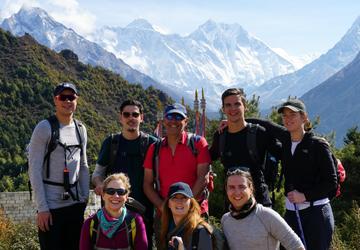
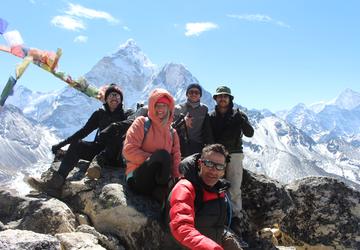
- Stand proudly at the foot of the world's highest mountain, Everest Base Camp, surrounded by the majestic Khumbu Glacier and Icefall, with Lhotse and Everest towering above you – a truly monumental achievement and a sight to behold!
- Witness an unforgettable sunrise over Mount Everest from the iconic Kala Patthar (5,545m), as the first golden rays illuminate the snow-capped peaks, offering the finest panoramic views of the Everest massif.
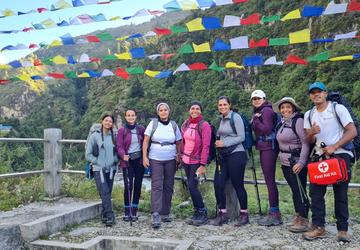
- Experience a thrilling mountain flight to Lukla, gateway to the Everest region, and immerse yourself in the rich Sherpa culture as you traverse charming villages, stay in local lodges, and taste authentic Nepalese food along the legendary trekking trails.
- Be continually captivated by sweeping Himalayan vistas, including Thamserku and Ama Dablam, with strategic acclimatization hikes to places like Syangboche and Nagarjun Hill, ensuring you enjoy every moment of these magnificent mountain panoramas.
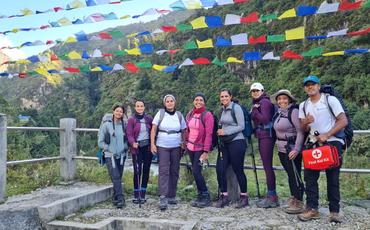
- Journey through diverse landscapes, from dense rhododendron forests to rocky, windswept trails, crossing iconic suspension bridges, including the famous Hillary Bridge, as you make your way through Sagarmatha National Park.
- Explore the vibrant Sherpa town of Namche Bazaar, an amphitheatre of activity with its unique shops and bakeries, and discover the spiritual heart of the Khumbu at Tengboche Monastery, the oldest and largest in the region, nestled amidst breathtaking mountain scenery.
Everything you need to picture the adventure and pack with confidence — in one free PDF.
What's inside the PDF
Day-by-day itinerary
Every day mapped out, covering activities, travel times, meals and where you'll stay.Packing & kit list
Exactly what to bring, from clothing and essentials to luggage guidelines and what's available to hire locally.What's included
Accommodation, transport, guides and meals, so you can see exactly what your price covers.
Summary
Everest Base Camp Trek is a dream destination for trekkers around the world. And why wouldn’t it be? This 14 day trek really has got everything from lovely Sherpa villages to the classic trekking trails found nowhere else. Let's not forget the obvious, the famed Himalayas and the world’s highest mountain, Mt. Everest!
Starting off with a flight to Lukla town from Kathmandu, trekkers get to experience a thrilling mountain flight. Our journey follows dense forest trail and leads us to several high bridge crossings. And later on, captivates us with a breathtaking sight that comes out once we arrive at the Everest Base Camp. There is simply no limit to what you can do once you visit this place. You can stay overnight in lodges run by local families, and taste authentic Nepalese food. In addition to that, you will also get to admire the sunrise view over the summit of Mt. Everest from Kalapatthar (5,545m). All in all, this trip introduces you to a classic adventure that is sure to leave you in awe.
Your domestic flight (Kathmandu to Lukla and back) is included in the trip cost! Prices are based on two adults sharing. If you are a solo traveller there may be a mandatory single supplement fee. Please note food is not included in this trek - we offer the same with food included - just ask our team
If you are interested in a private tour then this operator offers a very competitive price - get in touch with our team to get a quote for your group.
Itinerary
Day 1
Arrival Day in Kathmandu
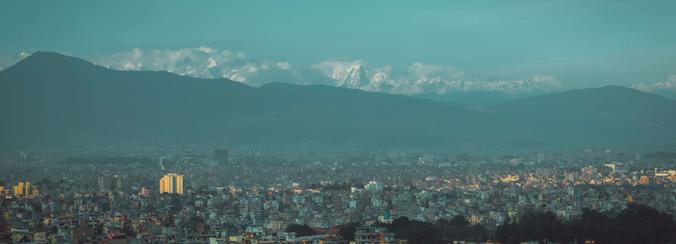
Elevation: Kathmandu 1,338m / 4,390ft
Welcome to Nepal! As you arrive at Tribhuvan International Airport, your driver will be waiting to greet you warmly and transfer you to your guesthouse or hotel (your airport transfer is included). Once you've checked in and settled, we'll hold a pre-trip meeting to talk through the trek ahead and check in on everyone's health and fitness, so we all set off feeling confident. We'd suggest a short stroll around the local streets to stretch your legs and soak up the buzz of Kathmandu. Your representative will also confirm the time of tomorrow's domestic flight to Lukla.
Please note: during peak trekking season (spring and autumn), all Lukla flights operate from Manthali rather than Kathmandu. Manthali is roughly a 4–5 hour drive away, so this often means an early start on Day 2.
Day 2
Fly to Lukla, trek to Phakding - 2,652m/8,700ft - 9km / 3 to 4 hours
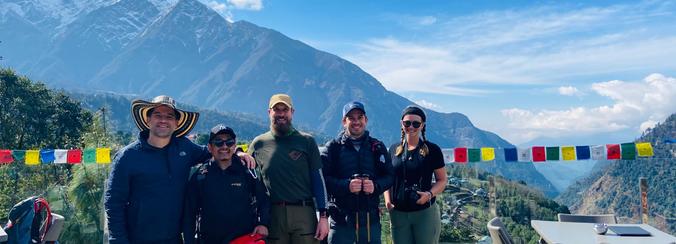
2,652m / 8,700ft · 9km · 3–4 hours
This morning we transfer to the airport (included) for the short, spectacular flight to Lukla — one of the most scenic mountain flights anywhere. You'll have been given your flight time at last night's meeting; if it's an early departure, your guide will arrange breakfast to take with you. Try to sit on the left of the aircraft for the finest views during the roughly 20–35 minute flight (a little shorter from Manthali, longer from Kathmandu). At Lukla you'll meet the rest of your crew — the porters — and enjoy a tea or coffee while they organise the luggage. Your guide then leads you through the National Luminary Pasang Lhamu Memorial Gate, where the great adventure truly begins. It's around an hour's walk to Thado Koshi; you can stop for lunch here or carry on to eat at the lodge. Either way, you'll walk beside the rushing Dudh Koshi river, crossing suspension bridges and pausing for a famous glass of mango juice before arriving in Phakding. Collect your room key and rest, or explore the village and its nearby monasteries, before the group gathers for dinner around 7:30pm.
Day 3
Phakding to Namche Bazaar - 3,400m/11,283ft - 12 km / 5 to 6 hours
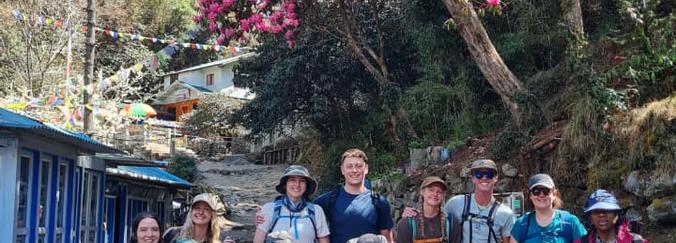
3,440m / 11,283ft · 12km · 5–6 hours
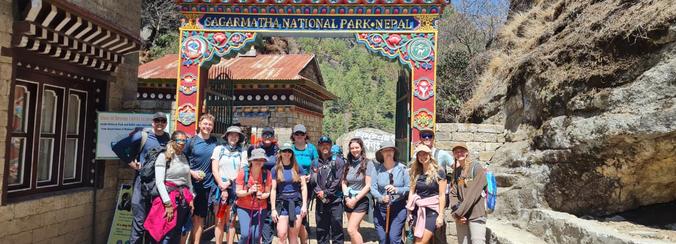
After breakfast at the tea house, we pack up and hand our duffel bags to the porter team before setting off. Your leader will brief you on the day ahead, then we follow rocky forest trails wrapped in rolling hills, entering Sagarmatha National Park through its large stone-stepped gateway. It's mostly downhill to our lunch stop at Jorsale — after which the real challenge begins, with a demanding uphill climb to Namche. Along the way we cross two suspension bridges, the iconic Hillary Bridge among them, and if the skies are clear you'll catch your very first glimpse of Mount Everest just beyond it. The air cools as we climb, and depending on the season there may be a little light rain or wind, before we finally reach the famous Sherpa town of Namche Bazaar. Check in to your cosy stone-and-timber lodge and rest, or explore this amphitheatre of a village — full of restaurants, bakeries and shops, with ATMs on hand if you need them.
Day 4
Syangboche - 3,780m/12,402ft - 4-9 km / 3-6 hours
3,780m / 12,402ft · 4–9km · 3–6 hours
Today we climb above 3,000m, where the altitude can begin to be felt. It won't affect everyone, but a mild headache or a little dizziness is completely normal at first, and your guide will keep a close eye on everyone, making sure you're well hydrated and fuelled. This is a magnificent day for views: Thamserku, Ama Dablam and Everest itself all come into sight. We hike up towards Syangboche and the Everest View Hotel at around 3,800m, where we pause for a pot of tea or coffee and drink in that unforgettable Everest panorama. This gentle "climb high, sleep low" outing is key to good acclimatisation, so afterwards we return to our Namche lodge for a second night's rest before dinner.
Day 5
Namche Bazaar to Tengboche - 3.860m/12,660ft - 12km / 6 hours
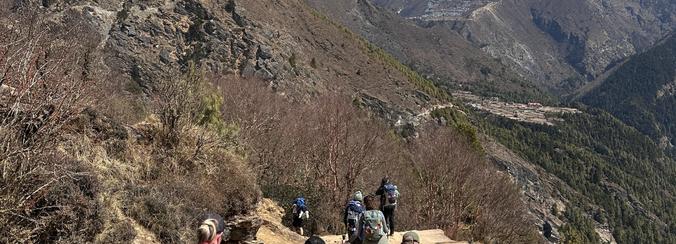
3,860m / 12,660ft · 12km · 5–6 hours
After breakfast we set off towards Tengboche and its great circling prayer wheel. The morning is a lovely, mostly level walk with Ama Dablam for company, then a descent through beautiful rhododendron forest — a good moment for some dried fruit or an energy bar. We cross a striking suspension bridge to reach Phunki Thangka, our lunch spot, before a steep, forested climb up to Tengboche, where a real sense of achievement greets you at the top. Once you've settled into your lodge, explore the area's highlight: Tengboche Monastery, the oldest and largest in the Khumbu, rebuilt in 1989 after a fire (you may even spot the monks playing football). Treat yourself to cake and pastries at a nearby bakery, then enjoy a relaxed evening at the lodge.
Day 6
Tengboche to Dingboche - 4,410m/14,464ft - 11km / 5-6 hours
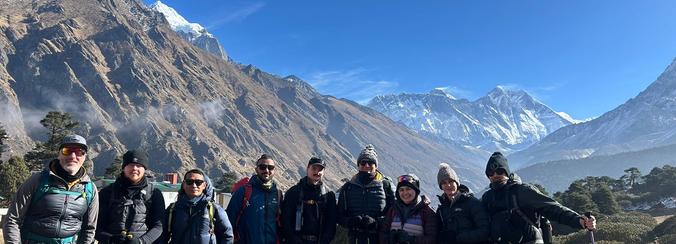
4,410m / 14,464ft · 11km · 5–6 hours
The day begins gently, descending through fragrant forest to Deboche and across the Imja Khola on a suspension bridge, with yak pastures dotting the landscape. A steady climb then brings us to Pangboche, where sweeping Himalayan views open up and a tea house makes a welcome spot for a refreshing drink. From here we continue through rocky, windswept trails, stopping for lunch at a tea house along the way as the air grows thinner — so keep sipping water and topping up your energy. Crossing several hills in the late afternoon, spirits lift as our tea house comes into view at Dingboche, a village of chortens, stone-walled fields and a handful of welcoming lodges, where we spend the night.
Day 7
Dingboche to Nagarjun Hill - 5,100m/16,728ft - 6km / 4-5 hours
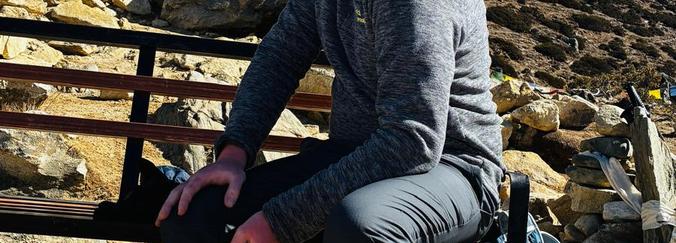
5,100m / 16,728ft · 6km · 4–5 hours
Wake to some of the most beautiful mountain views of the whole trek, right from your lodge window. After an early breakfast we set off on our second acclimatisation hike, and your guide will talk you through two options. The first is Nangkartshang (Nagarjun) Hill — around two and a half hours up and half an hour down a steady slope, rewarded with prayer-flag-draped ridges and a magnificent mountain panorama. The alternative is a tougher, rockier climb to Chhukhung at 5,559m / 18,238ft — around 7–8 hours in all, but hugely rewarding, with close-up views of Ama Dablam, Lhotse, Island Peak and more. Whichever you choose, we return to our lodge afterwards for a well-earned rest and dinner.
Day 8
Dingboche to Lobuche - 4,910m/16,105ft - 12km / 5-6 hours
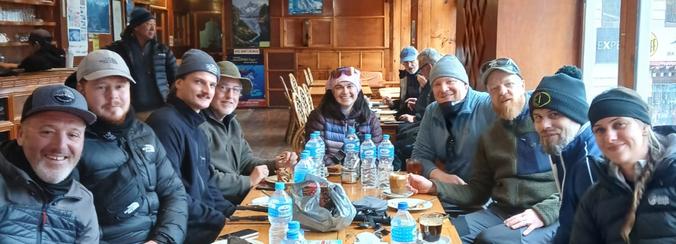
4,910m / 16,105ft · 12km · 5–6 hours
After breakfast we climb steadily out of Dingboche, following gradual trails with the Himalayas rising to the south, towards our lunch stop at Dughla (Thukla). Crossing rocky terrain and clear mountain streams, we refuel at one of Dughla's couple of tea houses before tackling the short, steep climb to Thukla Pass. At the top we're surrounded by mountains as far as the eye can see, and we pass the moving memorials to the many brave climbers who have lost their lives on Everest. A gentler walk of just over an hour, with Lobuche Peak ahead, brings us to our lodge at Lobuche for the night.
Day 9
Lobuche to Everest Base Camp - 5,364m/17,594 - 12km / 9 hours
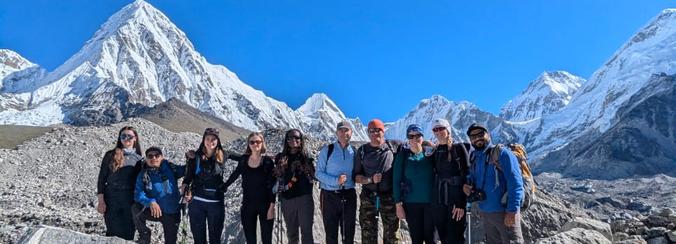
Everest Base Camp 5,364m / 17,594ft · 12km · around 9 hours
Today is the big one — the day we've all been waiting for. We begin with a rugged, rocky walk to Gorakshep over sometimes-unstable ground with no clear path, so keep your trekking poles to hand and take it steady. At Gorakshep we check in to our lodge, rest and have lunch, before setting off on the narrow trail to Everest Base Camp itself. Your guide will keep you safe and steady every step of the way. And then — you're there. Take a moment to feel enormously proud: you're standing at the foot of the highest mountain on Earth, surrounded by the Khumbu Glacier and Icefall, with Lhotse and Everest towering above. Take your photos, soak it in, and celebrate — mission accomplished! We then retrace our steps to Gorakshep for dinner and a good rest.
Day 10
Gorakshep to Kalapatthar to Pheriche at 4,210m/13,809ft - 12km / 7 hours
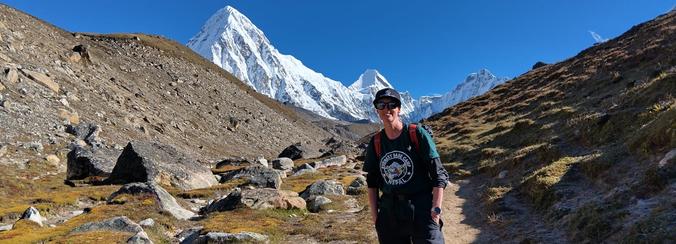
Kala Patthar 5,545m / 18,192ft · Pheriche 4,210m / 13,809ft · 12km · around 7 hours
A very early start today for the climb to Kala Patthar, to witness sunrise over Everest between roughly 5am and 7am. It's a steady ascent in the dark, so have your head torch ready. As you climb you may hear the eerie crack and rumble of ice from Nuptse, and at the top you're treated to the finest Everest views of all, as first light turns the snow-capped peaks a glowing gold. Kala Patthar is the coldest point of the trek, so wrap up thoroughly, head to toe, keeping exposed skin covered — and a bowl of hot garlic soup back in Gorakshep works wonders. After this magical sunrise we descend to our rest stop for the night at Pheriche.
Day 11
Pheriche to Namche Bazaar at 3,440m/11,280ft - 15km / 6 hours
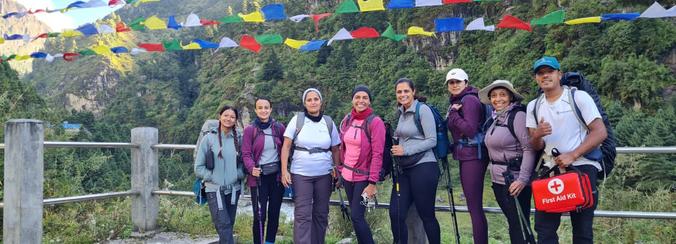
3,440m / 11,280ft · 15km · 6 hours
We set off early to retrace our route towards Namche, a day that's largely downhill in gradual stages. You'll notice how much easier breathing becomes as we lose altitude, and the now-familiar trail feels different with your goal accomplished. We'll stop at Pangboche or Tengboche for lunch before the final descent into Namche Bazaar, where there's plenty of time to pick up souvenirs and relax.
Day 12
Namche Bazaar to Lukla at 2,800m/9,184ft - 19km / 7 hours
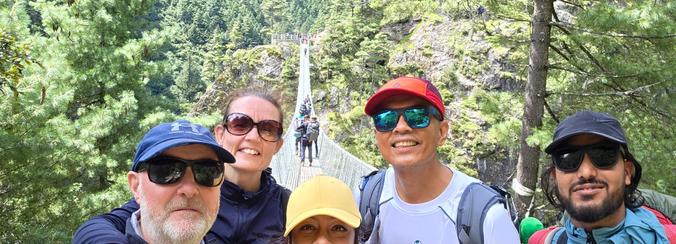
2,800m / 9,184ft · 19km · 7 hours
Our final trekking day — and another to celebrate! We make our way back to Lukla, crossing river tributaries and the Phakding valley, drinking in the Himalayan atmosphere one last time. There's time for a drink, a dance and a proper celebration of everything you've achieved. Tipping is customary here, and greatly appreciated: your contributions to the porters and guides directly support the local people and communities who help make this incredible journey possible. We enjoy a final evening together at our tea house before resting up.
Day 13
Fly from Lukla to Kathmandu at 1,338m/4,390ft
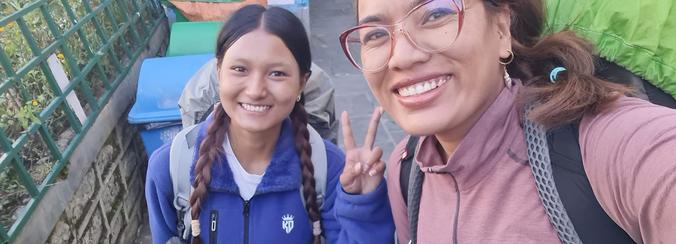
1,338m / 4,390ft
Savour one last morning in the heart of the Khumbu before boarding our flight back to Kathmandu (most often a morning departure, though times vary — your guide will confirm the details). On arrival you'll transfer to your guesthouse or hotel with the rest of the day at leisure — explore a little more, keep celebrating, or simply put your feet up. This evening we gather for a farewell dinner, hosted by the operator at a lovely restaurant near Thamel — the one included meal of your trip, and a fitting way to toast your achievement together.
Day 14
Departure Day!
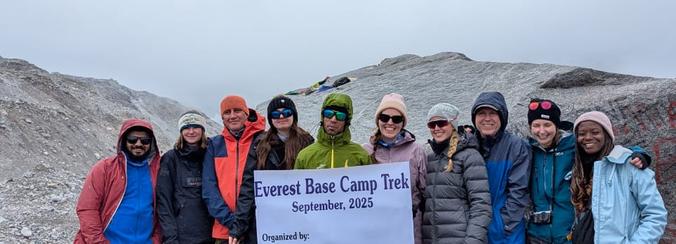
Kathmandu 1,338m / 4,390ft
Today your adventure comes to an end. After breakfast there's time to say goodbye to your fellow trekkers before your included transfer to the airport for your onward flight — we'll aim to have you there around three hours before departure. Safe travels home, and congratulations on reaching the foot of the world's highest mountain
Good to know: airport transfers (arrival, to/from the Lukla flights, and departure) are included. Accommodation is a guesthouse or hotel in Kathmandu and tea houses along the trail. Meals are not included except the farewell dinner on the final evening, leaving you free to choose from the tea house and restaurant menus along the way.
What's Included
Accommodation
Twin-share Hotel (2 Nights) Twin-share Local Lodges & Tea Houses (11 Nights)
Meals
Breakfasts: 2, Lunches: 0, Dinners: 0
Vegetarian options are available on all meals throughout the adventure.
Vegetarian options availableLocal Guide
GuidedThis adventure is led by a local guide throughout. The main language of this adventure is English. Please contact us for other languages available.
Airport Transfers
IncludedWifi
Wifi is available during the adventure. In some areas and / or accommodation / transport Wifi may be free.
Dates & Prices
Oct 2026
from £935Nov 2026
from £975Dec 2026
from £935Jan 2027
from £975Feb 2027
from £975Mar 2027
from £975Apr 2027
from £975May 2027
from £975Jun 2027
from £975Jul 2027
from £975Aug 2027
from £975Sep 2027
from £975Oct 2027
from £975Nov 2027
from £975Dec 2027
from £975Jan 2028
from £975Feb 2028
from £975Mar 2028
from £975Apr 2028
from £975May 2028
from £975Jun 2028
from £975Jul 2028
from £975Aug 2028
from £975Sep 2028
from £975Oct 2028
from £975Nov 2028
from £975Dec 2028
from £975
December 2026
7 departures- Save 17%Saturday 5 Dec 2026to Friday 18 Dec 20266+ spaces of 12 leftGuaranteed Departure£1,175£975
- Save 17%Sunday 6 Dec 2026to Saturday 19 Dec 20266+ spaces of 12 leftGuaranteed Departure£1,175£975
- Save 17%Saturday 12 Dec 2026to Friday 25 Dec 20266+ spaces of 12 leftGuaranteed Departure£1,175£975
- Save 17%Sunday 13 Dec 2026to Saturday 26 Dec 20266+ spaces of 12 leftGuaranteed Departure£1,175£975
- Save 17%Saturday 19 Dec 2026to Friday 1 Jan 20276+ spaces of 12 leftGuaranteed Departure£1,175£975Book for£200 today, pay the rest later
- Save 17%Sunday 20 Dec 2026to Saturday 2 Jan 20276+ spaces of 12 leftGuaranteed Departure£1,175£975Book for£200 today, pay the rest later
- Save 17%Saturday 26 Dec 2026to Friday 8 Jan 20276+ spaces of 12 leftGuaranteed Departure£1,127£935Best offerBook for£200 today, pay the rest later
Make this tour private
Every departure on this trip can be booked just for your own group — your dates, your people, the same expert local guides.
What changes when you go private
Travel with just your own group
No other travellers on the trip — just the people you choose to bringTravel on your schedule
Pick your exact start date—no fixed group departures or rigid timetables.Exclusively for your party
Enjoy this handcrafted itinerary with a dedicated private guide just for you.
Customer reviews & ratings
Anyone thinking of going to Nepal, EBC just book it! life changing experience unforgettable experience all thanks to Icicles.Was met at the airport by my guide Prakash and taken to my hotel to meet Indira the company boss, lovely girl! This team looked after me from start to finish, Prakash was a great guide very professional! Always pointing out wildlife and any points of interest and we had a good laugh along the way, and not to mention my Sherpa Modam? And as a solo trekker I met some amazing people along the way who we’ve become friends.Many thanks to you all! Will definitely return island peak? .
Heath A VerifiedCould not recommend Icicles enough! We came to Nepal on the Everest Base Camp trip but due to weather couldnt fly into Lukla to start to trip. Within a few hours we had picked a new trek to do the Manaslu Circuit instead and everything was organised to start the following morning. Ram and Sonny were the best guides we could have asked for, we felt safe and looked after at every step. If you're looking for a more challenging and remote hike seriously think about Manaslu, it was incredibly worth it and the trip of a lifetime!!
The Three P Sep, 2022 Verified
Essential trip information
Our Important Notes and Packing List cover all essentials, from necessary equipment to inclusions, ensuring you're fully equipped and informed for this extraordinary adventure and more.
Frequently asked questions


Still have questions?
Can't find the answer you're looking for? Please chat to our friendly team.
Why book with us
Help Change The World
We collaborate with local businesses and communities.
Best Price Guaranteed
We won't be beaten on price. If you find this adventure at a lower price please get in touch!
You're In Good Hands
We work with trusted tour operators around the world.
You're spoilt for choice
We have the best choice of adventures on the market.