Climb Kilimanjaro: Rongai Route - 7 Days
Trip Snapshot
Genders
- Female35%
- Male65%
Average age
Start / End
- Moshi
- Moshi
Physical rating
Group size
2 - 20Meals included
20Highlights
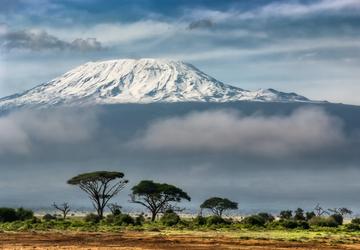
- Ascend with Confidence: Embrace the Rongai Route, celebrated for its relatively high summit success rate and a more gentle gradient, offering a superb and often less strenuous path to Kilimanjaro's peak.
- Immersive Wildlife & Secluded Trails: Trek through a vibrant, wildlife-rich forest at the start of your journey, where sightings of birds and monkeys enhance the adventure, all while enjoying the unique solitude of Kilimanjaro's most secluded route.
- Spectacular Panoramas & Volcanic Grandeur: Witness "terrific views of Kibo" and the first glimpses of its eastern ice fields, culminating in the dramatic vista from Mawenzi Tarn, nestled beneath the towering spires of Mawenzi peak.
- Traverse the Lunar Saddle: Experience the unique and awe-inspiring "lunar desert of the ‘Saddle’" as you journey between the Kibo and Mawenzi peaks, leading you to the final Kibo Hut base camp.
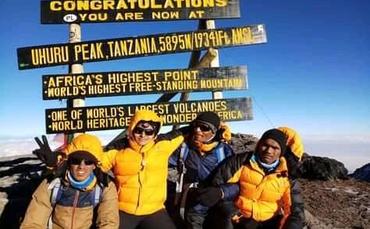
- Triumphant Summit & Unforgettable Sunrise: Begin your challenging yet rewarding summit night between midnight and 2 a.m., aiming for the most magnificent sunrise from Stella Point before conquering Uhuru Peak – the Roof of Africa – for an unparalleled sense of accomplishment.
- Dedicated Expert Support: Climb with peace of mind, backed by highly experienced, Wilderness First Responder certified guides and a dedicated support crew, ensuring your safety, comfort, and success throughout this epic 7-day adventure.
Everything you need to picture the adventure and pack with confidence — in one free PDF.
What's inside the PDF
Day-by-day itinerary
Every day mapped out, covering activities, travel times, meals and where you'll stay.Packing & kit list
Exactly what to bring, from clothing and essentials to luggage guidelines and what's available to hire locally.What's included
Accommodation, transport, guides and meals, so you can see exactly what your price covers.
Summary
The Rongai route is known for its relatively high success rate in reaching the summit of Mount Kilimanjaro.
The trek starts in a wildlife-rich area near the Kenya-Tanzania border. As you hike through the Rongai forest, you may encounter various species of birds, monkeys, and other wildlife. This adds an extra element of excitement and adventure to your trek.
This is generally considered to have a less steep and more gentle gradient compared to other popular routes like Machame or Umbwe. Like all summit attempts it is still a serious undertaking requiring appropriate training.
If you prefer a more secluded trek with fewer climbers around, Rongai can be a great option.
Itinerary
Day 1
NALE MURU GATE – SIMBA CAMP: 7k /4.3mi | 3-4 hrs | Rainforest
Departing from Moshi a 4-5 hour drive will take you through the coffee plantations and Village of Nale Muru to the Kilimanjaro National Park Gate. We will patiently wait for our permits to be issued while watching the hustle and bustle of operations as many crews prepare for the journey ahead. Enjoy the beautiful wooded scenery, and windy trails while your guide tells you about the local flora and fauna and natural wildlife you are likely to see. Simba camp sits near the first cave at the edge of the moorland zone with spectacular views of the plains of Kenya. Elevation: 1997m/6552ft to 2635m/8645ft Altitude gained: 638m
Day 2
SIMBA CAMP – SECOND CAVE CAMP: 5.8km/3.6mi | 5-6hrs | Moorland
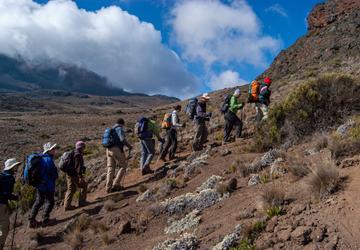
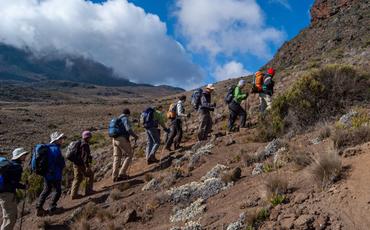
After a good night sleep and a hearty breakfast we continue along moorland terrain on a consistent ascending path. You will catch some terrific views of Kibo and get your first glimpse of the ice fields on the Eastern crater rim. The small shrubs of the moorland became thinner as you approve the Second Cave. Temperatures begin to drop. Elevation: 2635m/8645ft to 3487m/11440ft Altitude gained: 852m
Day 3
SECOND CAVE CAMP – KIKELEWA CAMP: 5.95km/3.7mi | 2-3hrs | Semi Desert
After breakfast and packing, you continue your stead ascent across the Moorland towards the jagged peaks of Mawenzi. This relatively short hiking day brings you closer to the Easter ice fields, continually drawing your attention to their beauty. Pay attention to your body and keep your guide informed of any signs of altitude sickness. Elevation: 3487m/11,440ft to 3675m/12057ft Altitude gained: 188m
Day 4
KIKELEWA CAMP- MAWENZI TARN: 3.75km/2.3mi | 3-4hrs | Semi Desert
A short but steep climb up grassy slopes is rewarded by superb views. Leave the vegetation behind shortly before reaching the next camp at Mawenzi Tarn, spectacularly situated in a cirque directly beneath the towering spires of Mawenzi. The afternoon will be free to rest or explore the surrounding area as an aid to acclimatization. If you are spending an extra day on the mountain, you will camp for two nights here. You can hike up and around Mawenzi for your acclimatization hike. Elevation: 3487m/11440ft to 4302m/14114ft Altitude gained: 627m
Day 5
MAWENZI TARN – KIBO HUT: 8.9km /5mi | 4-5hrs | Alpine Desert
Cross the lunar desert of the ‘Saddle’ between Mawenzi and Kibo to reach Kibo campsite at the bottom of the Kibo crater wall. The remainder of the day is spent resting in preparation for the final ascent on Summit Night. Elevation: 4302m/14,114ft to 4714m/15,466ft Altitude gained: 412m
Day 6
KIBO HUTS – SUMMIT: 4km /2.5 mi up | 5-7hrs | – HOROMBO HUTS: 15.75km /9.8mi down | 5-6hrs | Glaciers, Snow Capped Summit
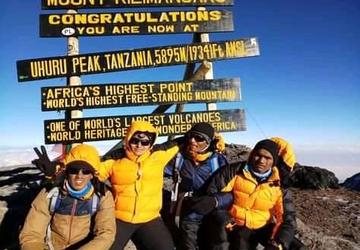
Excitement is building as morning comes with an early start between midnight and 2 a.m. This is the most mentally and physically challenging portion of the trek. We continue our way to the summit between the Rebmann and Ratzel glaciers trying to stay warm and focused of the amazing sense of accomplishment that lies ahead. With a switchback motion in a northwesterly direction and ascend through heavy scree towards Stella Point on the crater rim. You will be rewarded with the most magnificent sunrise during your short rest here. Faster hikers may view the sunrise from the summit. From here on your remaining 1 hour ascent to Uhuru Peak, you are likely to encounter snow all the way. Congratulations, one step at a time you have now reached Uhuru Peak the highest point on Mount Kilimanjaro and the entire continent of Africa! After photos, celebrations and maybe a few tears of joy we take a few moments to enjoy this incredible accomplishment. We begin our steep descent down to Mweka Camp, stopping at Barafu for lunch and a very brief rest. We strongly recommend gaiters and trekking poles for uncooperative loose gravel and volcano ash terrain. Well-deserved rest awaits you to enjoy your last evening on the mountain. Overnight Mweka Camp. Elevation: 4302m/14,114ft to 5895m/19,341ft Altitude gained: 721m Descent to 3721m/12,208ft Altitude lost: 2174m
Day 7
HOROMBO HUTS – MARANGU GATE – MOSHI: 20km/12.5mi |6-7hrs | Rainforest
After breakfast and a heartfelt ceremony of appreciation and team bonding with your crew it’s time to say goodbye. We continue the descent down stopping at the Mandara Huts for lunch. Remember to tip your guides, cooks, and porters, since you will be leaving them here. You return back to the Marangu Park Gate and receive your summit certificates. As the weather is drastically warmer, the terrain is wet, muddy and steep and we highly recommend Gaiters and trekking poles. From the gate, a vehicle will meet you to drive you back to your hotel in Moshi (about 45 minutes). Elevation: 3721m/12,208 to 1905m/6250ft Altitude lost: 1816m
What's Included
Accommodation
3 nights simple mountain hut, 3 nights camping
Meals
Breakfasts: 7, Lunches: 7, Dinners: 6
Vegetarian options are available on all meals throughout the adventure.
Vegetarian options availableLocal Guide
GuidedThis adventure is led by a local guide throughout. The main language of this adventure is English. Please contact us for other languages available.
Wifi
Wifi is available during the adventure. In some areas and / or accommodation / transport Wifi may be free.
Dates & Prices
Oct 2026
from £1,625Nov 2026
from £1,625Dec 2026
from £1,625Jan 2027
from £1,625Feb 2027
from £1,625Mar 2027
from £1,625Apr 2027
from £1,625May 2027
from £1,625Jun 2027
from £1,625Jul 2027
from £1,625Aug 2027
from £1,625Sep 2027
from £1,625Oct 2027
from £1,625Nov 2027
from £1,625Dec 2027
from £1,625
October 2026
2 departures- Save 4%Sunday 18 Oct 2026to Saturday 24 Oct 20266+ spaces of 20 left£1,685£1,625
- Save 4%Sunday 25 Oct 2026to Saturday 31 Oct 20266+ spaces of 20 left£1,685£1,625
Make this tour private
Every departure on this trip can be booked just for your own group — your dates, your people, the same expert local guides.
What changes when you go private
Travel with just your own group
No other travellers on the trip — just the people you choose to bringTravel on your schedule
Pick your exact start date—no fixed group departures or rigid timetables.Exclusively for your party
Enjoy this handcrafted itinerary with a dedicated private guide just for you.
Customer reviews & ratings
We climbed the Rongai route over 6 days with our guide Benny and assistant guide Kenny. As well as the rest of our great team of porters. Everyone was absolutely incredible throughout the whole trip. My dad and I were treated like royalty throughout the week and even though summit night was extremely difficult, I wouldn't have been able to make it without Benny and Kenny - they were amazing!
Donna Oct, 2023 VerifiedAbsolutely brilliant organisation. Joseph & his team are a credit to your company. They treated me very well and thanks to Joseph I made it to the summit. He is so knowledgeable & experienced but also good fun & talkative to be around. I couldn't have wished for a better team - Abuu's cooking was five star, he is such a talent & all the other lads looked after me (Elbricke especially tended to anything I needed) & everyone was great company & engaging - I will miss them - they worked so hard all week.
Tammy Feb, 2023 Verified
Essential trip information
Our Important Notes and Packing List cover all essentials, from necessary equipment to inclusions, ensuring you're fully equipped and informed for this extraordinary adventure and more.
Frequently asked questions
Still have questions?
Can't find the answer you're looking for? Please chat to our friendly team.
Why book with us
Help Change The World
We collaborate with local businesses and communities.
Best Price Guaranteed
We won't be beaten on price. If you find this adventure at a lower price please get in touch!
You're In Good Hands
We work with trusted tour operators around the world.
You're spoilt for choice
We have the best choice of adventures on the market.