The Inca Trail – Am I Fit Enough?
What the trek involves and how to prepare for it

by The Adventure People on 3rd October 2018
Would you like to write for our blog? Please send an email to hello@theadventurepeople.com we'd love to hear your ideas!
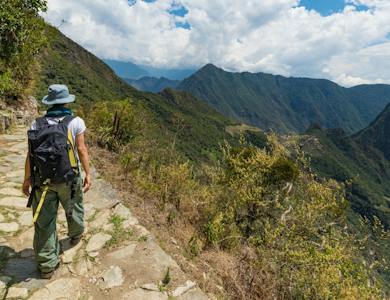
"Am I fit enough?" is one of the most common questions we hear from travellers thinking about the Inca Trail. The short answer: if you can walk for five to seven hours on hilly ground, then do it again the next day, you have the foundations to complete it.
The Classic Inca Trail is a moderately challenging trek, not a technical climb. Thousands of people complete it every year, from teenagers to travellers in their seventies. What makes it demanding is the combination of altitude, steep stone steps and several long days in a row.
This guide covers what the trek involves day by day, what fitness level you need, a 12-week training plan, how the Inca Trail compares with the Lares and Salkantay treks, and how to plan time in Cusco so you start the trail acclimatised.

What to expect on the Inca Trail
The Classic Inca Trail covers around 42km (26 miles) over four days, starting at Kilometre 82 in the Sacred Valley and finishing at Machu Picchu. The figures that matter most for fitness are below.
Inca Trail at a glance | |
|---|---|
Distance | Around 42km (26 miles) |
Duration | 4 days, 3 nights camping |
Walking per day | Roughly 5–9 hours on days 1–3; 2–3 hours on day 4 |
Highest point | Dead Woman's Pass (Warmiwañusca), 4,215m (13,829ft) |
Start point | Kilometre 82, around 2,700m (8,860ft) |
End point | Machu Picchu, 2,430m (7,972ft) |
Terrain | Uneven stone paths and long flights of steep Inca steps, up and down |
What you carry | A daypack; porters carry up to 7kg of your kit |
Trail closure | Closed every February for maintenance |
How the effort builds day by day
Campsites vary between operators, so the exact split of each day differs. The overall shape of the trek stays the same.
- Day 1 – the warm-up. A steady walk along the Urubamba valley past Inca sites such as Llactapata, with gradual climbs. Most people find it comfortable, though the 4:30am pick-up from Cusco makes for a long day.
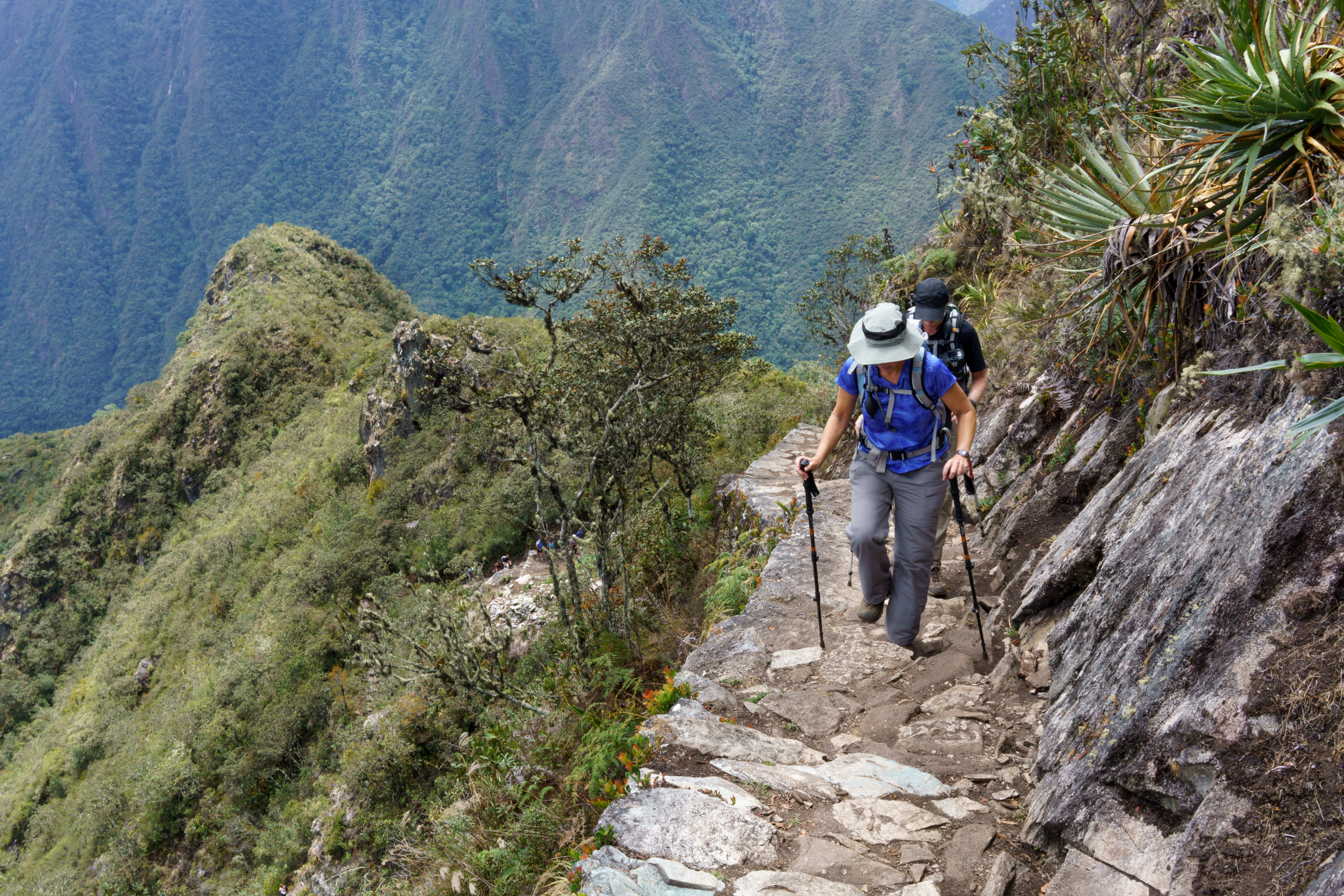
- Day 2 – the big climb. The hardest day. The trail climbs roughly 1,200m to Dead Woman's Pass, much of it on high stone steps, before a steep descent into the Pacaymayo valley. Some itineraries continue over the second pass the same afternoon.
- Day 3 – the long descent. Often the longest day on foot. It crosses the Runkurakay Pass (around 3,950m) and then descends through cloud forest on thousands of stone steps. Expect tired thighs and knees rather than heavy breathing.
- Day 4 – Machu Picchu. A pre-dawn start, then around an hour to the Sun Gate (Inti Punku) and down into Machu Picchu for a guided tour. Short on distance, but it follows three hard days.
Conditions change with altitude. Days lower down in the cloud forest can be warm and humid, while nights at the higher campsites can drop close to freezing, especially in the dry season (around May to September).
How fit do you need to be for the Inca Trail?
You need a moderate, all-round level of fitness: enough stamina to walk for most of the day, and enough leg strength to handle hundreds of steep steps in both directions. You don't need to be an athlete, and previous multi-day trekking experience isn't required.
That said, "exercise" here doesn't mean running a marathon every year. If you go to the gym, play a sport, walk regularly or spend hours gardening, you are likely to have a good base. If you don't exercise at all right now, a few months of steady training is usually enough to get you ready.
A quick self-check
Ask yourself whether you could currently:
- Walk for 5–6 hours on a hilly route with a light daypack, without needing a long recovery.
- Do a long walk on two consecutive days and still feel able to go again on a third.
- Climb 20–30 flights of stairs at a steady pace, with short pauses.
- Walk downhill for an hour without knee pain.
If the answer is yes to most of these, you are in a good position. If not, the training plan below is designed to get you there.
What makes the Inca Trail hard
- The steps. Much of the trail is original Inca stonework, with uneven, knee-high steps. Descending them is often harder on the legs than climbing.
- The altitude. Above 3,000m there is noticeably less oxygen, so even fit trekkers walk slowly and breathe hard on Day 2.
- Back-to-back days. No single day is extreme, but fatigue builds, and early starts and nights in a tent mean less sleep than usual.
What makes it achievable
- You walk at your own pace. Groups spread out, and guides walk with the slowest trekkers.
- Porters carry your sleeping kit and clothes, so you only carry a daypack.
- Cooks prepare meals and campsites are set up for you, so your energy goes into walking.

Inca Trail training plan: 12 weeks to trek-ready
Three months of consistent training is enough for most people to go from a low base to comfortable on the trail. The plan below builds walking stamina, leg strength and confidence on steps, then tapers so you arrive fresh. Adjust it to your starting point, and check with your GP before starting if you have a health condition or haven't exercised for a while.
Weeks | Focus | Midweek | Weekend long walk | Strength (2x a week) |
|---|---|---|---|---|
1–4 | Build a base | 2–3 brisk walks of 45–60 mins, or cycling/swimming | 2–3 hours on mixed terrain | Bodyweight squats, lunges, calf raises, glute bridges, planks |
5–8 | Add hills and weight | 2–3 sessions of 60 mins, including hill or stair intervals | 4–5 hours with hills, carrying a 5–6kg daypack | Add step-ups and slow step-downs; hold weights if you can |
9–11 | Trek simulation | 2–3 sessions of 60–75 mins with sustained climbing | 5–7 hours, plus a shorter walk the next day (back-to-back) | Keep step-ups and step-downs; add single-leg work |
12 | Taper | 2 easy walks of 30–45 mins | One easy 2–3 hour walk | One light session, then rest |
The exercises that matter most
- Step-ups and slow step-downs. The closest match to Inca steps. Use a sturdy step or bench at knee height and lower yourself slowly to build control for the descents.
- Squats and lunges. Build the thigh and glute strength that powers you up Dead Woman's Pass.
- Calf raises. Strengthen calves and ankles for hours on uneven stone.
- Glute bridges and planks. A strong core and hips help with balance and reduce strain on your knees and back.
- Stair climbing. A stairwell, stadium steps or a stair machine is ideal training if you live somewhere flat.
Training tips
- Train in your trekking boots. New boots can rub and cause blisters. Wear them on every long walk so they are fully broken in before you fly.
- Train with your daypack. Pack water, layers and snacks so you get used to the weight you'll carry on the trail.
- Practise with trekking poles. Poles take pressure off your knees on descents. Metal tips aren't allowed on the trail, so use rubber tip covers.
- Find some hills. Good UK training ground includes the Peak District, Lake District, Bannau Brycheiniog (Brecon Beacons), Snowdonia and the South Downs. A full day on a big hill is the best preparation there is.
- Look after the basics. Eating well, sleeping well and not smoking all help your body cope with altitude.
Less than 12 weeks to go?
Prioritise the weekend long walk and stair or step sessions, and build up gradually rather than cramming. Even four to six weeks of regular walking and stairs will make a noticeable difference on the trail.

Altitude and acclimatisation
Acclimatisation matters more than fitness on the Inca Trail. Altitude sickness can affect anyone, however fit, and being fit doesn't make you less likely to get it. In fact, very fit trekkers sometimes push too hard on Day 2 because their legs feel fine.
Cusco sits at about 3,400m (11,150ft), and Dead Woman's Pass is 4,215m. Spending at least two full days in Cusco or the Sacred Valley before you start gives your body time to adjust to the thinner air. Three days is better if your schedule allows.
Signs to look out for
Mild symptoms include headache, breathlessness, tiredness, poor sleep and loss of appetite. Tell your guide if symptoms get worse rather than better, and never keep climbing with worsening symptoms. Read more about altitude sickness and what to do if it happens to you.
How to acclimatise well
- Take it easy on your first day at altitude, even if you feel fine.
- Drink plenty of water and avoid alcohol for the first couple of days.
- Try coca or muña tea, which are widely offered in Cusco.
- Walk slowly on climbs and keep a pace where you can still talk.
- Ask your GP about altitude medication such as acetazolamide (Diamox) before you travel.
Inca Trail vs Lares and Salkantay: which needs more fitness?
All three treks need a similar moderate fitness level, but they test you in different ways. The Inca Trail has the lowest high point of the three; the Salkantay and Lares treks climb higher but have far fewer stone steps.
Classic Inca Trail | Salkantay Trek | Lares Trek | |
|---|---|---|---|
Highest point | Dead Woman's Pass, 4,215m | Salkantay Pass, 4,630m | Condor Pass, up to 4,750m (varies by route) |
Main challenge | Steep stone steps, up and down, over three long days | Long days and the highest, coldest camp and pass | Short but steep climb to a very high pass |
Terrain | Paved Inca paths and staircases | Mostly earth and rock trails | Rural mountain paths through villages |
Walking days* | 3 long days plus a short final morning | 2 long days, then a lower day through cloud forest | Around 2.5 days, with Day 2 the longest |
Best for | History lovers who want to arrive at Machu Picchu on foot via the Sun Gate | Trekkers who want big mountain scenery and are comfortable with higher altitude | Travellers who want culture, fewer crowds and slightly less time on foot |
*Based on our 4-day versions of each trek.
If steps and knees are your main worry, Salkantay or Lares may suit you better. If altitude is your main concern, the Inca Trail's lower high point is an advantage. Whichever you choose, the same training plan and acclimatisation advice apply.
Explore our Salkantay treks and Lares treks.
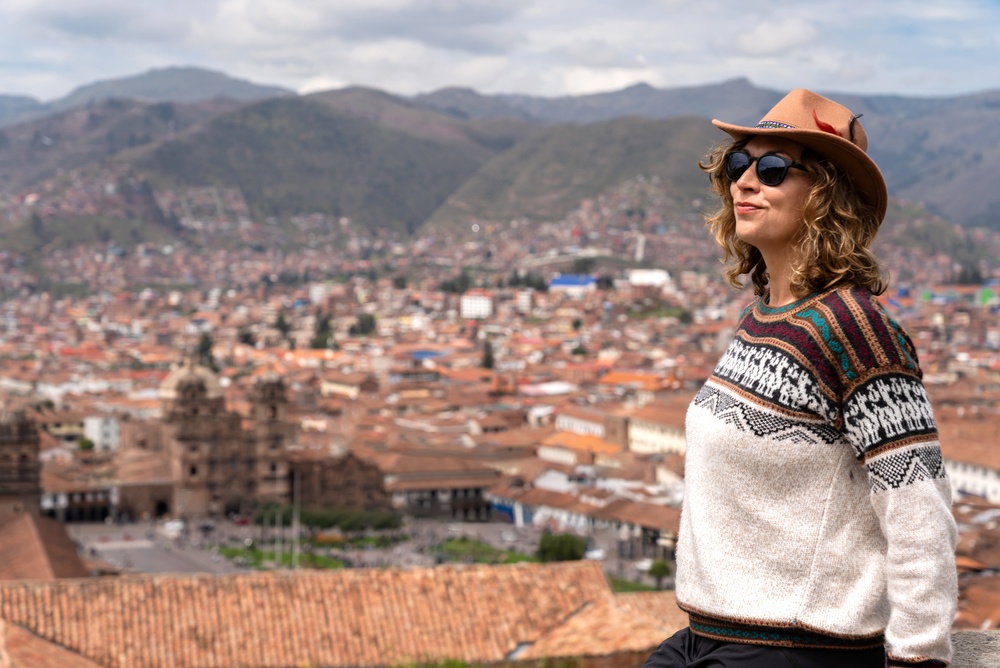
Planning your trip around the Inca Trail
Our Classic Inca Trail & Machu Picchu trek runs Cusco to Cusco and covers the trek only, so you can slot it into your own Peru itinerary. That flexibility means it's up to you to build in time to acclimatise before and recover after.
Before the trek: how long to spend in Cusco
Plan to arrive in Cusco at least two full days before your trek starts, and three if you can. A pre-trek briefing takes place the evening before you set off, and pick-up on Day 1 is around 4:30am, so you'll want to be settled and rested.
A simple three-day lead-in might look like this:
- Arrival day. Check in, rest and keep activity light. Drink plenty of water and have an early night.
- Day 2. Explore Cusco on foot at an easy pace: the Plaza de Armas, San Pedro market and the Qorikancha temple.
- Day 3. A gentle walk up to Sacsayhuamán above the city, or a day trip into the Sacred Valley. Attend your trek briefing in the evening.
- Day 4. Start the Inca Trail.
The Sacred Valley sits several hundred metres lower than Cusco, so staying in Urubamba or Ollantaytambo for your first nights can make acclimatising easier. Pick-ups for the trek are also available from both towns. Save higher excursions such as Rainbow Mountain, which tops 5,000m, for after the trek rather than before.
Fitting the trek into a wider South America trip
- Book early and build your plans around the permit. Inca Trail permits are limited, named and tied to a fixed date, so secure your trek first and plan the rest of your trip around it.
- Arrive from altitude if you can. If you're travelling independently, time spent beforehand in places such as Lake Titicaca or La Paz counts towards acclimatisation. Arriving straight from Lima, the coast or the Amazon means you'll need the full two to three days in Cusco.
- Avoid February. The trail closes every February for maintenance, so plan another trek or Machu Picchu by train if you're travelling then.
Prefer acclimatisation built in? Our Inca Trail, Sacred Valley & Machu Picchu - 8 Days package includes time in the region before the trek.
After the trek: recovery
You return to Cusco by train and transfer on the evening of Day 4, usually tired and with sore legs. Leave at least one full rest day before any long-haul flight or further big activities. Gentle walking, stretching and a massage in Cusco all help, and it's the ideal time to enjoy the city's food scene.
So, are you fit enough for the Inca Trail?
For most people with a moderate level of fitness, a few months of preparation and two or three days to acclimatise, the answer is yes. Fitness gets you over the steps; acclimatisation gets you over the pass; and a positive, steady approach gets you to the Sun Gate.
If you have any medical conditions, or your knees give you trouble, speak to your doctor before booking. Otherwise, it's largely a self-assessment: if you want to do it and you're willing to train, you're very likely to make it.
Ready to start planning? Browse our Inca Trail tours or speak to our travel experts about the right trek for you.
Inca Trail fitness FAQs
How hard is the Inca Trail?
The Classic Inca Trail is a moderately challenging trek. It isn't technical, but it combines high altitude, steep stone steps and three long walking days in a row. Day 2, the climb to Dead Woman's Pass, is the hardest.
Can a beginner do the Inca Trail?
Yes. You don't need previous trekking experience, but you do need to prepare. Beginners who follow a training plan for two to three months and acclimatise properly in Cusco regularly complete the trek.
What if I'm not fit enough for the Classic Inca Trail?
Consider the Short Inca Trail, which covers the final section of the route in a single day and stays well below the high passes. It still ends at the Sun Gate and Machu Picchu. See our Sacred Valley, Short Inca Trail & Machu Picchu trip.
How long should I train for the Inca Trail?
Around 12 weeks is ideal if you're starting from a low base. If you already walk or exercise regularly, six to eight weeks of focused hill and stair training is usually enough.
Is Dead Woman's Pass difficult?
It's the toughest part of the trek. The climb gains roughly 1,200m to reach 4,215m, mostly on steep steps, and takes several hours at a slow, steady pace. Rest stops are frequent, and the views from the top make it worthwhile.
Is there an age limit for the Inca Trail?
There's no official upper age limit, and travellers in their seventies complete the trek. Minimum ages vary by tour, so check the details of the trip you're interested in. Age matters less than preparation and general health.
Do I have to carry my own bag on the Inca Trail?
Only a daypack with water, snacks, layers and a waterproof. On our Classic Inca Trail trek, porters carry up to 7kg of your personal kit, including your sleeping bag.
Do I need trekking poles for the Inca Trail?
They're not essential, but many trekkers find them a big help on the steep descents, especially if they have knee concerns. Bring rubber tip covers, as metal tips aren't permitted on the trail.
What happens if I struggle on the trail?
Guides walk with the slowest members of the group and are trained in first aid. Tell your guide early if you feel unwell, particularly with altitude symptoms, so they can help you manage your pace or arrange support.