Celebrity Race Across the World 2026: Follow the Route from Borneo to Melbourne

by The Adventure People on 3rd November 2026
Would you like to write for our blog? Please send an email to hello@theadventurepeople.com we'd love to hear your ideas!

Celebrity Race Across the World is back on BBC One, and this series sends four celebrity pairs – including Sam Ryder, Ella Eyre, Jeff Stelling, and Princess and Junior Andre – on a 7,500km race from Kuching in Malaysian Borneo to Melbourne. There are no flights and no phones, just cash, a paper map and five checkpoints spread across three countries.
It's a route that strays well off the usual South East Asia trail. The teams cross the rivers and rainforests of Indonesian Borneo and the highlands of Sulawesi before swapping jungle for reef on Australia's east coast. Racing it on a shoestring makes great TV, but every stage is worth seeing at a slower pace.
The checkpoints are revealed one episode at a time, so we'll update this guide as the race unfolds. In the meantime, here's what each region on the route is like, what to expect when you get there, and the small group tours that let you follow in the teams' footsteps.
The route at a glance
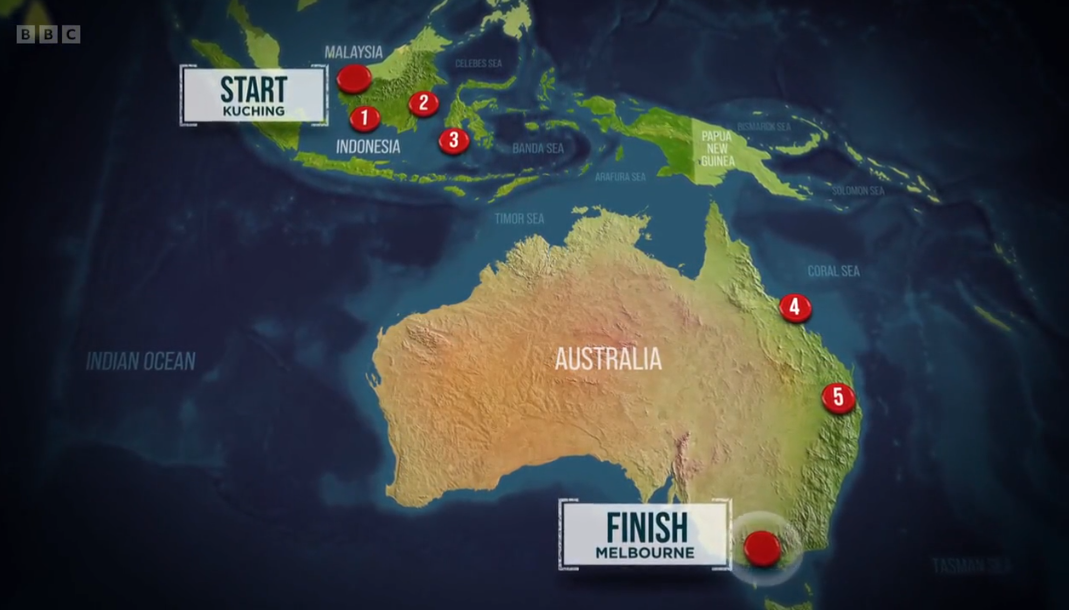
At the time of writing, the teams have reached the first checkpoint, Pangkalan Bun in Indonesian Borneo. The map shown in episode one gives a good idea of where the rest of the race is heading.
Stage | Region | Country |
|---|---|---|
Start | Kuching, Sarawak | Malaysia |
Checkpoint 1 | Pangkalan Bun, Central Kalimantan | Indonesia |
Checkpoint 2 | East Kalimantan (to be revealed) | Indonesia |
Checkpoint 3 | Sulawesi (to be revealed) | Indonesia |
Checkpoints 4 and 5 | Queensland coast (to be revealed) | Australia |
Finish | Melbourne, Victoria | Australia |
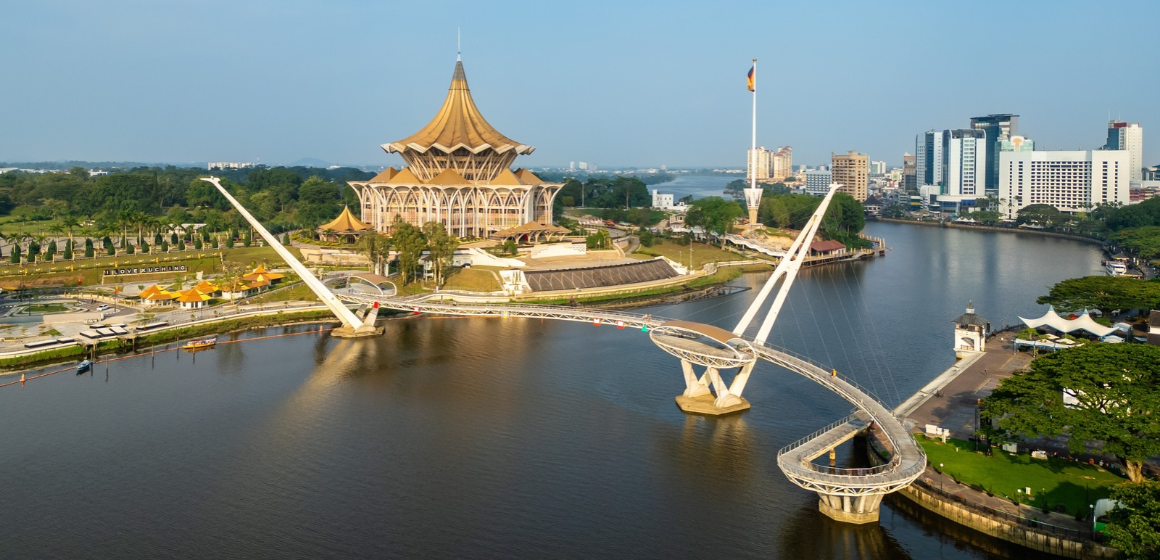
Start line: Kuching and Sarawak
Kuching, the capital of Sarawak, is an easy-going riverside city and a gentle introduction to Borneo. Spend a morning on the waterfront promenade, wander the old Chinese shophouse streets and start the day the local way, with a bowl of Sarawak laksa.
Why go: some of Borneo's best wildlife sits within an hour or two of the city. At Semenggoh Wildlife Centre, semi-wild orangutans swing in from the forest to feeding platforms. A short boat ride up the coast, Bako National Park – Sarawak's oldest – is home to proboscis monkeys, jungle trails and quiet beaches. Further north, Gunung Mulu National Park is a UNESCO World Heritage Site known for its vast cave systems and the stream of bats that pours out of Deer Cave at dusk.
What to expect: heat and humidity all year round. Rain can fall in any month, but the heaviest showers usually arrive between November and February. Pack light, quick-drying clothes and decent walking shoes for muddy trails.
Follow the route: Wild Sarawak – 10 days starts in Kuching, just like the race. Look for proboscis monkeys on a Bako night walk, see the orangutans at Semenggoh, explore Mulu's caves and trek the Headhunters' Trail, then unwind on Labuan Island before finishing in Kota Kinabalu. Groups are capped at 12 travellers.
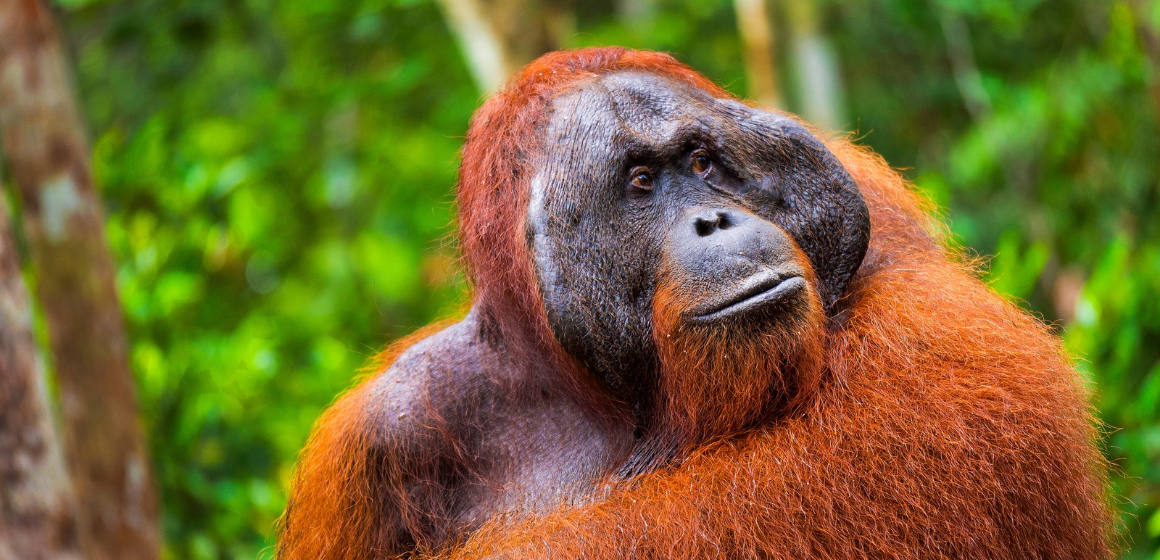 Orangutan in Tanjung Puting National Park
Checkpoint 1: Pangkalan Bun and Tanjung Puting
The first leg took the teams across the border into Kalimantan, the Indonesian side of Borneo. Pangkalan Bun is a small river town in Central Kalimantan, and for most travellers it's the gateway to one place: Tanjung Puting National Park, famous for its orangutans.
Why go: from the neighbouring port of Kumai, you board a klotok – a wooden riverboat named after the sound of its engine – and head upriver into the forest. Along the way are feeding stations where orangutans gather, and Camp Leakey, the research station set up in 1971 that put this park on the map. Between stops, scan the riverbanks for proboscis monkeys, gibbons and hornbills.
What to expect: simple, slow and deeply rewarding travel. Days revolve around the river, nights are spent in basic lodges, and visitors aren't allowed to bring food or drink near the orangutans or touch them, to protect the animals from disease.
Follow the route: Indonesia Expedition: Orangutans of Kalimantan – 9 days travels from Jakarta to Palangka Raya, then to Tumbang Malahoi for a night in a traditional longhouse, complete with a welcome blessing ceremony. Visit the Borneo Orangutan Survival Foundation on Kaja Island, the last stop for rescued orangutans before release, then spend three nights in an ecolodge inside Tanjung Puting, cruising the river by klotok. Groups are capped at 12 travellers.
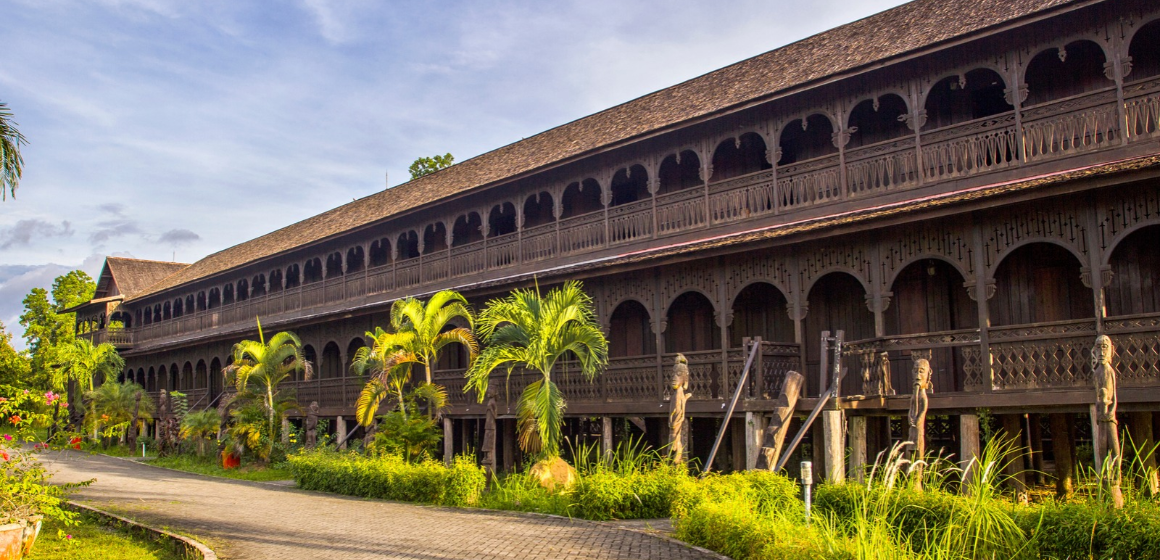 Traditional Dayaknese long house in East Kalimantan
Checkpoint 2: East Kalimantan (to be revealed)
The map points to the east coast of Indonesian Borneo, home to the port cities of Balikpapan and Samarinda. Few tourists make it here, which makes it a fascinating glimpse of how Borneo is changing: Indonesia is building its new capital city, Nusantara, in the forests inland.
Why go: wildlife and wild rivers. The Mahakam River runs deep into the interior past Dayak villages, and is home to a small, critically endangered population of freshwater Irrawaddy dolphins. Off the coast to the north, the Derawan Islands are known for green turtles and diving.
What to expect: this is independent-travel territory, with long road and river journeys and few international visitors. If you want to experience Kalimantan with the logistics taken care of, Central Kalimantan (above) is the easier place to start.
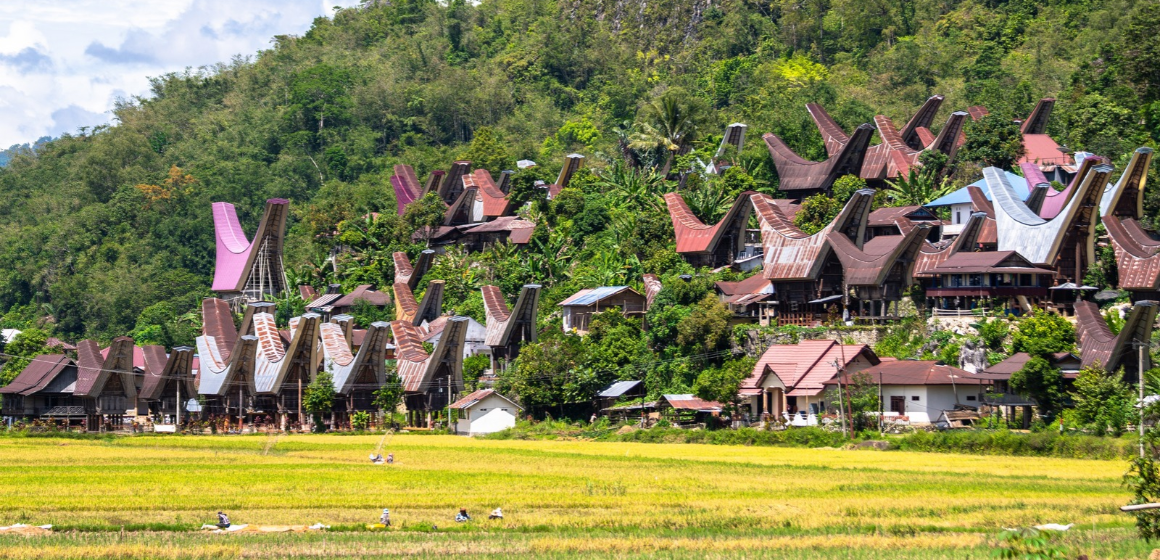 Traditional village of Tana Toraja land in Sulawesi
Checkpoint 3: Sulawesi (to be revealed)
From Borneo, the route heads east to Sulawesi, the sprawling, many-armed island at the heart of Indonesia. Its biggest city, Makassar, is the gateway to the south, with a 17th-century Dutch fort, sunsets over Losari Beach and a long seafaring tradition – the Bugis people here have built wooden pinisi sailing ships for centuries.
Why go: to meet the Toraja. In the misty highlands of Tana Toraja, families live in tongkonan – ancestral houses with soaring, boat-shaped roofs – and honour their dead with elaborate ceremonies, cliffside graves and cave tombs. Torajan culture is found nowhere else, and it plays out among rice terraces, coffee farms and bamboo forest.
What to expect: tourism here is still developing, so accommodation is simpler and travel times are longer than in Bali or Java. That's a big part of the appeal. If you're invited to a Torajan ceremony, dress modestly and follow your guide's lead.
Follow the route: Indonesia Expedition: Sulawesi & Toraja Tribes – 12 days starts and ends in Makassar. Take a boat through the limestone karst of Ramang-Ramang, then trek for two days through Torajan villages, rice terraces and cacao plantations, sleeping in a traditional tongkonan guesthouse. Visit the cliff graves at Lemo, the megaliths of Bori and the floating village on Lake Tempe, and join a fishing community's mangrove conservation work in Puntondo. The trek includes a day of around 13km, so a good level of fitness helps. Groups are capped at 12 travellers.
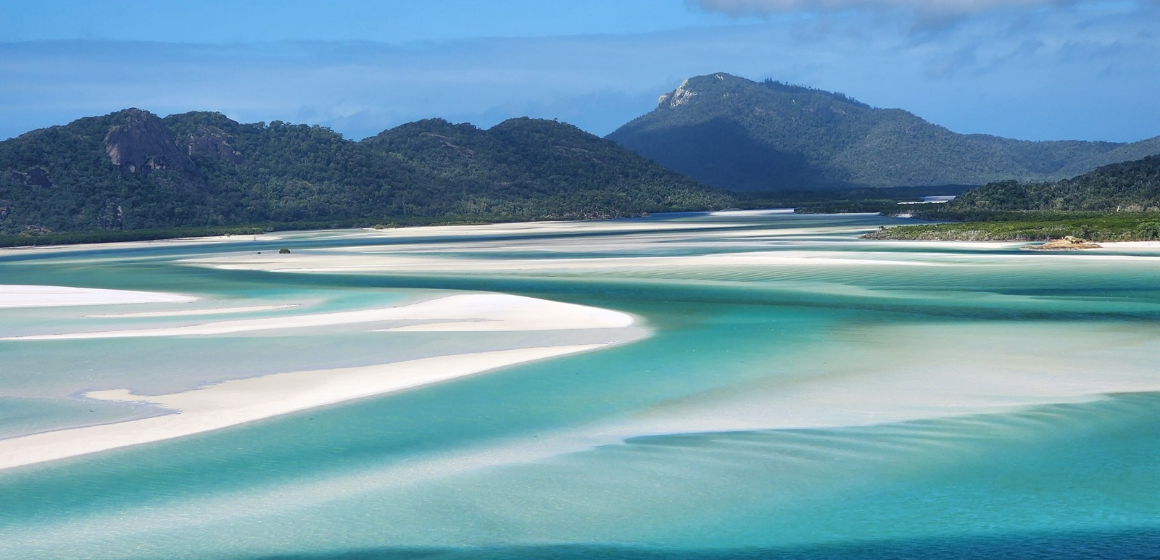 Whitehaven Beach in the Whitsunday Islands, Australia
Checkpoints 4 and 5: Australia's east coast (to be revealed)
After Indonesia, the race finally reaches Australia, and the map suggests two checkpoints on the Queensland coast: one around the Whitsundays and another further south, near Brisbane. It's a dramatic change of scene, from rainforest villages to reef, surf and big-sky beaches.
Why go: the Whitsundays are a cluster of 74 islands off Airlie Beach, the jumping-off point for sailing trips, snorkelling on the Great Barrier Reef and the bright white silica sand of Whitehaven Beach. Further south, Brisbane is a relaxed riverside city within easy reach of K'gari (Fraser Island) – the world's largest sand island – as well as the beaches of Noosa, the Gold Coast and Byron Bay.
What to expect: Queensland's dry season, from roughly May to October, brings warm days and calmer seas. From November to April it's hotter and wetter, and in the tropical north it's also stinger season, when wearing a stinger suit to swim is recommended.
Follow the route: our East Coast tours run between Sydney and Cairns, taking in the stretch of coast the race is likely to cover.
Tour | Length | Highlights | Good for |
|---|---|---|---|
15 days | Hunter Valley, Port Macquarie, Brisbane, Mission Beach, Atherton Tablelands | The highlights in two weeks | |
20 days | Byron Bay, Brisbane, Noosa, K'gari, Airlie Beach and the Whitsundays, the Daintree | Covering both likely checkpoints, ages 15+ | |
20 days | Brisbane, Rainbow Beach, K'gari, the Whitsundays, Magentic Island, Cairns | 18-30s | |
36 days | Byron Bay, Brisbane, Magnetic Island, Cairns | 18-30s with plenty of time |
See all our trips on the Australia East Coast page.
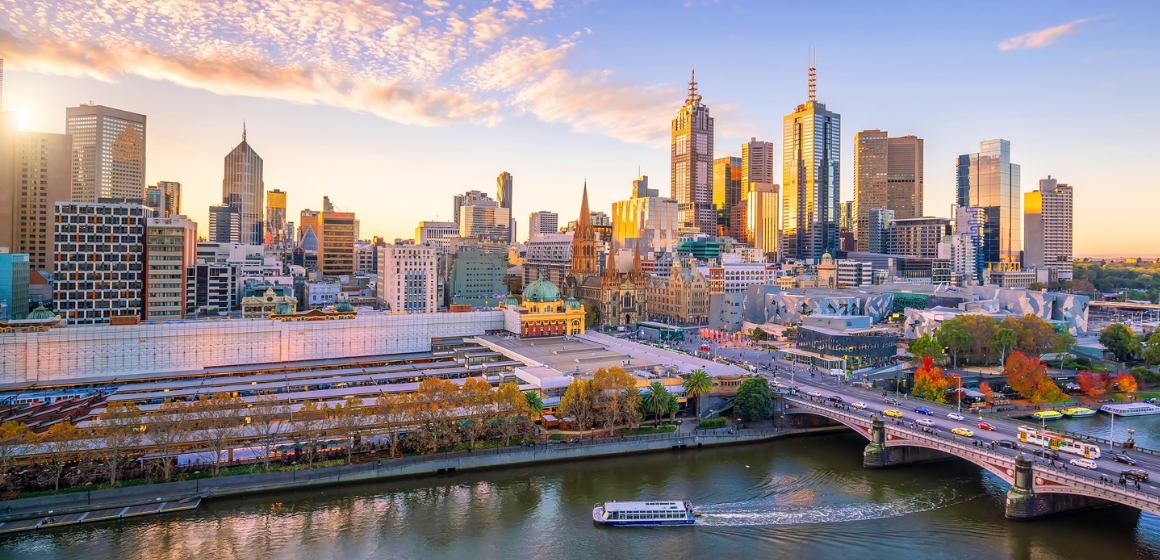 Melbourne city skyline at sunset
Finish line: Melbourne
The race ends in Melbourne, a city known for its food, arts and sport, and a fitting place to celebrate a long journey. Lose an afternoon in the city's laneways and street-art alleys, browse Queen Victoria Market and take the café culture seriously – this is a city that cares about its coffee.
Why go: Melbourne is also a great base for road trips. The Great Ocean Road winds west along the coast to the Twelve Apostles limestone stacks, Phillip Island's little penguins waddle ashore at dusk, and the Yarra Valley's wineries are an easy day out.
What to expect: Melbourne is known for having four seasons in one day, so pack layers whenever you visit. Spring and summer, from around November to March, are the warmest months for the coast.
Follow the route: two of our small group tours start in Melbourne. Great Ocean Road & Grampians Adventure – 7 days is a road trip along the Great Ocean Road to the Twelve Apostles, with a wildlife walk in Apollo Bay, a cultural walk in Budj Bim with an Aboriginal guide and day hikes in the Grampians (Gariwerd), before finishing in Adelaide. Groups are capped at 16 travellers.
If you'd rather see the coast on foot, Hike the Great Ocean Walk – 7 days follows the trail from Apollo Bay through the Great Otway National Park to the Twelve Apostles, carrying just a day pack while your luggage is moved for you. Almost every meal is included, and groups are capped at 12.
Follow the route, minus the race
The contestants are working against the clock on a tight daily budget, piecing together long overland journeys by bus and boat. That's what makes it gripping to watch – and exactly what you can leave out.
On a small group tour, the hard parts are handled for you: national park permits, klotok boats, longhouse stays and transfers between remote towns. A local leader knows the area, the customs and the best bowl of laksa in town. And because nobody's racing to the next checkpoint, there's time to watch an orangutan forage, sit down to a home-cooked Torajan meal or stay for one more sunset in the Whitsundays.
Most of our travellers join on their own, so you'll be in good company whether you're travelling solo, with a friend or as a couple. Every booking includes a free eSIM with data on arrival, and you can reserve now and pay later or spread the cost with monthly payments. All our holidays are ATOL and ABTA protected.
Want to link several stages together, such as a Borneo wildlife trip followed by Sulawesi? Get in touch with our team, who can help you plan the journey.
Browse all our Borneo tours · Browse all our Indonesia tours · Browse all our Australia tours