Zimbabwe and Botswana Wildlife Safari 2026 - 14 Days
Trip Snapshot
Age range
16 - 79Physical rating
Group size
1 - 16Meals included
30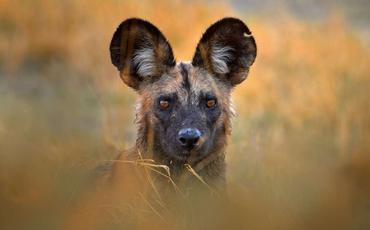
Download the full trip brochure
Everything you need to picture the adventure and pack with confidence — in one free PDF.
What's inside the PDF
Day-by-day itinerary
Every day mapped out, covering activities, travel times, meals and where you'll stay.Packing & kit list
Exactly what to bring, from clothing and essentials to luggage guidelines and what's available to hire locally.What's included
Accommodation, transport, guides and meals, so you can see exactly what your price covers.
Summary
Explore the wilderness of Zimbabwe and Botswana on our ultimate safari tour. This all-encompassing itinerary covers two of Africa's greatest wildlife destinations and ticks off the continent's finest national parks. Head out on game drives to spot the Big Five and more and set out on foot to trek endangered rhinos and get up close to curious meerkats. Over two weeks, witness diverse landscapes from dense bush to gleaming salt flats and majestic creatures from elephants to lions and leopards to wild dogs.
Motobo National Park - Track rhinos on a walking safari in this vast park alongside an expert guide.
Savuti and Chobe National Parks - Explore these sprawling reserves, home to more elephants than any other park on earth.
Victoria Falls - Witness the awe-inspiring beauty of the largest waterfall in the world.
Hwange & Matobo Hills - Visit two of Zimbabwe's most renowned national parks, home to the Big Five and more.
Itinerary
Day 1
Join trip in Victoria Falls
Our tour begins today in Victoria Falls, often referred to as the adventure capital of Zimbabwe. The town offers an exciting mix of land, air and water-based activities, making it a fitting starting point for the journey ahead.
For those arriving in time, your tour leader will meet you in the hotel reception at 6pm for a welcome meeting. No other activities are planned for today, so you are free to arrive in Victoria Falls at any time.
If you would like to arrange an airport transfer, please arrive into Victoria Falls Airport (VFA), which is approximately a 30-minute drive from the hotel. If you miss the welcome meeting, your tour leader will ensure you receive any essential information when you next meet.
This evening, we will be staying at Shongwe Lookout, set within lush landscaped gardens. The property features a swimming pool, spacious rooms, an expansive terrace where meals are served, as well as a bar stocked with a range of both local and international refreshments. The property also has a unique lookout tower, which offers stunning views of the Zambezi River and the mist rising above the world-famous Victoria Falls.
If your flight arrives earlier in the day, you may wish to take advantage of the wide range of optional activities available, including white-water rafting, , a cruise on the Zambezi River or a helicoper trip over the falls.
Full details can be found in the Budgeting and packing section of your trip notes.
Day 2
Drive to Hwange National Park. Game drive in the afternoon
Leaving our lodge after breakfast, we head southeast towards Hwange National Park on a journey of around four to five hours, to begin our wildlife safari experience. Upon arrival at the park gates, we will change transport and continue the final 40-minute drive to camp in our specialised open game-viewing vehicles. All our safaris in Hwange will also take place in these vehicles.
While these vehicles provide an immersive experience, they can feel brisk and windy, so bringing layers is recommended, particularly on longer drives. Road conditions across both Botswana and Zimbabwe can vary, meaning some journeys may be slow and bumpy, but the ever-changing scenery and wildlife sightings make it worthwhile.
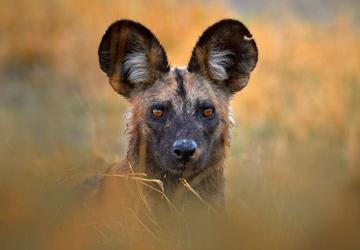
Hwange is Zimbabwe's largest national park, covering just under 15,000 km². It is renowned for its vast elephant population, along with more than 100 species of mammals and over 400 bird species, including the African golden oriole, Bradfield's hornbill, and the crimson-breasted shrike. For those hoping to spot the Big Five, Hwange offers an excellent starting point, though its rich biodiversity ensures plenty more to see, from rare African wild dogs to giraffes and zebras.
For the next two nights, we stay at Silwane Camp, located in the southeastern region of the park. This well-positioned camp offers an ideal base from which to experience Zimbabwe's wild and untamed landscapes. Accommodation consists of spacious, en-suite tented chalets, and the camp features a small swimming pool, a bar, and a large terrace overlooking the surrounding bushland and nearby waterholes.
Day 3
Safari in Hwange National Park, famous for its population of large-tusked elephant
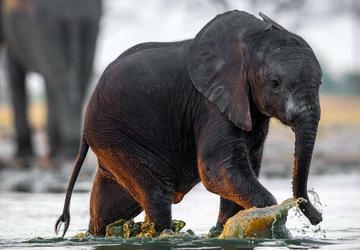
We have a very early start this morning to make the most of our time in Hwange National Park. Departing with our packed breakfast boxes, we'll set out in our game-viewers, with our expert safari guide, on the lookout for large herds of elephants. During the season it's not unusual to see huge herds numbering in their hundreds as they seek out the water holes in the early hours of the morning.
The landscape of Hwange is exceptionally diverse, ranging from vast dry savannah to lush green forests, making it a haven for most sub-Saharan species of wildlife including southern giraffes, pangolins, aardvarks and a whole range of birdlife.
We'll break for a picnic lunch within the park before we head back to our lodge in the early to mid-afternoon. There'll be time for a siesta, a dip in the pool, or a spot of birdwatching before dinner.
Dinner at the lodge will usually be a buffet with a selection of fresh, seasonal Zimbabwean dishes and some international dishes.
Day 4
Travel to Matobo via Bulawayo
This morning, we bid farewell to Hwange and make our way to Matobo Hills (a five to six hour journey split between game viewers and a minibus). Our route takes us through open bushland interspersed with rural villages and farming communities but the major settlement along the way is the colonial market town of Bulawayo, where we'll stop for lunch.
Over the next two days, we'll explore Zimbabwe's oldest national park. It was established in 1926 when it was called the Cecil Rhodes National Park (named after the British colonialist and politician) and was made a UNESCO World Heritage Site in 2003. Today, it's known for its unique 'kopjes' stacked boulder formations, as well as for having the densest population of leopards in the world - if you want to tick the cat off your list, you have a good chance in Matobo. The park is also home to the Southern White Rhino, the second-largest land mammal on the planet.
Our base for the next two nights is the Farmhouse Lodge, located on the boundary of the national park. Accommodation comprises a converted farmhouse with 12 bungalow cottages. The lodge offers a rock swimming pool, large gardens and a newly renovated bar and restaurant where we'll gather for a set dinner this evening.
Day 5
Rhino tracking in the morning and exploration of Matobo National Park in the afternoon
After an early breakfast this morning, we'll travel the short distance (around 30 minutes of driving) into the national park, accompanied by an experienced ranger and tracker. We'll then embark on a walking safari in the hope of spotting the white rhinoceroses that roam this part of the park.
A walking safari is an intimate way to get closer to wildlife in areas that can't be accessed by vehicles or boats. While our focus is spotting the rhinos, it's a great opportunity for us to see other wildlife species such as antelopes, zebras and wildebeests. Matobo National Park doesn't have a regular population elephants or lions, so a walking safari is perfectly safe and we'll be joined by specially trained experts. Our safari fee goes towards helping the conservation of these majestic creatures and to protecting them from poaching.
This afternoon, we'll see some of the cave paintings that can be found in the park - there are more than 3,000 in total. We'll also pay a visit to World's View - the grave of Cecil Rhodes, the founding father of Zimbabwe - perched at the very top of Motopo Hills. The spot has been given its name thanks to the endless views across the plains below.
In the late afternoon, we'll return to our lodge with plenty of time to freshen up before dinner. This evening's meal is likely to be a traditional Southern African braai, a much-loved barbecue experience featuring a selection of locally inspired grilled meats and accompaniments, enjoyed in a relaxed outdoor setting.
Day 6
Drive to Ntwetwe Pan (Botswana)
Most of today will be spent on the road as we set off early towards Botswana. We expect to reach the Zimbabwe-Botswana border around two hours into our journey. Once border formalities have been completed, we will continue on to Ntwetwe Pan and our accommodation for the night.
Please note that while crossing the border between Zimbabwe and Botswana is usually straightforward, delays can occasionally occur. This is perfectly normal and should not be a cause for concern.
Today's journey covers just over 420 kilometres (260 miles) and will take approximately eight hours, depending on the length of time spent at the border crossing. Around lunchtime, after arriving safely in Francistown, we will change vehicles before continuing the remainder of the journey.
We expect to arrive at our accommodation in the late afternoon, leaving time to freshen up, enjoy a shower, or simply relax before dinner is served.
Day 7
Experience one of the largest salt flats in the world and seek out Meerkat in their natural habitat
After breakfast this morning, we'll head out to explore the lunar landscape of the Makgadikgadi Pan, the largest salt pan in Africa covering around 12,000km2 - here, the blinding white and gold salt flats stretch far into the horizon. Contrasting with our safari experiences so far, the landscape in this region contrasts dramatically with anything else we'll see during our tour.
There's not much wildlife to be seen on the pan, but a few desert-adapted species such as brown hyenas, elephants, zebras and wildebeests inhabit the fringes, as well as the Kalahari meerkat.
We'll join a local expert guide on a short walk to see these curious little mongooses and learn about the conservation work currently taking place. It's worth noting that these semi-habituated animals are wild. Although they're curious by nature and it's not unusual for them to get very close to visitors, you must resist the temptation to touch or hold them.
In the early to mid-afternoon, we'll return to our accommodation for lunch and the rest of the afternoon is free to explore the surroundings or study the local birdlife.
Day 8
Drive to Moremi, game drives in the afternoon
This morning, we head north-west to Moremi Game Reserve, departing after breakfast and arriving at the park gates just before 2pm. We'll break in Maun en route for lunch.
Located in the Okavango Delta, Moremi is famous for its diverse landscapes that include floodplains, forests and lagoons, drawing all manner of wildlife and birdlife. We'll spend two nights camping within the park, where the waters feed an abundance of flora and fauna, including endangered African wild dogs - hippos are often heard at night, too. On the way to our campsite, we should have a good opportunity to spot some of Moremi's creatures, then, in the late afternoon, we'll set out on a game drive.
Our campsite uses dome tents with private en-suite facilities. They're big enough for you to stand inside and are made from durable rip-stop canvas with sewn-in groundsheets. Each tent is equipped with sturdy camp beds, mattresses, fitted sheets, pillows, and duvets. Other equipment includes camping basins, washstands, hot water bucket showers and camping toilets. Safari-style fold-up chairs and large tables are provided.
Our backup staff will set up and break camp as well as cook and clean for us during our two-night stay.
Please note that during the 2026 season, we may occasionally stay near Kizikini, just outside Moremi Game Reserve, due to unprecedented rainfall within the park. Periods of prolonged heavy rain and localised flooding can sometimes make certain areas difficult to access, and the local authorities might close access to the park with very short notice.
Depending on conditions at the time, we may also choose to spend three nights closer to Savuti instead. This flexibility allows us to maximise wildlife-viewing opportunities while ensuring that the itinerary remains both safe and enjoyable.
Any such changes will be made with the aim of providing the best possible safari experience while adapting to local conditions on the ground
Day 9
Game drives in Moremi Game Reserve
We have two game drives ahead of us today.
Setting off at first light (often around 5am), we'll get the chance to experience one of Africa's unspoiled wonderlands, with the possibility to spot hippos, crocodiles, lions and a great variety of birds, as well as the elusive sitatunga antelope. Moremi is also an ornithologist's paradise with fish eagles, kingfishers, herons, storks, egrets, weavers and bee-eaters all seen regularly.
We'll return to camp for brunch and spend the hottest part of the day relaxing. Take the chance for a siesta, to relax reading a book or to do a bit of birdwatching. At around 4pm, we'll set out for our second game drive of the day, returning in the early evening.
Day 10
Drive to Savuti and game drives
This morning, after breakfast, we'll journey north towards Chobe and Victoria Falls.
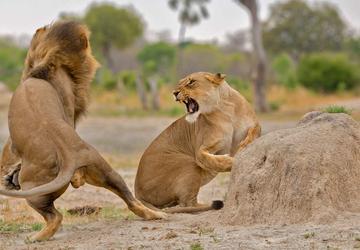
En route, you can watch as the ever-changing scenery introduces us to new flora and fauna. Savuti and Chobe are famous for their high density of zebras and lions. During the most recent aerial game census, it was estimated a population of over 100,000 elephants was living in Botswana - around 80% of those were found to be near the lush forests and plains of the Savuti Channel and the Chobe River.
Our drive today covers around 150 kilometres/93 miles. Due to the poor road conditions, we expect this to take between five and seven hours. We'll keep a leisurely pace to maximise our chances of spotting wildlife.
We aim to arrive at our camp in the afternoon and the rest of the day is free to relax or do a bit of bird spotting.
Day 11
Drive to Kasane via Chobe National Park
Today, we'll drive the final 150 kilometres/93 miles from Savuti up to Kasane via the sandy roads of Chobe National Park. For most of the day, we'll stay within the borders of the game reserves, giving us a good opportunity to spot wildlife along the way.
After approximately 80 kilometres/50 miles we'll pick up the proper tarmac road and driving will become slightly more comfortable. Before we arrive into Kasane we will oncer agaion cross into the Chobe National Park and stop somewhere near the Chobe River where we will enjoy our packed lunches.
Upon arrival at our camp, we'll have a few hours to freshen up before dinner.
Day 12
Full day in Chobe National Park. Morning game drives with afternoon sundowner cruise
On our game drive this morning, we take a slow drive along the southern bank of the Chobe River, where bushbuck and a wide variety of antelope can often be seen. The remarkable diversity of wildlife in this area makes it a highlight for any wildlife enthusiast. We hope to observe large herds gathering along the river, which is also home to hippos and crocodiles.
This afternoon, we switch from land to water as we set out on a sundowner cruise, offering a completely different perspective of the river and its wildlife.
The Chobe River, one of the main tributaries of the Zambezi, supports an abundance of wildlife as well as a variety of fish species, including the tiger fish (often referred to as freshwater barracuda). The region is also renowned for its striking scenery and spectacular red and gold sunsets.
We return to our accommodation around 7pm in time for dinner
Day 13
Drive to Victoria Falls town
This morning, we'll leave our camp in Botswana and cross the border back into Zimbabwe, heading back to the town of Victoria Falls.
This afternoon, we'll visit the falls from the Zimbabwean side of the river where the Zambezi River plummets over a sheer cliff wall spanning more than 1,676 meters and dropping approximately 100 metres into the abyss below.
The natives named the waterfall, Mosi-oa-Tunya, meaning 'the smoke that thunders' because of the plumes of water vapour that rise like smoke into the sky above the falls, accompanied by the deafening roar.
After checking in to our hotel, a rest and maybe even a dip in the pool we'll head out for our last evening meal together.
Day 14
Trip ends in Victoria Falls
Our tour ends this morning after breakfast. Depending on the schedule of your departing flight, you might like to spend a few hours exploring the town.
There are no activities planned today, so you're free to depart from Victoria Falls at any time.
If your flight is departing later in the day, luggage storage facilities are available at our lodge.
There's so much to see and do in and around Victoria Falls and our itinerary allows for limited time in the area. If you'd like to add additional nights to the start or end of your trip, contact us to book accommodation.
What's Included
Accommodation
Comfortable
Meals
Breakfasts: 13, Lunches: 8, Dinners: 9
Vegetarian options are available on all meals throughout the adventure.
Vegetarian options availableLocal Guide
GuidedThis adventure is led by a local guide throughout. The main language of this adventure is English. Please contact us for other languages available.
Wifi
Wifi is available during the adventure. In some areas and / or accommodation / transport Wifi may be free.
Dates & Prices
Jul 2026
from £4,054Aug 2026
from £4,203Sep 2026
from £4,549Oct 2026
from £4,054Dec 2026
from £4,351
- Save 8%Tuesday 13 Oct 2026to Monday 26 Oct 2026£4,395£4,054Best offerBook for£250 today, pay the rest later
- Save 1%Tuesday 27 Oct 2026to Monday 9 Nov 20266+ spaces of 16 left£4,395£4,351Pay MonthlyBook for£250 today, pay the rest later
Essential trip information
Our Important Notes and Packing List cover all essentials, from necessary equipment to inclusions, ensuring you're fully equipped and informed for this extraordinary adventure and more.



Still have questions?
Can't find the answer you're looking for? Please chat to our friendly team.
Why book with us
Help Change The World
We collaborate with local businesses and communities.
Best Price Guaranteed
We won't be beaten on price. If you find this adventure at a lower price please get in touch!
You're In Good Hands
We work with trusted tour operators around the world.
You're spoilt for choice
We have the best choice of adventures on the market.