Victoria Falls to Windhoek Overland Safari & Participation Camping - 8 Days
From £927£116 per daySave 26%

Trip Snapshot

Genders

  • Female69%
  • Male31%

Average age

39
12 Min100 Max

Start / End

  • Victoria Falls
  • Windhoek

Physical rating

3/5

Group size

1 - 22

Meals included

15

Highlights

  • Marvel at the majestic Victoria Falls, one of the world's largest waterfalls, offering exhilarating optional activities like white-water rafting, scenic helicopter flights, and bungee jumping for the ultimate adrenaline rush.
  • Embark on unforgettable wildlife safaris in Botswana's renowned Chobe National Park, where you'll witness vast herds of elephants, hippos, crocodiles, and an abundance of other captivating wildlife on thrilling boat cruises and open safari drives.
  • Immerse yourself in the serene wilderness of the Okavango Delta with an authentic bush camping experience. Glide silently through its intricate waterways in a traditional mokoro (dugout canoe) for exceptional birdwatching, and enjoy guided nature walks as the sun sets.
  • Discover the ancient traditions of the San people in the heart of the Kalahari Desert near D'kar, gaining fascinating insights into their wilderness survival skills and enjoying their warm hospitality at a supported lodge and camp.
  • Experience the magic of African nights camping under a canopy of stars, particularly memorable beneath the colossal branches of ancient baobab trees near Nata, offering a truly unique and serene overnight experience.
  • Traverse the diverse landscapes of Zimbabwe, Botswana, and Namibia aboard a custom-built 'Lando' overland vehicle, designed for optimal wildlife viewing and access to remote, authentic African locations, all while enjoying the camaraderie of participation camping.
Recommended

Download Trip Brochure PDF

Uncover insider tips, see a packing list and view a detailed itinerary and accommodation information.

Summary

Spend eight days travelling through Zimbabwe, Botswana, and Namibia, searching for epic wildlife as you go. From spotting hippos and elephants in Chobe National Park, to learning about wilderness survival skills from local San people, not to mention camping under the stars, this trip has no shortage of adventure for those looking to witness the unfiltered, authentic atmosphere in these African locations.

Itinerary

  • Day 1

    Victoria Falls

    Arrive at any time.

    Tonight after a brief welcome meeting, choose to get to know your group members with an optional group dinner at a nearby local restaurant.

  • Day 2

    Victoria Falls

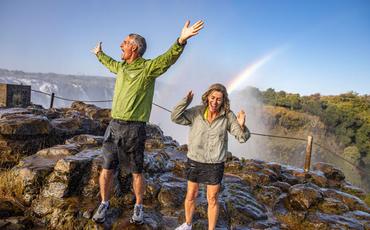
    Spend a full free day getting to know Victoria Falls, home of one of the largest waterfalls in the world. For the more adventurous, we recommend white water rafting, a scenic helicopter flight over the falls, or bungee jumping. The choice is yours and there are plenty of options to choose from. Victoria Falls is a great base to see both natural wonders and take part in some exciting activities. Get up close to the awesome Victoria Falls, opt to raft the whitewater of the mighty Zambezi, or bungee jump (with Victoria Falls in sight).

  • Day 3

    Victoria Falls/Kasane

    Travel across the border from Zimbabwe into Botswana. Opt to take a wildlife boat cruise along the fertile lands of the Chobe River. Spend time relaxing at camp with the group in a serene setting. You will stay over just outside of the park near the town of Kasane. This afternoon, take an optional afternoon sunset boat cruise along the Chobe River - it's your best opportunity to view hippos, crocodiles, and many elephants wallowing in the water.

    You can pre-book the Chobe River Sunset Cruise on the checkout page, or through your Global Connection Officer or travel agent.

  • Day 4

    Kasane/Nata

    Wake up early today and opt for a wildlife safari drive in an open safari vehicle in Chobe National Park. Afterwards, travel south to Nata and reward yourself after the long journey with a group toast before camping under the stars and branches of ancient baobab trees.

  • Day 5

    Nata/Maun

    Watch a beautiful sunrise this morning from your camp under the huge baobab trees. Hit the road in the Lando to Maun where the group will set up camp in a serene setting. Choose to prebook a scenic helicopter ride through the Delta during your free time in Maun.

  • Day 6

    Maun/Okavango Delta

    Travel from Maun into the Delta to explore the landscape from an open 4x4 safari vehicle on the way to the basic bush camp. Do some birdwatching in a traditional mokoro (dugout canoe), then set out on a sunset nature walk. Return to camp and unwind around the campfire.

  • Day 7

    Maun/D'kar

    Travel back through the Okavango Delta to Maun. Then, travel through the western part of Botswana to D'kar; the heart of the Kalahari. Set off on an optional bushman walk and see how the local San People adapted to life in the desert.

    Later, enjoy the warm hospitality of the San Bushmen as the group will be staying at the the tour operator-supported Dqae Qare San Lodge & Camp.

  • Day 8

    D'kar/Windhoek

    Climb into the Lando and drive to Windhoek today after crossing the border into Namibia. The tour ends upon arrival.

    Not ready to leave Africa just yet? Talk with your CEO about extending your adventure and get to know Namibia or beyond!

What's Included

  • Accommodation

    Basic bush camp (1 nt), participation camping (6 nts).

  • Meals

    Breakfasts: 6, Lunches: 6, Dinners: 3

    Vegetarian options are available on all meals throughout the adventure.

    Vegetarian options available

  • Local Guide

    Guided

    This adventure is led by a local guide throughout. The main language of this adventure is English. Please contact us for other languages available.

  • Wifi

    Wifi is available during the adventure. In some areas and / or accommodation / transport Wifi may be free.

Dates & Prices

  • Jun 2026

    from £927
  • Jul 2026

    from £1,051
  • Aug 2026

    from £927
  • Sep 2026

    from £989
  • Oct 2026

    from £934
  • Nov 2026

    from £1,088
  • Dec 2026

    from £1,088
  • Jan 2027

    from £1,167
  • Feb 2027

    from £1,088
  • Mar 2027

    from £1,088
  • Apr 2027

    from £1,088
  • May 2027

    from £1,088
  • Jun 2027

    from £1,088
  • Jul 2027

    from £1,237
  • Aug 2027

    from £1,237
  • Sep 2027

    from £1,167
  • Oct 2027

    from £1,167
  • Nov 2027

    from £1,088
  • Dec 2027

    from £1,088
  • Jan 2028

    from £1,088
  • Feb 2028

    from £1,088
  • Save 16%
    Saturday 1 Aug 2026to Saturday 8 Aug 2026
    🔥3 spaces of 22 leftGuaranteed Departure
    £1,249£1,051
    Solo Room from +£98
  • Save 26%
    Saturday 29 Aug 2026to Saturday 5 Sep 2026
    6+ spaces of 22 leftGuaranteed Departure
    £1,249£927
    Best offer
    Book for£250 today, pay the rest later
    Solo Room from +£98

Essential trip information

Our Important Notes and Packing List cover all essentials, from necessary equipment to inclusions, ensuring you're fully equipped and informed for this extraordinary adventure and more.

Frequently asked questions
  • What is the main focus of this tour?

    This overland safari travels through Zimbabwe, Botswana, and Namibia, focusing on epic wildlife spotting, learning wilderness survival skills from local San people, and camping under the stars, offering an authentic African adventure. Highlights include Victoria Falls, Chobe National Park, and the Okavango Delta.
  • What kind of accommodation is provided on this tour?

    Accommodation primarily consists of participation camping for 6 nights and basic bush camping for 1 night. In Windhoek, you will stay in backpackers or small guesthouses. Camping involves supplied dome tents with insect nets and mattresses, and shared facilities (flush toilets, outdoor showers, though warm water isn't always guaranteed). Bush camping in the Okavango Delta is very basic with no running water, showers, or toilet facilities. Rooming requests for multi-share accommodations cannot be taken.
  • What meals are included during the trip?

    The tour includes 6 breakfasts, 6 lunches, and 3 dinners. Most included meals are prepared from fresh local produce by a cook, with group participation requested for meal preparation and dish washing duties. Vegetarian and other dietary requirements can be accommodated if specified prior to arrival.
  • What is the typical group size for this safari?

    The maximum group size is 22 travelers, with an average of 18 participants.
  • What modes of transportation are used on this tour?

    Transportation primarily involves a custom-built 24-seat overland adventure vehicle (OAV) named the 'Lando', walking, traditional mokoro (dugout canoe) rides, and safari vehicles. The Lando offers storage, viewing windows, reclining seats, a mobile kitchen, drinking water, air-conditioning, and USB charging ports.
  • What is the physical rating or difficulty level of this trip?

    The physical rating is 3 out of 5. While not physically demanding, travel can involve long drives on poor road conditions at times. However, most clients find the diversity of the African landscape, countries, culture, and wildlife to be well worth the experience.
  • Are there any age restrictions for participants on this tour?

    You must be 18 to travel unaccompanied on this tour. For minors, the minimum age is 12 when traveling with a guardian over 21 years old.
  • What is the policy for solo travelers?

    Solo travelers do not pay an extra supplement, as our group trips are designed for shared accommodation. Single travelers are paired in twin or multi-share accommodation with someone of the same sex for the duration of the trip.
  • What vaccinations or health considerations should I be aware of?

    It is compulsory to show a valid Yellow Fever vaccination certificate if you are traveling to Botswana from, or have recently traveled through, a Yellow Fever endemic country. Yellow Fever inoculations need to be administered at least 10 days prior to entry. Malaria is present in some regions, so preventative medication (prophylaxis) and regular use of insect repellent are recommended. It is advised to contact your family physician or local travel clinic at least one month before departure for the most up-to-date health information and recommended inoculations.
  • What currency should I bring, and how can I manage money during the tour?

    Zimbabwe uses US Dollar and South African Rand (ZAR). The Namibian Dollar (NAD) is equivalent to ZAR in Namibia. In Botswana, Pula (BWP) is used for supermarkets, but USD is accepted for activities and drinks at campsites. It is strongly advised to bring ZAR or USD from your home country or exchange money before the tour to avoid delays. US notes older than 2006 are not accepted. Visa/Plus system cards are most widely accepted for ATMs; Mastercard/Cirrus cards are harder to use. Credit cards are accepted in major cities only and may incur a 5-10% fee. A combination of foreign currency and debit/credit cards for cash advances is best. You should also have access to at least an additional USD $200 (or equivalent) as an emergency fund.
  • Are there any tipping guidelines for the tour staff?

    Tipping is an expected, though not compulsory, component of your tour. Suggested guidelines per person are: $5-8 USD per day for the Chief Experience Officer (CEO), $2-3 USD per day for local guides and safari guide/drivers, 10-15% of the bill for restaurant staff, and 50-100 BWP (Botswana Pula) for Okavango Delta polers.
  • What are the general safety and security recommendations for this trip?

    In major cities, always keep your passport (carry a photocopy instead), traveler’s cheques, tickets, and unused money in a hotel safe deposit. Avoid leaving bags unattended or flaunting valuables. Stick to main streets during the day and take taxis at night. Be cautious of con artists. Do not take photos of police stations, border crossings, airports, army barracks, personnel, or government buildings, as it is against the law. Drones are prohibited in national parks. Always follow your CEO's advice, especially in rural areas.
  • Is travel insurance required for this trip?

    Yes, travel insurance is compulsory. You will not be permitted to join the group without evidence of travel insurance covering at minimum USD200,000 for medical expenses, including emergency evacuation and repatriation. Coverage for personal liability, cancellation, curtailment, and loss of luggage and personal effects is strongly recommended.
  • What are the visa and entry requirements for the countries visited?

    All countries require a valid passport with a minimum of 6 months validity. Botswana has a mandatory $30 USD tourism levy for non-SADC visitors, valid for 30 days and multiple entries. As of April 1st, 2025, Namibia will introduce a new mandatory 90-day visa costing USD90 per person on arrival; applying prior to travel is recommended to prevent delays.
  • Can I do laundry during the trip?

    Laundry can be done in Maun, where the accommodation offers a laundry service. At some other campsites, local women may offer hand washing services at a negotiated price, typically between ZAR30-ZAR50 per load. Bringing some washing powder/liquid for smaller items is recommended.
  • What is 'participation camping' and what are my responsibilities?

    Participation camping is an essential part of the safari experience. The group is usually divided into small teams with rotating daily tasks such as kitchen duty (helping prepare meals and clean up), packing/setting up tables and chairs, and cleaning the overland vehicle. While CEOs handle meal preparation, clients are asked to assist with dishwashing. All camping equipment, except your sleeping bag and pillow, is supplied.
  • What kind of accommodation is provided on this tour?

    The tour includes 1 night in a basic bush camp and 6 nights of participation camping. In Windhoek, we stay in backpacker's (hostels) or small guest houses. All camping equipment, except for your sleeping bag and pillow, is supplied, including warm and comfortable camp mattresses and durable 2-person safari canvas dome tents with built-in mesh insect netting.
  • What are the facilities like at the campsites?

    Campsite facilities in Southern Africa are generally good but can be basic in certain places. They usually have flush toilets and showers, though some showers may be outdoors with simple reed enclosures for privacy. Warm water is available at most sites but not guaranteed to always be warm. We typically set up camp close to toilet facilities, though a short walk may sometimes be required.
  • What is "bush camping" in the Okavango Delta like?

    Bush camping in the Okavango Delta is the most basic part of the trip, with no running water, showers, or toilet facilities. You will be truly camping in the wild, surrounded by nature, which many travelers find to be the highlight of the trip.
  • Can I request a private room if I am a solo traveler?

    Our group trips are designed for shared accommodation, and solo travelers are paired in twin or multi-share accommodation with someone of the same sex. There is no single supplement. If you are a parent or guardian traveling with a minor under 18 of a different gender, you will be accommodated together in a private room.
  • How many meals are included in the tour?

    The tour includes 6 breakfasts, 6 lunches, and 3 dinners. Meals not included offer opportunities to explore local cuisine, and your CEO can provide suggestions.
  • How are meals prepared, and is there participant involvement?

    All included meals are prepared from fresh local produce by our cook. Group participation is an essential part of the safari, and a duty schedule is created for fair, rotating participation in meal preparation and dishwashing. Team spirit is part of the fun!
  • Can dietary requirements like vegetarian meals be accommodated?

    Yes, vegetarian meals and other dietary requirements need to be specified prior to arrival.
  • What kind of vehicle is used for transportation during the tour?

    We use a custom-built 24-seat Overland Adventure Vehicle (OAV) named the Lando for criss-crossing Southern Africa. It's raised for excellent wildlife viewing and enjoying scenic landscapes. We also use walking, traditional mokoros (dugout canoes), and safari vehicles for specific activities.
  • What are the features of the overland adventure vehicle (Lando)?

    The Lando offers accessible storage for main luggage, space for day packs, an onboard safety box for valuables, front viewing windows and large sliding windows, reclining seats, a fully equipped mobile kitchen, access to a 250L tank of drinking water, air-conditioning, and USB charging ports for every traveler. Please note, Landos do not have on-board bathrooms.
  • What are the road conditions like during the tour?

    Road conditions can vary from new to very poor. While not physically demanding, travel can be difficult at times with long drives and bumpy roads. Most clients find the diverse African landscape, culture, and wildlife make it worthwhile.
  • What is the typical group size for this tour?

    The maximum group size is 22 travelers, with an average of 18.
  • What are the age restrictions for participants?

    The minimum age to travel unaccompanied on this tour is 18. For minors traveling with a guardian over 21, the minimum age is 12.
  • What is the role of the Chief Experience Officers (CEOs)?

    On this tour, you will be accompanied by two Chief Experience Officers (CEOs) who act as group managers, leaders, cooks, and drivers. They provide information, offer suggestions, introduce you to locals, and handle logistics so you can enjoy your adventure. They are experienced group leaders with broad knowledge of the region.
  • Is group participation required for daily tasks?

    Yes, participation is an essential part of your safari. The group is usually divided into small teams for tasks like kitchen duty (helping prepare meals and clean up), packing, and vehicle cleaning. Your CEOs organize meal preparation, but clients are asked to help with washing up.
  • Are there any important health considerations or vaccinations required for this trip?

    We recommend contacting your family physician or local travel clinic at least one month before departure for up-to-date health information. Medical facilities are basic. It's compulsory to show a valid Yellow Fever Certificate if traveling from a Yellow Fever endemic country to Botswana, Namibia, and Zimbabwe, or if transiting through an endemic country for more than 12 hours. Yellow Fever inoculations must be administered at least 10 days prior to entry. Malaria is present in some regions, so speak to your doctor about preventative medication (prophylaxis) and use insect repellent.
  • What are the safety and security guidelines I should be aware of during the trip?

    We recommend using a neck wallet or money belt for valuables and leaving expensive jewelry at home. Many hotels have safety deposit boxes. Always lock your luggage. In cities, avoid leaving bags unattended and flaunting valuables. Do not wander to unknown areas at night; use taxis organized from reception. Be wary of con artists on the street. Drones are prohibited in national parks. Your CEO can amend the itinerary for safety concerns and will accompany you on all included activities. Optional activities undertaken in free time are at your own judgment and risk. Water-based activities should only be done with a guide.
  • Is it safe to bring a drone on this tour?

    No, the use of drones in national parks in Southern Africa is prohibited.
  • What should LGBTQ+ travellers know about safety and travel considerations on this trip?

    The safety and well-being of all travelers, including those who identify as part of the LGBTQ+ community, is a priority. We encourage you to visit our LGBTQ+ page for useful resources and to feel safe and comfortable throughout your trip.
  • What currencies are accepted in the countries visited?

    In South Africa and Namibia, the South African Rand (ZAR) is accepted, and the Namibian Dollar (NAD) is equivalent to ZAR in Namibia. In Botswana, Pula (BWP) is used for purchases, but USD is accepted for activities and drinks at campsites. Zimbabwe uses the US Dollar and South African Rand. USD notes older than 2006 are not accepted due to forgery concerns, and large USD notes can be difficult to change in some places. USD cash is required for border visas.
  • What should I know about using ATMs and credit cards?

    Each currency can be obtained locally by changing foreign currency or using ATMs where available. Visa/Plus system cards are most widely accepted; if you have a Mastercard, it's recommended to also carry a Visa card. Credit cards can be used in major cities and towns only, often with a 5-10% fee, but should not be relied upon as the sole payment method. Power outages and ATMs running out of cash can affect access to money, so a combination of foreign currency and cards is best.
  • How much emergency money should I have access to?

    It is recommended to have access to at least an additional USD $200 (or equivalent) as an emergency fund for unforeseen circumstances.
  • Are tips expected, and what are the tipping guidelines?

    Tipping is an expected, though not compulsory, component of your tour, serving as an expression of appreciation for exceptional service. It's an important source of income for those in the tourism industry. Guidelines (per person): CEO: $5-8 USD per day; Local guides/Safari Guide/Driver: $2-3 USD per day; Restaurant Staff: 10-15% of the bill; Okavango Delta polers: 50-100 BWP.
  • What are the main highlights of this trip?

    Highlights include meeting the Naro San people on the fringes of the Kalahari Desert, exploring the Okavango Delta with traditional canoe rides and wilderness camping, cruising the Chobe River at sunset, and viewing the mighty Victoria Falls.
  • What optional activities are available during the tour?

    Optional activities include: Victoria Falls Visit (50USD), Victoria Falls Whitewater Rafting (120USD), Zambezi Bungee Jump (168USD), Victoria Falls Helicopter Ride (15 Mins), Chobe River Sunset Cruise, Chobe National Park Safari Drive, Delta Doors-off Scenic Helicopter Flight in Maun, and a Walk with San People in Ghanzi (150BWP).
  • Are international flights included in the tour price?

    No, international flights are generally not included in the price of your tour. You should confirm with your booking agent for any specific combo tours where flights might be included.
  • Where can I do laundry during the trip?

    Laundry can be done in Maun, where accommodations offer laundry service. At some campsites further along the route, local women may offer hand-washing services at a negotiated price (usually between ZAR30-ZAR50 per load). It is recommended to bring some washing powder for smaller items.
  • Anna's profile
  • Petra's profile
  • Charlotte's profile

Still have questions?

Can't find the answer you're looking for? Please chat to our friendly team.

Get In Touch

Why book with us

  • Help Change The World

    We collaborate with local businesses and communities.

  • Best Price Guaranteed

    We won't be beaten on price. If you find this adventure at a lower price please get in touch!

  • You're In Good Hands

    We work with trusted tour operators around the world.

  • You're spoilt for choice

    We have the best choice of adventures on the market.

Similar adventures

Was this page helpful ?

If you need information about a tour or a booking, please contact us instead.