Hiking Morocco: The High Atlas Mountains - 9 Days
From £696£77 per daySave 21%

Trip Snapshot

Genders

  • Female50%
  • Male50%

Average age

39
12 Min100 Max

Start / End

  • Marrakesh
  • Marrakesh

Physical rating

3/5

Group size

1 - 14

Meals included

18

Highlights

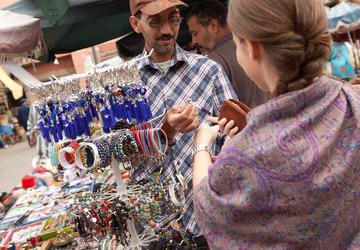
  • Travel to some of Morocco’s unique locally favorite destinations like Icht and Tiznit for village tours and local market visits
  • Enjoy a cooking demonstration of Madfouna and Tajin while in the desert of Zagora
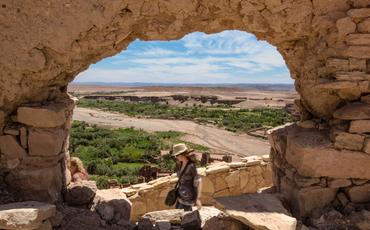
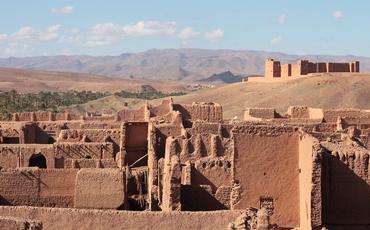
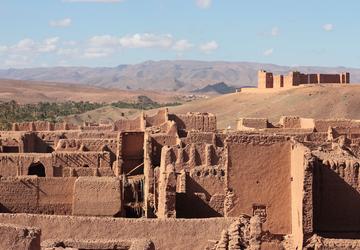
  • Visit the historic ksar of Aït Ben Haddou along the former caravan route between the Sahara and Marrakech
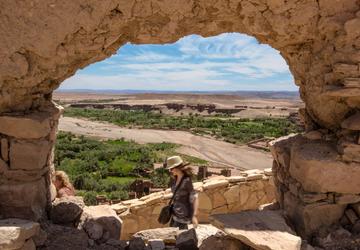
  • Hike along trails in the High Atlas Mountain area of the country
Recommended before you book

Download the full trip brochure

Everything you need to picture the adventure and pack with confidence — in one free PDF.

What's inside the PDF

  • Day-by-day itinerary
    Every day mapped out, covering activities, travel times, meals and where you'll stay.
  • Packing & kit list
    Exactly what to bring, from clothing and essentials to luggage guidelines and what's available to hire locally.
  • What's included
    Accommodation, transport, guides and meals, so you can see exactly what your price covers.
Free, instant PDF - no obligation

Summary

Get ready to blaze a trail on this nine-day active Moroccan adventure, hitting both southern gems and off-the-radar spots. Start in vibrant Marrakech before heading to Tiznit, where the Atlas Mountains set the stage for epic hikes through jaw-dropping landscapes. Along the way, enjoy village hikes with warm welcomes from local communities. Next, it’s off to Zagora, the gateway to the desert and southern Berber culture, where you'll camp under the stars, share stories around a bonfire, and ride camels through golden dunes at sunrise. With gorge hikes, visits to ancient granaries, and inspiring community projects, this adventure is Morocco at its most thrilling and authentic.

Itinerary

  • Day 1

    Marrakech

    Arrive at any time. Attend a welcome meeting at the joining hotel in the evening before an optional group dinner to get to know your fellow travellers.

  • Day 2

    Marrakech/Tiznit

    Travel to Tiznit today, a town on the west coast of Morocco known for its silver jewelry, and mint daggers and sabres. Along the way stop for a visit to Souk EL Had and have lunch there on your own before continuing on. Visit the local silver market upon arrival and the historic medina in Tiznit. Spend the remainder of the day on your own to explore the narrow alleys and enjoy the town's gorgeous natural landscapes surrounded by mountains.

  • Day 3

    Tiznit/Icht

    Leave Tiznit behind and visit the Granaries of Tigida before travelling to the remote Berber oasis of Amtoudi. Here, the group will have lunch with a local family in the village. Stop by more granaries for a visit en route to Icht, a small town on the edge of the Sahara desert. Enjoy an optional group dinner tonight at the hotel.

  • Day 4

    Icht/Zagora

    Travel to Zagora today and visit Icht Village along the way for your underground tour. Your local guide will lead you on a walk around the area concluding with tea at their home in the village. Enjoy free time for lunch on your own in the town of Tata, and arrive in the desert landscape of Zagora in time to walk with your local guide to the comfortable desert camp. Enjoy welcome tea and pastries while you watch the sunset. Dinner will be served tonight at camp. Make sure you do some night sky gazing in a place with very little light pollution.

  • Day 5

    Zagora

    Witness sunrise in the desert then have breakfast before departing camp via a camel ride through the dunes. Arrive to a local family's oasis and enjoy a traditional welcome before a cooking experience hand in hand with members of the family. Learn about their culture and lifestyle, as the group waits for lunch to be ready. Before heading back to Zagora, the group will visit an old library to learn about ancient books from The Middle East and Africa that are a thousand years old. Then, spend time at a pottery workshop in the village, and discover a unique and preserved way of shaping clay. Return to the dunes nearby for an epic sunset (if the weather allows).

  • Day 6

    Zagora/Aït Ben Haddou

    In the morning begin your travels to Aït Ben Haddou. Stop along the way in Ouarzazate where the Atlas Film Studio is and take some free time for lunch on your own. Arrive at Aït Ben Haddou in the late afternoon and visit the Ksar, a group of earthen buildings surrounded by high walls. Enjoy the sunset at this spot before having dinner at the hotel with the group.

  • Day 7

    Aït Ben Haddou/Aït Bouguemez

    Transfer to the town of Demnat this morning and embark on a hike from this cultural crossroads to the Imi nifri Waterfalls and impressive natural bridge. Arrive at Aït Bouguemez in the late afternoon and enjoy this beautiful part of Morocco in the High Atlas Mountains with its strong ties to Berber culture and traditions.

  • Day 8

    Aït Bouguemez

    Begin today’s hike around the valley and to the Granary of Tabat in the morning. Then have lunch with a local family before a free evening to enjoy the area on your own. Dinner is included at the hotel tonight.

  • Day 9

    Aït Bouguemez/Marrakech

    Head back to Marrakech today stopping by a G for Good project along the way for an introduction to the work being done in the local community. The tour ends upon arrival in Marrakech.

What's Included

  • Accommodation

    Hotels (7 nts), Desert Camp (1 nt).

  • Meals

    Breakfasts: 8, Lunches: 4, Dinners: 6

    Vegetarian options are available on all meals throughout the adventure.

    Vegetarian options available

  • Local Guide

    Guided

    This adventure is led by a local guide throughout. The main language of this adventure is English. Please contact us for other languages available.

  • Wifi

    Wifi is available during the adventure. In some areas and / or accommodation / transport Wifi may be free.

Dates & Prices

  • Sep 2026

    from £791
  • Oct 2026

    from £764
  • Nov 2026

    from £696
  • Dec 2026

    from £870
  • Jan 2027

    from £870
  • Feb 2027

    from £870
  • Mar 2027

    from £870
  • Apr 2027

    from £949
  • May 2027

    from £1,019
  • Sep 2027

    from £1,019
  • Oct 2027

    from £1,019
  • Nov 2027

    from £870
  • Dec 2027

    from £870
  • Jan 2028

    from £870
  • Save 21%
    Monday 9 Nov 2026to Tuesday 17 Nov 2026
    6+ spaces of 14 leftGuaranteed Departure
    £879£696
    Pay MonthlyBest offer
    Book for£250 today, pay the rest later
    Solo Room from +£207
  • Save 1%
    Monday 16 Nov 2026to Tuesday 24 Nov 2026
    6+ spaces of 14 leftGuaranteed Departure
    £879£870
    Pay Monthly
    Book for£250 today, pay the rest later
    Solo Room from +£207
  • Save 21%
    Saturday 28 Nov 2026to Sunday 6 Dec 2026
    6+ spaces of 14 leftGuaranteed Departure
    £879£696
    Pay MonthlyBest offer
    Book for£250 today, pay the rest later
    Solo Room from +£207

Essential trip information

Our Important Notes and Packing List cover all essentials, from necessary equipment to inclusions, ensuring you're fully equipped and informed for this extraordinary adventure and more.

Frequently asked questions
  • What are the main highlights and activities included in this tour?

    This tour offers a range of highlights including visits to unique local destinations like Icht and Tiznit for village tours and market visits, a cooking demonstration of Madfouna and Tajin in the Zagora desert, exploring the historic ksar of Aït Ben Haddou, and hiking trails in the High Atlas Mountains. Specific activities include a Zarbiat Achbarou Cooperative Visit, Souk El Had Visit, Tiznit Silver Market Visit, a locally guided underground village visit in Icht, a desert stay experience with a camel ride in Zagora, and an Iminifri Natural Bridge Hike.
  • What type of accommodation can I expect on this trip?

    You will stay in local hotels for 7 nights and a desert camp for 1 night. Expect local hotels or pensions which vary in standard; some may not have elevators, air-conditioning, or English-speaking staff. They are typically locally-run with traditional character and central locations. Morocco is a developing country, so expect quirky plumbing and potentially cold showers.
  • What meals are included in this trip?

    The tour includes 8 breakfasts, 4 lunches, and 6 dinners.
  • What should I expect regarding Moroccan cuisine and dining on this tour?

    Moroccan cuisine is world-famous. Breakfasts are usually simple, often a croissant or sweet roll with jam and instant coffee, sometimes a buffet. Lunches and dinners feature staples like couscous, tagine, and brochette, typically costing 10-15 USD per meal. You can also try pastilla (a sweet pastry with savory filling) and harira (chickpea soup). Fresh orange juice is highly recommended, and along the coast, fresh seafood is a must-try. Your CEO can suggest favorite local restaurants.
  • What are the modes of transportation used during the tour?

    Transportation throughout the tour will be by private vehicle, camels (during the desert experience), and walking during hikes and village explorations.
  • How large will the group be for this tour?

    The maximum group size is 14 travelers, with an average of 10.
  • Who will be leading the group during the tour?

    The group will be accompanied by a Chief Experience Officer (CEO) throughout the tour. The CEO acts as a group coordinator and manager, offering general knowledge of Morocco, suggesting activities, recommending eating venues, and introducing local friends. Certified local city guides are also used for specific sites.
  • Are international flights included in this trip?

    No, international flights are generally not included in the price of your tour. You should contact your airline for the most up-to-date information regarding check-in times and baggage allowances.
  • What should I know about currency, credit cards, and exchanging money while on this tour?

    The local currency is the Moroccan Dirham (MAD). ATMs are common and generally accept Cirrus and Plus cards, but it's advisable to check with your bank before departure and carry more than one card type. Visa is the most widely accepted credit card, mainly for larger purchases, and a fee usually applies. Euros are commonly accepted for exchange, along with GBP and USD. It's best to have a combination of cash (Euro/GBP/USD) and cards. Daily exchange rates can be found at www.xe.com.
  • Is tipping customary in Morocco, and how is it handled on this tour?

    Tipping is customary and expected in Morocco. To simplify this, the tour operator uses a tipping kitty system where your CEO collects a contribution at the start of the tour to tip service providers as a group (excluding the CEO). On Day 1, your CEO will advise the required amount in USD or local currency (MAD). Tipping your CEO is also appreciated at the end of the trip, with a guideline of $8-11 USD per person per day.
  • How much emergency money should I bring on this trip?

    It is recommended to have access to at least an additional USD $200 (or equivalent) as an emergency fund, for unforeseen circumstances like route changes due to natural disasters. This is a rare occurrence.
  • Are there any health considerations I should know before traveling?

    It is your responsibility to consult with your travel doctor for up-to-date medical travel information and required inoculations well before departure. While there are no specific health requirements for this trip, carrying a First Aid kit, hand sanitizers, and any personal medical requirements is recommended. Be aware that you will be in remote areas away from medical facilities for some time, and leaders are prohibited from administering any drugs.
  • Is travel insurance required for this trip?

    Yes, travel insurance is compulsory. You will need to show evidence of coverage for medical expenses (including emergency evacuation and repatriation, minimum USD200,000) to your leader. Personal liability, cancellation, curtailment, and loss of luggage are strongly recommended. Ensure your policy covers all included adventure activities.
  • What are the trip-specific safety considerations?

    Like any major city, some areas are safer than others. It's important to use common sense, be aware of your surroundings, and mind your personal belongings.
  • What rules should I know before joining this trip?

    Illegal drugs are not tolerated and contravene local laws, risking the group. Smoking marijuana and opium, while part of local culture in some areas, is not acceptable for travelers. The exploitation of people in the sex trade is strictly against the tour philosophy. CEOs have the right to expel any group member found with drugs or utilizing the services of paid sex workers.
  • What should LGBTQ+ travelers know about safety and travel considerations on this trip?

    The safety and well-being of all travelers, including those identifying as part of the LGBTQ+ community, is a priority. For specific concerns and resources, you are encouraged to visit the tour operator's LGBTQ+ page and use tools like Equaldex for destination-specific information.
  • What should I know about the climate in Morocco during the tour?

    Morocco has a Mediterranean climate along the coast, becoming more extreme inland. Winters (October to March) have cold nights and pleasant days. Summers (April to September) are pleasant until mid-June when temperatures become extremely hot (up to 50°C), moderating in late September. Inland areas are very dry with high daytime temperatures for most of the year, except in higher mountains. Rain is generally short bursts from November to March. Be prepared for very hot days in summer and cold nights in the mountains during autumn, early spring, and winter (down to -6°C), with a high probability of snowfall. Most Moroccan buildings are not equipped with heating, so warm layers are essential for colder months.
  • How should I dress to respect local customs during the tour?

    When visiting mosques and religious monuments, modest dress is required, meaning shoulders should be covered, and short shorts or skirts should be avoided. In less touristic areas outside of capital cities, local dress is often more conservative. Both men and women are advised to wear loose-fitting clothes with shoulders covered as a sign of respect. Your CEO can offer more specific advice.
  • What languages are spoken in Morocco?

    Arabic is the official language, with a distinctive Moroccan dialect. Approximately 40% of the population, mainly in rural areas, speaks Amazigh in one of its three dialects. French is widely spoken in economics, commerce, education, and government. Many Moroccans in the north speak Spanish, and English is commonly spoken in tourist areas.
  • What is the primary religion in Morocco?

    Islam is the official state religion, with almost the entire population being Sunni Muslim. There is a small percentage of Christians (1%) and Jews (0.2%).
  • Are there any cultural events like Ramadan or Eid al-Adha that might impact the tour?

    Yes, Ramadan and Eid al-Adha, determined by the lunar cycle, can impact travel. During Ramadan (e.g., Feb 28-Mar 29, 2025; Feb 17-Mar 19, 2026), Muslims fast from sunrise to sunset. This may lead to some limitations in services and schedule disruptions, though food is available for non-Muslims. Increased cultural sensitivity is important; wear loose-fitting clothes covering knees and shoulders, and avoid eating, drinking, or smoking in public. During Eid al-Adha (e.g., Jun 16-17, 2024; Jun 6-7, 2025), most shops and restaurants may be closed, some historical sites might be inaccessible, and hotels may have fewer staff.
  • How old must I be to join this trip?

    You must be 18 to travel unaccompanied. For minors traveling with a guardian over 21 years old, the minimum age is 12.
  • When can I do my laundry on this trip?

    Some hotels offer laundry facilities for a charge. If you plan to do your own laundry, it is suggested to bring non-polluting or biodegradable soap.
  • What should I do if I experience problems upon arrival?

    If you encounter problems preventing you from starting your trip as scheduled, immediately refer to the emergency contact details provided in your dossier. If you have a pre-booked transfer and haven't connected with a representative within 30 minutes of clearing customs, you should take a taxi to your starting hotel following the joining instructions. You can then apply to your travel agent for a refund of the transfer cost.
  • What is the physical rating and travel style of this tour?

    This is an active tour with a physical rating of 3, indicating a moderate level of activity. You should be prepared for hiking and an adventurous itinerary.
  • What type of activities are included in this tour?

    This tour includes village tours and local market visits in Icht and Tiznit, a cooking demonstration and lunch in Zagora, a desert stay experience with a camel ride, a kasbah tour in Aït Ben Haddou, and several hikes, including to the Iminifri Natural Bridge and around the Aït Bouguemez Valley and Granaries. You will also visit a G for Good project in Marrakech.
  • What kind of accommodation can I expect on this trip?

    You will stay in local hotels or pensions for 7 nights and a comfortable desert camp for 1 night. These accommodations are locally-run with traditional character. Please note that some may not have elevators, air-conditioning, or English-speaking staff, and you might experience quirky plumbing or occasional cold showers.
  • What meals are included during the tour?

    The tour includes 8 breakfasts, 4 lunches, and 6 dinners. Generally, other meals are not included to offer maximum flexibility in choosing where and what to eat, but your CEO can recommend local eateries.
  • What is the maximum group size for this tour?

    The maximum group size for this tour is 14 travelers, with an average group size of 10.
  • Are there any age restrictions for this tour?

    You must be 18 to travel unaccompanied on this tour. For minors travelling with a guardian over 21 years old, the minimum age is 12.
  • Who will be leading the group on this tour?

    The tour will be led by a Chief Experience Officer (CEO) throughout, who will manage the group and provide general knowledge about Morocco. Certified local city guides will also be used for specific sites to enhance your experience.
  • What modes of transportation are used during the trip?

    Transportation will primarily be via private vehicle, camels (during the desert experience), and walking during hikes and explorations.
  • What should I know about health and medical considerations for this trip?

    It is your responsibility to consult with your travel doctor for up-to-date medical travel information and required inoculations well before departure. We recommend carrying a First Aid kit, hand sanitizers, and any personal medical requirements. Please be aware that you will be in remote areas at times, and for legal reasons, our leaders are prohibited from administering any type of drug.
  • What are the local customs regarding dress that I should be aware of?

    When visiting mosques and other religious monuments, modest dress is required, meaning shoulders should be covered, and short shorts or skirts should be avoided. Outside of major tourist centers, local dress is often more conservative, and it's recommended for both men and women to wear loose-fitting clothes with shoulders covered out of respect. Your CEO can offer more specific advice.
  • What currency is used in Morocco, and how should I manage my money?

    The local currency in Morocco is the Moroccan Dirham (MAD). ATMs are common but may not always work reliably, so it's advisable to carry more than one card type and check with your bank before departure. Visa cards are widely accepted for larger purchases, though a fee may apply. Euros, GBP, and USD are commonly accepted foreign currencies for exchange in major cities. A combination of cash (preferably local currency or Euros/GBP/USD) and cards is recommended.
  • Are there any optional activities available on this trip?

    No, there are no optional activities explicitly listed for this trip.
  • What is the expected climate/weather during the tour?

    The climate in Morocco is Mediterranean along the coast and more extreme inland. Summer months (April to September) can be very hot during the day (up to 50°C), while winter months (November to March) can be cool to cold, especially in the Atlas Mountains, with a high probability of snowfall (down to -6°C at night). Most Moroccan buildings lack heating, so appropriate layers are essential for cooler periods.
  • How might cultural events like Ramadan or Aid Al-Adha affect the tour?

    During Ramadan, Muslims fast from sunrise to sunset. There might be some limitations to services or schedule disruptions, but tours generally operate effectively, and food is available for non-Muslims. Increased cultural sensitivity is important; wear loose-fitting clothes that cover knees and shoulders, and try to avoid eating, drinking, or smoking in public. During Aid Al-Adha, most shops and restaurants may be closed, and historical sites might have limited hours.
  • Is travel insurance required for this trip?

    Yes, travel insurance is compulsory to participate in this trip. You will not be allowed to join without evidence of travel insurance. A minimum coverage of USD200,000 for medical expenses, including emergency evacuation and repatriation, is required. It is strongly recommended that the policy also covers personal liability, cancellation, curtailment, and loss of luggage and personal effects. Ensure your policy covers all included adventure activities.
  • What safety guidelines should I follow during the trip?

    In major cities, exercise common sense, be aware of your surroundings, and mind your personal belongings. Illegal drugs are not tolerated and can lead to expulsion from the group. The exploitation of people in the sex trade is strictly against the tour's philosophy and can also result in expulsion. LGBTQ+ travelers are encouraged to consult specific resources for safety and comfort.
  • Will laundry facilities be available on this trip?

    Laundry facilities are offered by some of our hotels for a charge. There will be times when you may want to or have to do your own laundry, so we suggest you bring non-polluting/biodegradable soap.
  • Are international flights included in the tour price?

    No, international flights are generally not included in the price of your tour. You should arrange your own international travel.
  • Anna's profile
  • Petra's profile
  • Charlotte's profile

Still have questions?

Can't find the answer you're looking for? Please chat to our friendly team.

Get In Touch

Why book with us

  • Help Change The World

    We collaborate with local businesses and communities.

  • Best Price Guaranteed

    We won't be beaten on price. If you find this adventure at a lower price please get in touch!

  • You're In Good Hands

    We work with trusted tour operators around the world.

  • You're spoilt for choice

    We have the best choice of adventures on the market.

Similar adventures

Was this page helpful ?

If you need information about a tour or a booking, please contact us instead.