Highlights of Japan - Kyushu Island 2027 - 9 Days
Trip Snapshot
Age range
16 - 79Start / End
- Fukuoka
- Fukuoka
Physical rating
Group size
1 - 16Meals included
11Highlights
- Discover the dramatic volcanic scenery, rich culture and delicious food of Kyushu Island
- Aso-Kuju National Park giant caldera, pristine forest and grasslands
- Nagasaki and Fukuoka historic crossroads of East and West
Download the full trip brochure
Everything you need to picture the adventure and pack with confidence — in one free PDF.
What's inside the PDF
Day-by-day itinerary
Every day mapped out, covering activities, travel times, meals and where you'll stay.Packing & kit list
Exactly what to bring, from clothing and essentials to luggage guidelines and what's available to hire locally.What's included
Accommodation, transport, guides and meals, so you can see exactly what your price covers.
Summary
Discover a hugely enjoyable side of Japan that few travellers reach. Our nine-day Kyushu adventure takes you through the north of the country's third-largest island, where dramatic landscapes, bubbling hot springs and rich culture await. Explore the vibrant cities of Fukuoka and Nagasaki and sample the region's famous tonkotsu ramen. There's even a chance to see one of the world's largest volcanic caldera - an awe-inspiring natural wonder.
Aso-Kuju National Park - Discover stunning volcanic landscapes, steaming hot springs, virgin forests and grasslands
Hot Spring haven - Visit the hot spring town of Beppu, famous for its therapeutic waters
Gateways to the West - Uncover the cultural and historical heritage of Nagasaki, Kumamoto, and Fukuoka
Extend your stay? - Visit the highlights of Honshu Island on our 14 day Simply Japan trip in combination with this trip
Itinerary
Day 1
Join Tour in Fukuoka
Our tour starts today in Fukuoka on Kyushu Island, Japan's third-largest island and the historic gateway to Asia. This southernmost island of the mainland is influenced by a long history of contact with the rest of Asia and the West.
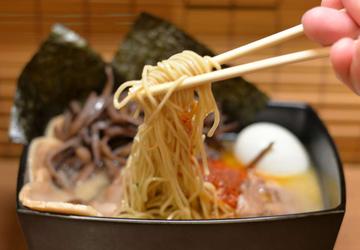
Fukuoka is the largest city and a hotspot of culture, art, history and food. This is a great place to start our exploration of northern Kyushu, through a landscape of dramatic mountains, volcanic terrain, varied hot springs and peaceful beaches. Fukuoka is known as one of the top destinations in Japan for delicious food. While the seafood and vegetables are excellent, the city is also famous for its chicken dishes. Local specialties include mizutaki (a hot pot made with chicken) and yakitori (grilled chicken skewers). The city also has a great street food scene, and one dish that has gone global is tonkotsu ramen - a local variation on a famous noodle dish. If you are arriving early, you may choose to visit the Kyushu National Museum or Fukuoka Tower.
For those arriving on time, our tour leader plans to meet you in the hotel reception at 6pm for a welcome meeting, with the chance to go out afterwards with the rest of the group for dinner. If some of the group are arriving on later flights, the main introductory briefing will take place on the morning of Day 2 with everybody present.
There are no activities planned today, so you're free to arrive at any time. If you miss the welcome meeting, your tour leader will inform you of any essential information as soon as you catch up.
We don't provide arrival transfers on this tour, but detailed information on how to reach the hotel will be provided in your final documentation. Fukuoka Airport (FUK) is around 20 minutes away from the hotel by metro or slightly longer by a relatively inexpensive taxi, depending on traffic.
If you're joining this trip after participating in one of our other trips that end on Honshu Island, such as Simply Japan, you can either make your own way to Fukuoka or contact us to put you in touch with our local partners who will help arrange your train ticket. For this journey you may prefer to forward your main luggage. You can consult the tour leader about this on tour and decide if you want to do this, paying the hotel directly for the service with your tour leader's assistance.
Day 2
Explore Fukuoka City by public transport
Our adventure kicks off after breakfast this morning. First, we take the train out of town to the peaceful grounds of the Shinto shrine of Dazaifu Tenmangu. Hundreds of Tenmangu shrines exist across Japan, dedicated to the exiled scholar Michizane and, among these, two reign supreme - one in Kyoto and this one in Fukuoka, which is built atop his grave. Thousands of plum trees are planted here, adding to the natural beauty. A short distance away is Komyozenji Temple for an introduction to Buddism in Japan.
After heading back into town, we explore Ohori, a scenic city park with a large pond, which was once part of the moat system of a castle. After an included tonkotsu ramen lunch, we continue to Tochoji Temple, home to Japan's largest seated Buddha. We end today's tour with a glimpse into traditional life, crafts and culture in the Meiji and Taisho eras at the Hakata Machiya Folk Museum, which focuses on the houses from that period.
Fukuoka is well known for its open-air food stalls (Yatai), and tonight we recommend trying some of them out. They're not suitable for a group meal as they can only seat a few people, so we suggest splitting up into mini groups or exploring on your own. There are dozens across town, your tour leader will be able to advise you where to find them - there are several which are centrally located, as well as some situated along the water on the southern end of Nakasu Island. Depending on how many of the group arrive in time for the day 1 meeting, your Tour Leader may arrange a group meal tonight and advise Yatai stalls for the first night.
Day 3
Train to Nagasaki. Discover the Edo period controlled trading island of Dejima and the Peace Park Memorial and Museum
We have a busy day ahead today as we set off on our travels around Kyushu. First, we take the subway then a bullet train to Nagasaki - a journey of around one hour and a half. Nagasaki is an important deep harbour city with an eventful history and was, of course, the target of the second atomic bomb attack on Japan. After dropping our overnight bags at the hotel reception for safe keeping, our first visit is to the poignant and moving Peace Park and Museum, a memorial site dedicated to the victims of the 1945 atomic bombing, which symbolises the hope for world peace and the abolition of nuclear weapons. In Nagasaki we will be occasionally be staying in a hotel that is located around twenty minutes walking away from the centre of town, on a hill with easy access to the cable car that goes up Mount Inasa. To save time today, on arrival we plan to make use of the train station lockers for anybody that prefers to store their overnight bag and not carry it around with them for the whole day, rather than spending time heading to drop them off at the hotel.
The city was, for long periods in its history, Japan's main contact with the outside world. In the 16th century it was established as the main trade point with the Portuguese. As well as providing wealth from trade, the Portuguese tried to introduce Christianity. At the start of the Edo period under Shogun rule after almost a century of turmoil the religion was banned, foreign traders were expelled, and Japan closed its doors to the West. The one exception was the artificial island in Nagasaki harbour, Dejima. This small, closely guarded enclave was the site of the Dutch Trading Mission, which remained Japan's only contact with the outside world for almost 200 years. During our visit here and to the residential quarters of Glover Gardens this afternoon, we'll see that some of the original features remain, as well as some excellent reconstructions of the 18th-century buildings. We also plan to see the facade of Oura Cathedral, Japan's oldest standing Christian church and a UNESCO World Heritage site. The sightseeing should end at around 5.30pm and this evening, if time and energy permits you may consider visiting Chinatown.
Please note, our main luggage will be forwarded to our hotel in Kumamoto today, and we'll be travelling with just our overnight bags. Depending on local arrangements, you might need to leave your luggage in reception the night of Day 2 or before breakfast this morning - your tour leader will advise you on the time. For more information, please refer to the Budgeting & packing section of the Trip Information.
Day 4
Train and ferry to Kumamoto. Visit Kumamoto Castle, built by a samurai warlord, and Suizenji Jojuen Garden
This morning, we make our way to Shimabara Port by local train (a one and a half hour journey), where we ride the ferry (a one-hour journey), then a local bus bound for Kumamoto, a major city rich in samurai history located on the west coast of Kyushu Island.
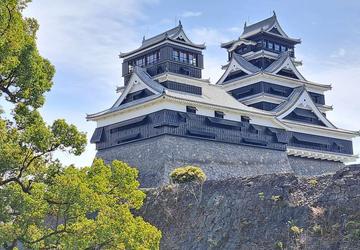
After some free time for lunch, our first visit is to Kumamoto Castle, considered to be one of the three most impressive in Japan. The Tour Leader will give explanations before we enter the keep of the castle as guiding is not permitted inside. It is worth a climb to the top for views of Kumamoto. Next up, we have planned a visit to Suizenji Jojuen Garden so you can see a spacious, Japanese style landscape garden. Timings are too tight to include, but in case you are interested in visiting Lafcadio Hearn's former residence instead, of your own accord, please discuss with the Tour Leader for instructions. Lafcadio Hearn was a Greek-born American academic and writer who ended up living here and helped introduce the culture and literature of Japan to the West.
Day 5
Scenic charter bus journey across Aso-Kuju National Park
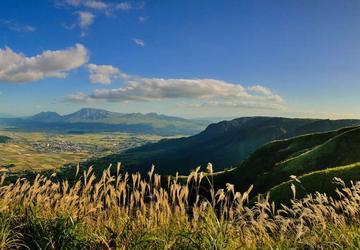
Over the next two days, we'll traverse the dramatic volcanic landscapes of northern Kyushu in our own vehicle. At times, we'll be travelling through Aso-Kuju National Park - a dynamic landscape with volcanic peaks, hot springs, virgin forests and vast grasslands. The southern part of the park is dominated by Mount Aso, one of the world's largest calderas with five peaks within it that are said to resemble a sleeping Buddha. This morning, we plan to visit Kamishikimi Kumanomimasu shrine that offers a contrasting setting amid the forest, and we access it on a long stone staircase through the forest. We will also stop at Kusasenri for panoramic views.
For over a millennium, the park's grasslands have been seared away in a controlled burn from mid-February to March. This helps preserve the grasslands for cattle and horses. Parts of the caldera and national park are 'regular sections' where inhabitants farm and graze the rich soils, and we plan to stop at the Aso Milk factory, famous in Japan for its high-quality milk and cheese products. Our journey continues this afternoon with a stop at the Daikanbo Lookout for commanding views over the caldera. We also plan to visit the Minami Aso Panorama lookout deck. Our final stop is at the ancient and revered Aso Shrine before we head to our accommodation for the night.
For our night in Aso Kuju we will be staying at the comfortable-grade Senomoto Hotel in a beautiful natural setting. We stay in western style twin rooms with en suite toilet and bathrooms. There are onsen communal bathing facilities for you to use, but please note that tattoos must be covered.
Please note that occasional volcanic activity may cause changes to our planned itinerary - our tour leader will inform you of any necessary changes.
Day 6
Scenic drive to Beppu via Nabegataki Falls, a Taiko drum performance and the Tadewara marshes
Continuing our journey across Kyushu today, we'll make several stops at places of interest along the way. The order of visits today may vary according to local conditions and daylight hours. Our first visit is along a 1-kilometre/0.6-mile trail that leads us to Nabegataki Falls, a 10-metre/33-foot high waterfall with access to the cavern behind the falls. We will also make a stop at Kokonoe Yume Otsuribashi - a dramatic footbridge that traverses the panoramic scenery of a remote forested valley.
The taiko drum has been part of the Japanese culture for centuries, used at different times in communication, military and religious ceremonies. This afternoon, if the weather allows, we plan to see a taiko drum performance on an open-air stage against a dramatic backdrop. Please note that this will not always be possible as the group performs only occasionally. If there is a performance and the weather forecast is bad, it may be moved to an indoor location. If seeing the main performance is not possible, we plan instead to visit a drumming school where you can meet drummers and try your hand.
Tadewara is one of two protected marshes at the edge of the Kuju mountain range, which runs through the centre of the National Park. It is home to a variety of rare plants as well as birdlife, and we will spend a short time walking a loop on the elevated cedar boardwalks. We also plan a visit to Sakamoto Zenzo Gallery if time permits.
Finally, we reach our hotel in Beppu, where we'll spend the next two nights. With over 2,000 hot springs, Beppu is one of Japan's most famous hot spring resorts, and only Yosemite has more. Despite being heavily geared up for tourism, Beppu is still a place of interest and worthy of inclusion in the itinerary.
Please note, our main luggage will be forwarded to our hotel in Fukuoka for our arrival on Day 8, and we'll be travelling with just our smaller bags for the next couple of nights. We do this to avoid being encumbered with our main luggage for the trip from Beppu to Fukuoka where we visit Kitsuki enroute. Depending on local arrangements, you might need to leave your luggage in reception the night of Day 5 or before breakfast this morning - your tour leader will advise you on the time. For more information, please refer to the Budgeting & packing section of the Trip Information.
Day 7
Explore the colourful hot springs of Beppu. Steam-cooked local lunch
Beppu is Japan's hot spring capital with eight major springs and some 3,000 vents - you'll be able to see and smell the sulphurous steam rising across part of this resort city. This morning we will visit some of the popular and colourful hot springs in what is locally known as a hell tour - including Sea Hell (Umi Jigoku), Cooking Pot (Kamado Jigoku), Blood Pond Hell (Chinoike Jigoku) and depending on the time of your visit you may be lucky enough to see a Geyser erupting at Tatsumaki Jigoku
For lunch today, we've planned jigoku-mushi or 'hell steaming'. With the help of a local guide, we'll source our ingredients from the local market before cooking over the natural geothermal steam.
The rest of the late afternoon is free for you to explore solo. Takegawara Onsen was built in 1879 and is one of the oldest and most famous, so you may wish to visit to see the distinctive architecture and perhaps even have a communal hot bath or a sand bath.
Day 8
Visit the traditional Edo period town of Kitsuki on train route back to Fukuoka
This morning, we leave Beppu and take the local express train to the former castle town of Kitsuki - a hidden gem in Oita, which is known by locals but more rarely touched by foreign tourists.
We've planned a short walking tour with a local guide to explore the samurai townscape, seaside castle setting and streets infused with the Edo-era and three historic artisan shops - accessible only with a local guide. The tour includes a rare magewappa (woodcraft) workshop run by one of only two remaining craftsmen in Kyushu, a miso brewery founded in 1900, a sake brewery and a traditional tea shop from the mid-Edo period. Enjoy tastings of miso, sake and tea. This is a rare opportunity to experience over a century of craftsmanship and tradition. After some free time for lunch here, we'll return to Fukuoka by express train (a journey of around two hours).
We'll check into our hotel, and the rest of the afternoon is free for last-minute shopping or sightseeing before our final supper and a chance to reflect on the holiday.
Day 9
Tour ends in Fukuoka
The trip ends after breakfast at our hotel in Fukuoka.
There are no activities planned today, so you\ re free to depart from Fukuoka at any time. If your flight is departing later in the day, luggage storage facilities are available at our hotel.
If you\ d like an airport transfer today, you'll need to depart from Fukuoka Airport (FUK), which is around 20 minutes away from the hotel. The transfer will be by metro, and our tour leader will give you your ticket and clear instructions so you can travel unescorted.
What's Included
Accommodation
Comfortable
Meals
Breakfasts: 8, Lunches: 2, Dinners: 1
Vegetarian options are available on all meals throughout the adventure.
Vegetarian options availableLocal Guide
GuidedThis adventure is led by a local guide throughout. The main language of this adventure is English. Please contact us for other languages available.
Wifi
Wifi is available during the adventure. In some areas and / or accommodation / transport Wifi may be free.
Dates & Prices
Feb 2027
from £2,965Mar 2027
from £3,213Apr 2027
from £3,213May 2027
from £3,114Jun 2027
from £2,965Sep 2027
from £3,213Oct 2027
from £3,213Nov 2027
from £3,114
- Save 1%Saturday 12 Jun 2027to Sunday 20 Jun 20276+ spaces of 16 left£2,995£2,965Pay MonthlyBest offerBook for£250 today, pay the rest later
Essential trip information
Our Important Notes and Packing List cover all essentials, from necessary equipment to inclusions, ensuring you're fully equipped and informed for this extraordinary adventure and more.



Still have questions?
Can't find the answer you're looking for? Please chat to our friendly team.
Why book with us
Help Change The World
We collaborate with local businesses and communities.
Best Price Guaranteed
We won't be beaten on price. If you find this adventure at a lower price please get in touch!
You're In Good Hands
We work with trusted tour operators around the world.
You're spoilt for choice
We have the best choice of adventures on the market.