Cape Town to Victoria Falls Adventure - 18 Days
From £2,843£158 per daySave 26%

Trip Snapshot

Genders

  • Female68%
  • Male32%

Average age

53
12 Min100 Max

Start / End

  • Cape Town
  • Victoria Falls

Physical rating

2/5

Group size

1 - 18

Meals included

23

Highlights

  • Marvel at the Fish River Canyon
  • Explore giant sand dunes and Victoria Falls
  • Track the "Big Five"
  • Take wildlife walks and traditional canoe rides
Recommended

Download Trip Brochure PDF

Uncover insider tips, see a packing list and view a detailed itinerary and accommodation information.

Summary

This 18-day journey through four African countries hits the highlights and is perfect for the adventurer who wants to discover the region’s diversity. Explore the Okavango Delta by traditional mokoro canoe, marvel at some of the highest sand dunes in the world in the Namib Desert, and meet the San Bushmen of the Kalahari. Your knowledgeable CEO (Chief Experience Officer) will take care of the hassles and planning while you recharge in hotels, local lodges, and camps for an unforgettable cultural experience you'll forever treasure.

Itinerary

  • Day 1

    Cape Town

    Arrive at any time. Get the most out of your time in Cape Town by pre-booking the South African Wine Tour and Tasting extra. If you do, we recommend booking accommodation for an extra night pre-tour as this activity has an early start time. Please note, due to the timings of this activity, there is a possibility you may miss the welcome meeting on day 1 of your tour - in this case, your CEO will leave you a message detailing what time and where you should meet the next morning.

  • Day 2

    Cape Town/Lambert's Bay

    Head up the Cape's west coast, stopping at the the tour operator supported !Khwa ttu San Culture and Education Centre. Arrive in Lambert's Bay and enjoy an included wine tasting. Then, opt to visit Bird Island, or stroll through this charming town. Today's journey takes you to Lambert’s Bay, a picturesque town on the west coast of South Africa, where you will enjoy an included wine tasting. Learn how to analyze your palates, listen to your taste buds, and how to pair your food with the best wine raised in the foothills of the Cederburg Mountains.

  • Day 3

    Lambert's Bay/Orange River

    Continue north and cross into Namibia. Settle in along the banks of the Orange River with time to enjoy your surroundings. Travelling north, the group will enjoy a full day's travel through this dry and remote part of South Africa.

    In the mid-afternoon, cross into Namibia and a more arid region with a stop at scenic Orange River for the evening. After getting settled, choose to enjoy the late afternoon by the river bank.

  • Day 4

    Orange River/Fish River Canyon/Keetmanshoop

    This morning, leave the banks of the Orange River behind as you continue on to Fish River Canyon. Visit this breathtaking canyon, then travel north, enjoying dramatic Namibian landscapes as you head up towards Keetmanshoop. In the afternoon visit the geological formation: Giant's Playground and the Quiver Tree Forest.

  • Day 5

    Keetmanshoop/Namib Desert

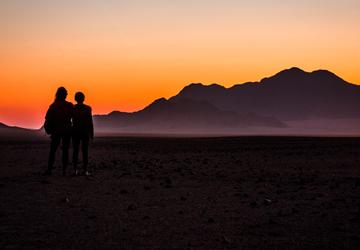
    Start early and travel north enjoying the dramatic Namibian landscape as you head up towards Sesriem. Arrive in the area in the late afternoon, where the towering red sand dunes of Sossusvlei form the gateway into the Namib Desert.

  • Day 6

    Namib Desert

    Visit Sossusvlei Dunes and Sesriem Canyon, and climb the towering Dune 45. Opt to visit Deadvlei. Enjoy a visit to Sossusvlei, a clay pan enclosed by the world’s largest sand dunes, up to 300m (984 ft) high. Here, use some free time to enjoy the sand dunes on your own. Visit the Sesriem Canyon, a small canyon typical of the area.

  • Day 7

    Namib Desert/Swakopmund

    Enjoy the views of the Namib desert before arriving in the historical town of Swakopmund. Get a real feel for the Namib Desert as we spend hours crossing this empty region.

    En route to the Namibian coast, take a coffee break in Solitaire, a mystical village consisting of a filling station, general dealer/coffee shop, and small mechanical workshop. Before arriving to Swakopmund, drive through Walvis Bay, the only town on the Namibian coastline that boasts a deep-sea harbor.

    Spend two nights in the area exploring this historical town or trying some of the numerous activities available, such as sandboarding or a skydiving.

    Swakopmund has bizarre lunar landscapes, unforgettable sunsets, and prehistoric Welwitchia plants.

  • Day 8

    Swakopmund

    Spend a day exploring all the area has to offer. Optional activities include sandboarding, skydiving, and a scenic flight. You can pre-book your sky dive on the checkout page, or through your Global Connection Officer or travel agent.

  • Day 9

    Swakopmund/Etosha National Park

    Enter Etosha National Park and enjoy an afternoon wildlife safari drive in our touring vehicle. Begin moving east into the interior of Namibia. On this route, pass through a lunar landscape and see the imposing Spitzkoppe, also known as the “Matterhorn” of Namibia, in the distance. Visit Etosha National Park on a wildlife safari drive in our touring vehicle. Keep an eye out for lions, giraffes, elephants, rhinos, and antelopes. After sunset, some animals may head to the watering holes near the campground.

  • Day 10

    Etosha National Park

    Enjoy another wildlife safari drive in our touring vehicle and keep your eyes peeled for the vast array of incredible animals.

  • Day 11

    Etosha National Park/Windhoek

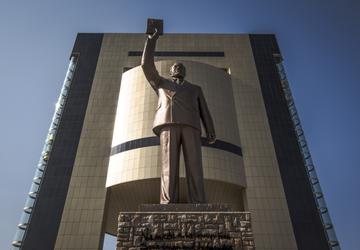
    Arrive in Windhoek and visit the the tour operator supported Penduka Village Restaurant & Shop for an included lunch, then spend the rest of the afternoon exploring the German-influenced capital city. Leave Etosha National Park and head south through the Namibian countryside to Windhoek.

  • Day 12

    Windhoek/Ghanzi

    Get ready to check another country off your list as the group crosses the border from Namibia into Botswana. Travel east into the heart of the Kalahari to Ghanzi. Catch a glimpse of how the Indigenous San Bushmen adapted to this difficult landscape on a San bushman walk.

    Then while the day comes to an end, enjoy the warm hospitality of the San Bushmen as the group will be staying at the the tour operator-supported Dqae Qare San Lodge & Camp. The best part? You are making a difference in the lives of this community just by enjoying your time at camp. So sit back, allow yourself to become immersed in their history and culture, sit around the fire, and simply enjoy the moment. Continue through the eastern part of Namibia and cross into Botswana before travelling into the heart of the Kalahari.

    Arrive in the late afternoon and camp in the Ghanzi area.

  • Day 13

    Ghanzi to Maun

    Prepare for a 1-night/2-day journey into the Okavango Delta. Travel along the northern portions of the Kalahari Desert throughout the day – this is a severely arid and barren landscape, though very beautiful.

    After arrival in Maun, the biggest town in the Okavango Delta area, pick up any supplies needed and prepare for the journey into the Okavango Delta.

    Choose to prebook a scenic helicopter ride through the Delta during your free time in Maun.

  • Day 14

    Okavango Delta

    Enjoy wildlife walks, birding and traditional mokoro excursions in the Okavango Delta. Learn the ways of the bush from the local 'polers'. The excursion begins with a drive in customized safari vehicles for about 1-2 hrs to the "dock" to board a mokoro (canoe) that takes us deep into the delta. After a 1-2 hrs in the mokoro, arrive to the camp.

    In the evening, watch a traditional dance performance.

  • Day 15

    Okavango Delta/Nata

    Enjoy the sunrise in the delta before travelling back to Maun by mokoro. Stop in Maun, pick up your luggage, have lunch, and continue to Nata. Travel to Nata. Opt for a sunset wildlife safari drive or bush walk in the area. Watch elephants drink from the camp's watering hole at night.

  • Day 16

    Nata/Kasane

    Travel to Kasane. Opt to embark on a sunset boat cruise on the Chobe River. Travel to Kasane outside the gates of Chobe National Park, home to the largest elephant population in Southern Africa.

    Opt to pre-book a Chobe River Sunset Cruise on the checkout page, or through your Global Connection Officer or travel agent.

  • Day 17

    Kasane/Victoria Falls

    Opt for an early morning safari drive in Chobe National Park, before crossing into Zimbabwe. Enjoy lunch at the the tour operator–supported Lusumpuko Women's Club. Take advantage of free time and choose to visit Victoria Falls, or try a helicopter flight over them. Cross the border to enter into Zimbabwe and continue on to Victoria Falls, arriving in the early afternoon. This is a great base to see natural wonders and take part in some adventure activities.

    Opt to get up close (and wet from the spray) while visiting the immense Victoria Falls, raft the whitewater of the mighty Zambezi, or, for the more adventurous, bungee jump with Victoria Falls in view.

  • Day 18

    Victoria Falls

    Depart at any time.

What's Included

  • Accommodation

    Hotels (6 nts), lodge/chalet (5 nts), guesthouse (1 nt), basic serviced camping (1 nt), Serviced camping (4 nts).

  • Meals

    Breakfasts: 15, Lunches: 3, Dinners: 5

    Vegetarian options are available on all meals throughout the adventure.

    Vegetarian options available

  • Local Guide

    Guided

    This adventure is led by a local guide throughout. The main language of this adventure is English. Please contact us for other languages available.

  • Wifi

    Wifi is available during the adventure. In some areas and / or accommodation / transport Wifi may be free.

Dates & Prices

  • Jun 2026

    from £2,843
  • Jul 2026

    from £3,033
  • Aug 2026

    from £2,954
  • Sep 2026

    from £3,939
  • Oct 2026

    from £2,850
  • Nov 2026

    from £2,850
  • Dec 2026

    from £3,415
  • Jan 2027

    from £3,415
  • Feb 2027

    from £3,415
  • Mar 2027

    from £3,415
  • Apr 2027

    from £3,415
  • Jun 2027

    from £3,563
  • Jul 2027

    from £3,563
  • Aug 2027

    from £3,712
  • Sep 2027

    from £3,712
  • Oct 2027

    from £3,563
  • Nov 2027

    from £3,563
  • Dec 2027

    from £3,415
  • Save 1%
    Wednesday 17 Jun 2026to Saturday 4 Jul 2026
    🔥1 space of 18 leftGuaranteed Departure
    £3,829£3,791
  • Save 26%
    Wednesday 24 Jun 2026to Saturday 11 Jul 2026
    Guaranteed Departure
    £3,829£2,843
    Best offer

Customer reviews & ratings

(4.72 out of 5)
Based on 418 reviews
  • Just amazing. Our CEO and driver made the trip. There was no question or request that was off limits and we all knew that we were truly getting the best experience we could have. I am so grateful to Celeste and Larry as they decided and took me to the doctor an hour or so away; stayed with me whilst I was being treated; took me back and then made supper for the camp. Just incredible. My group was supportive and never made me feel a burden or inconvenience which I think was taking the lead from Celeste and Larry. I love the variety of the trips which mean that experiences are so much more vivid and engaging

    Najma Oct, 2025 Verified
  • Amazing journey into the wildest part of Southern Africa Quality of the program, places to be visited

    Daniele Sep, 2024 Verified

Essential trip information

Our Important Notes and Packing List cover all essentials, from necessary equipment to inclusions, ensuring you're fully equipped and informed for this extraordinary adventure and more.

Frequently asked questions
  • What kind of experience can I expect on this 'Cape Town to Victoria Falls Adventure' tour?

    This 18-day journey through four African countries offers a diverse adventure, hitting highlights such as exploring the Okavango Delta by traditional mokoro canoe, marveling at the highest sand dunes in the world in the Namib Desert, and meeting the San Bushmen of the Kalahari. You'll experience cultural immersion and incredible wildlife.
  • Which countries does this tour visit?

    This adventure tour travels through four African countries, including South Africa, Namibia, Botswana, and Zimbabwe.
  • What are some of the main highlights of the tour?

    Key highlights include marveling at the Fish River Canyon, exploring giant sand dunes in the Namib Desert, experiencing the immense Victoria Falls, tracking the 'Big Five' on wildlife safaris, and taking wildlife walks and traditional mokoro canoe rides in the Okavango Delta.
  • What is the physical rating of this tour?

    The tour has a physical rating of 2. It is not considered a physically demanding journey, but travel can involve long drives and occasional poor road conditions. Most participants find the diverse landscapes, cultures, and wildlife to be well worth the experience.
  • What kind of accommodation can I expect on this trip?

    Accommodation varies throughout the trip and includes hotels (6 nights), lodge/chalets (5 nights), guesthouses (1 night), basic serviced camping (1 night), and serviced camping (4 nights). Camping equipment, including mattresses and insect-netted tents, is supplied.
  • Do solo travelers have to pay extra for their own room?

    No, single travelers are paired in twin or multi-share accommodation with someone of the same sex for the duration of the trip, without an extra single supplement. However, on days 5, 6, 9, 10, and 14, private rooms/tents may not be guaranteed even if the 'My Own Room/Tent' option is booked due to specific accommodation types (like basic camping in the Delta).
  • What meals are included in this trip?

    The tour includes 15 breakfasts, 3 lunches, and 5 dinners. Meals in the Okavango Delta are prepared by your CEO, consisting of continental/local dishes. For other meals, flexibility is offered to explore local dining options.
  • Can dietary restrictions be accommodated?

    Yes, vegetarian meal requests and other dietary requirements for included meals need to be specified prior to arrival.
  • What modes of transportation are used on this trip?

    Transportation includes a comfortable, air-conditioned private local bus for long drives, walking excursions, traditional mokoro canoes in the Okavango Delta, and safari vehicles for wildlife viewing.
  • Who will be leading the group?

    You will be accompanied by a group Chief Experience Officer (CEO) who acts as the manager and leader, and an expert driver throughout the tour. Local guides are also used where specific local knowledge enhances the experience.
  • How large will the group be?

    The maximum group size is 18 travelers, with an average group size of 14.
  • What is the minimum age for participants on this tour?

    The minimum age to travel unaccompanied on this tour is 18 years old. For minors traveling with a guardian over 21, the minimum age is 12.
  • Are there any health considerations I should be aware of, such as vaccinations or malaria?

    It is compulsory to show a valid Yellow Fever vaccination certificate if you are traveling to Botswana from a Yellow Fever endemic country or have recently visited one. Malaria is present in some regions, and it is recommended to speak to your doctor about preventative medication (prophylaxis) and use insect repellent. Always consult your family physician or local travel clinic for the most up-to-date health information at least one month before departure.
  • What should I know about currency, credit cards, and exchanging money while on this tour?

    The currencies used are South African Rand (ZAR) in South Africa (also accepted in Namibia), Namibian Dollar (NAD) in Namibia (equivalent to ZAR), Pula (BWP) in Botswana, and US Dollar/South African Rand in Zimbabwe. It's strongly advised to bring ZAR or USD from your home country or exchange money before the tour for Zimbabwe, as ATMs can be unreliable. USD notes older than 2006 are not accepted. Traveler’s cheques are not recommended. Visa/Plus debit cards are most widely accepted, and it's advisable to carry both Visa and Mastercard if possible, as credit card acceptance is limited to major cities and may incur a 5-10% fee. Power outages can also affect ATM access.
  • How much emergency money should I bring?

    It is recommended to have access to at least an additional USD $200 (or equivalent) as an emergency fund for unforeseen circumstances.
  • What are the visa and entry requirements for my trip?

    All countries require a valid passport with a minimum of 6 months validity. Visa requirements vary by nationality, so please contact your local embassy or consulate. Botswana has a $30 USD tourism levy, and Namibia will introduce a mandatory 90-day visa for USD90 on arrival from April 1st, 2025, with prior application recommended. Visitors to Zimbabwe may also require a visa, with varying fees and requirements.
  • What are the trip-specific safety considerations?

    General safety tips include safeguarding personal items, locking hotel room doors, not carrying large amounts of cash or flashy jewelry, and using a neck wallet/money belt. Drones are prohibited in national parks. Your CEO may amend the itinerary due to safety concerns. Optional activities are undertaken at your own judgment and risk. Always be alert for animals near roads and avoid traveling at night in Namibia. Swimming is at your own risk.
  • Are international flights included in this trip?

    No, international flights are generally not included in the price of your tour. You should contact your airline for check-in times and baggage allowances.
  • What is Planeterra and how does this tour support local communities?

    Planeterra International Foundation is a non-profit dedicated to connecting underserved local communities to tourism benefits. This tour includes 'G for Good Moments' that support local initiatives, such as the !Khwa ttu San Culture and Education Centre, Penduka Village Restaurant & Shop, Dqae Qare San Lodge & Camp, and Lusumpuko Women's Club Lunch.
  • Should I be tipping on my trip, and if so, what are the guidelines?

    Tipping is an expected, though not compulsory, component and is an important source of income. Suggested guidelines per person are: $5-8 USD per day for your CEO, $2-3 USD per day for local guides and safari guide/driver, 10-15% of the bill for restaurant staff, and 50-100 BWP (Botswana Pula) for Okavango Delta polers.
  • When can I do my laundry on this trip?

    Due to frequent travel, same-day laundry service might be limited. Swakopmund, Windhoek, Cape Town, and Victoria Falls are generally convenient places to get laundry done. Your CEO can assist with arrangements.
  • What activities are optional on this trip?

    Optional activities (at extra cost) include: In Cape Town: Two Oceans Aquarium, Hout Bay Kayaking, South African Wine Tour, Cape Point Explorer, Urban/Overberg/West Coast Explorer Tours, Sandboarding, Table Mountain Cable Car. In Lambert's Bay: Bird Island Visit. In Sossusvlei: Deadvlei Visit. In Swakopmund: Living Desert Tour, Sandboarding, Skeleton Coast Scenic Flight, Skydiving, Mondesa Township Tour. In Etosha National Park: Open Vehicle Wildlife Safari Drive. In Ghanzi: Traditional San People Dancing. In Maun: Delta Doors-off Scenic Helicopter Flight. In Nata: Bushwalk, Wildlife Safari Drive. In Chobe National Park: Chobe River Sunset Cruise, Chobe National Park Safari Drive. In Victoria Falls: Helicopter Ride, Victoria Falls Visit, Zambezi Bungee Jump.
  • What are the main highlights of this trip?

    This adventure allows you to marvel at the Fish River Canyon, explore giant sand dunes and Victoria Falls, track the "Big Five", and enjoy wildlife walks and traditional mokoro (canoe) rides.
  • What kind of accommodation can I expect on this tour?

    The tour includes a mix of Hotels (6 nights), Lodge/Chalets (5 nights), Guesthouses (1 night), and Serviced Camping (5 nights, including one basic serviced camping). All camping equipment is supplied, and campgrounds offer shared ablution blocks with hot showers, kitchen facilities, and sometimes a swimming pool.
  • Will I need to participate in setting up camp or meal preparation?

    Yes, participation is an essential part of the camping experience. You will be asked to help with pitching and packing away tents, and with meal preparation and washing up on nights when meals are provided by your Chief Experience Officer (CEO).
  • What types of transportation are used on the tour?

    We primarily use a comfortable, air-conditioned private local bus for journeys. In the Okavango Delta, you will explore by traditional mokoro (canoe) guided by local 'polers'. Safari vehicles are also used for wildlife drives.
  • Are international flights included in the trip price?

    No, international flights are generally not included in the price of this tour.
  • What health considerations should I be aware of before traveling?

    It is recommended to consult your physician or local travel clinic at least one month before departure for up-to-date health information and recommended inoculations. A valid Yellow Fever Certificate is compulsory if traveling to countries like Botswana, South Africa, or Zimbabwe from a Yellow Fever endemic country or if transiting through such an airport for more than 12 hours. Malaria is also present in some regions, and prophylaxis combined with regular use of insect repellent is recommended.
  • Do I need to pay a departure tax?

    All passengers are advised to check the Civil Aviation Authority of Zimbabwe website for updated information on applicable departure taxes for Zimbabwe.
  • What is the maximum group size for this tour?

    The maximum group size is 18 travelers, with an average group size of 14.
  • Is there an extra cost for solo travelers?

    No, single travelers are paired in twin or multi-share accommodation with someone of the same sex for the duration of the trip. However, for specific nights (Day 5, 6, 9, 10, 14), if you book the 'My Own Room/Tent' option, exceptions apply and you may not receive a single room/tent.
  • How much spending money should I budget for?

    Spending money requirements vary by traveler for drinks, shopping, and tipping. It is also recommended to have access to at least an additional USD $200 (or equivalent) as an emergency fund for unforeseen circumstances.
  • Who will be leading the group on this tour?

    You will be accompanied by a Chief Experience Officer (CEO)/driver throughout the trip, who acts as the group manager and leader. All leaders in southern Africa are registered and licensed tourism guides. Local guides are also used where specific knowledge will enhance the experience.
  • What meals are included in the tour price?

    The tour includes 15 breakfasts, 3 lunches, and 5 dinners. Meals included during the Okavango Delta bush camping excursion are prepared by your CEO, and consist of cereals for breakfast, light meals for lunch, and freshly-prepared hot meals for dinner. Vegetarian and other dietary requirements need to be specified prior to arrival.
  • Do I need to complete a medical questionnaire?

    Travelers with a pre-existing medical condition are required to complete a short medical questionnaire, which must be signed by their physician, to ensure they have the necessary fitness and mobility to comfortably complete their chosen trip.
  • What should I know about currency, credit cards, and exchanging money while on this tour?

    South Africa uses the Rand (ZAR), Namibia uses the Namibian Dollar (NAD, equivalent to ZAR), Botswana uses Pula (BWP), and Zimbabwe uses the US Dollar and South African Rand. It is strongly advised to bring USD or ZAR from your home country or exchange money before the tour, especially for Zimbabwe, as ATMs can be difficult to obtain cash from. USD notes older than 2006 are not accepted. Visa/Plus system cards are the most widely accepted debit cards, and it's recommended to travel with both Visa and Mastercard. Credit cards can be used in major cities and towns but are not widely accepted, and a fee of 5%-10% usually applies.
  • What optional activities are available?

    Optional activities include Hout Bay Kayaking, Two Oceans Aquarium, and wine tours in Cape Town; Bird Island Visit in Lambert's Bay; a visit to Deadvlei in Sossusvlei; Living Desert Tour, sandboarding, skydiving, or a scenic flight in Swakopmund; Etosha Open Vehicle Wildlife Safari Drives; Traditional San People Dancing in Ghanzi; a Delta Doors-off Scenic Helicopter Flight in Maun; Nata Area Bushwalks or Wildlife Safari Drives; Chobe River Sunset Cruises or National Park Safari Drives; and Victoria Falls Helicopter Rides, visits, or Zambezi Bungee Jumps.
  • Are drones allowed in national parks?

    No, the use of drones in national parks in Southern Africa is prohibited.
  • What are the general safety and security considerations for this trip?

    It's recommended to safeguard personal items, avoid displaying flashy jewelry, use a neck wallet or money belt for valuables, and utilize hotel safety deposit boxes. A lock for luggage is advisable. Your CEO can amend itineraries for safety concerns and will accompany you on all included activities. During free time, use good judgment for optional activities, travel in small groups, and take taxis at night in cities. Avoid protests/demonstrations. Water-based activities should always be accompanied by a guide.
  • What rules are there regarding illegal drugs and exploitation?

    Illegal drugs are not tolerated on any trips as they contravene local laws and put the group at risk. The exploitation of prostitutes is also contrary to the tour philosophy. CEOs have the right to expel any group member found violating these rules.
  • What should LGBTQ+ travelers know about safety and travel considerations on this trip?

    The safety and well-being of all travelers, including those identifying as part of the LGBTQ+ community, is a priority. Travelers are encouraged to visit the tour operator's LGBTQ+ page for useful resources and information to ensure safety and comfort throughout the trip.
  • What are the visa and entry requirements for my trip?

    All countries require a valid passport (with a minimum of 6 months validity). Visa requirements vary by nationality. Botswana has a $30 USD tourism levy. As of April 1st, 2025, Namibia will introduce a mandatory 90-day visa costing USD90 on arrival; applying prior to travel is recommended. Visitors entering Zimbabwe may require a visa, with fees and requirements varying. It is your responsibility to check and obtain the correct travel documentation.
  • When can I do my laundry on this trip?

    Due to frequent movement, there may not be much time for same-day laundry service. Swakopmund and Windhoek are convenient places for laundry, and facilities are also available in Cape Town and Victoria Falls. Your CEO can advise and assist with arrangements.
  • What regional information is useful to know?

    Southern Africa has an excellent outdoor climate. Winter (May-September) brings cold nights and pleasant days. Summer (October-April) starts with increasing dry heat and dust, with rains typically from mid-December to March, making it hot and humid. Electricity is 220-240V, 50 HZ, using 15 amp 3-prong round pin plugs; international adaptors are required. English is widely spoken in Namibia and South Africa, alongside multiple official languages and dialects.
  • What is Planeterra and how does the tour operator support local communities?

    Planeterra International Foundation is a non-profit organization that turns travel into impact by connecting underserved local communities to tourism benefits. They develop and support community-owned businesses, empowering Indigenous people, women, and youth, and protecting the environment. The tour operator is Planeterra's largest corporate donor, covering all operating costs, so 100% of your donation directly supports their projects. This tour includes visits to operator-supported initiatives like the !Khwa ttu San Culture and Education Centre, Penduka Village Restaurant & Shop, Dqae Qare San Lodge & Camp, and Lusumpuko Women's Club.
  • Will I travel with the same group throughout the entire tour?

    This tour combines with other tours. As such, staff and some travel companions on your tour may have previously been traveling together, and some may continue on another tour after your trip concludes.
  • Is there anything important to know about visiting Cape Town regarding water usage?

    Cape Town is currently experiencing severe droughts. Travelers are encouraged to be water-wise by bringing reusable water bottles, reusing hotel towels for at least two days, doing full loads of laundry, turning off taps when brushing teeth or shaving, limiting showers to two minutes or less, and using hand sanitizer instead of washing hands frequently.
  • Are there elevators in all accommodations?

    Please be aware that properties with only two stories may not have elevators installed, and climbing stairs with your luggage will be necessary.
  • What kind of accommodation can I expect on this trip?

    Hotel: Comfortable twin rooms with en suite or shared facilities. Lodge/Chalet: Standard rooms with en-suite facilities. Simple Cabin/Huts: Rooms are twin or single with shared facilities. Basic Camping: Pitched tents in the Delta with very basic facilities (no shower, dig-out toilet). Tents are twin. Camping: Pitched tents in Etosha National Park and Solitaire Area. Tents are twin with shared ablutions. At the campgrounds there are sites with their own shared ablution block including toilets, sinks, hot and cold showers, barbecues, kitchen facilities, and electricity. There’s a shaded veranda and swimming pool to relax in. All camping equipment is supplied. Assembly and disassembly of the tents takes only 5 minutes (your CEO will show you how to erect your tent). All tents have built-in insect nets. Mattresses are also provided (approximately 4cm/1.6 in thick) and are warm and comfortable. On some nights your meals will be provided, in which your CEOs will do all the meal preparation, but we do ask our travellers to help with the preparation and washing up. On nights where meals are not provided, the campground offers a restaurant and shop, which are great places to grab a meal. The CEO will provide options for campfires and barbecues (braais) under the stars with the whole group, splitting the cost of food between everyone. Please note that due to the high demand for accommodation in the parks, sometimes we will arrange alternative accommodation outside of the park.
  • About our Transportation

    For all of our standard class trips in southern Africa, including this tour, we use a private local bus for the journey. With air conditioning, and sliding windows, this style of transportation is a comfortable way to travel through the region. In addition, even with a full group of 18 travelers, there will be extra space for the benefit of the group. Having our own private vehicle throughout the tour allows us the flexibility of making stops when needed. In addition, we are able to travel to out-of-the-way locations where public transportation does not reach. Road conditions in South Africa are generally good, though once in Namibia and beyond, the road quality deteriorates. As such, we slow our traveling speed and enjoy some sand and bumps en route – something which is of course part of the adventure of traveling in Africa! In the Okavango Delta, we leave our bus behind and explore in the area in mokoros – traditional dug-out canoes. The mokoros usually seat 2 people and are handled by ‘polers’ – so named as they move the mokoro forward by using a very long pole pushed into the ground under the water. This is a relaxing and peaceful way to take in the fascinating environment and wonderful scenery of the delta.
  • Are international flights included in this trip?

    No, international flights are generally not included in the price of your tour. However, on some combo tours travelling between two different countries, international flights are included as part of the itinerary and price of the tour. Please speak to your GCO or booking agent for further details. In addition, check-in times and baggage allowances/restrictions vary by airline and can change at any time. For the most up-to-date information for your flight, please contact your airline. We recommend checking in online in advance to avoid potential delays at the airport.
  • Are there any health considerations I should know before travelling?

    We recommend you contact your family physician, or your local travel clinic for the most up-to-date health information at least one month before departure. Travellers should also carry a basic first-aid kit and hand sanitizers/antibacterial wipes on their travels. Medical facilities are basic throughout these countries. For your own safety, we strongly recommend that you advise your tour leader of any medical condition that may affect you while travelling with the group. Your tour leader will be able to inform you of local health advisories (e.g. drinking water quality). Please ensure you have all the inoculations recommended by your doctor. Yellow Fever Certificate Note: (Updated: May 2023) It is compulsory to show a valid Yellow Fever Certificate if you are travelling to the following the tour operator-visited countries from a Yellow Fever endemic country: - Botswana - Ethiopia - Kenya - Madagascar - Malawi - Mozambique - Rwanda - South Africa - Swaziland - Uganda - Zambia - Zimbabwe For some of these countries, proof of Yellow Fever vaccination is also required for passengers who have travelled more than 12 hours through the airport of an endemic country. If other countries not endemic to Yellow Fever have been visited after visiting an endemic country, then a Yellow Fever certificate may still be required on entry. Please check country-specific regulations before your departure. Malaria is a mosquito-borne disease that is present in some regions in Africa. Risk of malaria can increase during periods of heavy rain, during the rainy seasons, and in densely populated areas of Southern & East Africa. To prevent malaria, we recommend speaking to your doctor about taking preventative medication (prophylaxis), combined with regular use of insect repellent spray/cream. Please check updated travel health advisories specific to malaria before your departure.
  • Are there Itinerary notes?

    Please note on departures for this itinerary over the next 6-8 months, travellers will not be visiting/staying at the the tour operator-supported Dqae Qare San Lodge & Camp. During this time, travellers will overnight in different, nearby accommodations. The itinerary will resume normal operations at the lodge before the end of the year.
  • Departure Tax

    All passengers are advised to check the Civil Aviation Authority of Zimbabwe website for updated information on applicable departure taxes for Zimbabwe: http://www.caaz.co.zw/.
  • Do any exceptions apply to Rooming or “My Own Room” on my tour?

    Day 5, 6, 9, 10, 14
  • Does the tour operator have an email newsletter I can subscribe to?

    Our adventure travel e-newsletter is full of travel news, trip information, interesting stories and contests. To avoid missing out on special offers and updates from the tour operator, subscribe at www.gadventures.com/newsletters/ Stay current on how our company invests in our global community through our foundation – Planeterra. Sign up for Planeterra's monthly news to learn more about how to give back and support the people and places we love to visit.
  • Who should I contact in case of an emergency?

    Should you need to contact us during a situation of dire need, it is best to first call either the the tour operator Local Representative (if one is listed below) or our the tour operator Local Office. If for any reason you do not receive an immediate answer, please leave a detailed message and contact information, so they may return your call and assist you as soon as possible. AIRPORT TRANSFER If you have purchased an arrival through the tour operator or if an arrival transfer is included in the cost of your tour, please note that: Your arrival transfer has been arranged based on flight information provided to us. If you are advised of a flight schedule change or flight cancellation within 48 hours of your scheduled arrival time, please call the emergency contact number to advise of your new arrival flight information. If you do not, we will not be able to rearrange your arrival transfer and you will need to make your own way to the starting hotel at your own expense. If your arrival transfer does not arrive within 30 minutes after you have exited the arrivals area please take a taxi to your start point hotel. EMERGENCY CONTACT NUMBERS the tour operator Local Representative (South Africa) From outside South Africa: +27 713823286 From within South Africa: 071 3823286 If you are unable for any reason to contact our local office, please call the numbers listed below which will connect you directly with our Sales team who will happily assist you. Hours of operation by region can be found here. Toll-free, North America only: 1 888 800 4100 Calls from UK: 0344 272 0000 Calls from Germany: 0800 365 1000 Calls from Australia: 1 300 796 618 Calls from New Zealand: 0800 333 307 Outside North America, Australia, New Zealand, Germany and the UK: +1 416 260 0999
  • Emergency Fund

    Please also make sure you have access to at least an additional USD $200 (or equivalent) as an 'emergency' fund, to be used when circumstances outside our control (ex. a natural disaster) require a change to our planned route. This is a rare occurrence!
  • Who will be leading the group?

    Chief Experience Officer (CEO)/driver throughout, local guides.
  • Group Leader Description

    On this tour, you will be accompanied by a group Chief Experience Officer (CEO) and an expert driver. The Chief Experience Officer (CEO) will be the group manager and leader. All of our leaders in southern Africa are registered and licensed tourism guides, meaning they’ve studied to have a broad knowledge base of the region’s history, cultures, and wildlife, and are legally certified to lead/guide tours in the regions visited. Most of our leaders in the region are from South Africa, though it may be possible that you’ll have a leader from another country in the southern African region. As the group manager and leader, the aim of the group leader is to take the hassle out of your travels and to help you have the best trip possible. They will provide information on the places where are travelling, offer suggestions for things to do and see, recommend great local eating venues and introduce you to our local friends. He/she will take care of the small things so you can concentrate on enjoying your adventure. In addition, as an integral part of the team, your driver is skilled and experienced driver who has intimate knowledge of the vehicle and routes travelled. We also use local guides where we think more specific knowledge will add to the enjoyment of the places we are visiting.
  • How large will the group be?

    Max 18, avg 14
  • How much spending money do I need for my trip?

    Every traveller is different and therefore spending money requirements will vary. Some travellers may drink more than others while other travellers like to purchase more souvenirs than most. Please consider your own spending habits when it comes to allowing for drinks, shopping and tipping. Please also remember the following specific recommendations when planning your trip.
  • How old must I be to join this trip?

    You must be 18 to travel unaccompanied on a the tour operator tour. For minors travelling with a guardian over 21 years old, the minimum age is 12.
  • Important Notes

    1.This is not a physically demanding journey; however, travelling can be difficult, with long drives and poor road conditions at times. Despite this, most clients feel that the diversity of the African landscape, countries, culture and wildlife are all well worth the experience. We use a comfortable and safe air-conditioned touring vehicle for the long drives. 2. According to the WHO and CDC, there is no risk of yellow fever in Botswana. It is compulsory to show a valid Yellow Fever vaccination certificate if you are travelling to Botswana from a Yellow Fever endemic country, or have recently travelled to a Yellow Fever endemic country (with entry stamps in your passport), including the following countries (but not limited to): Angola, Benin, Burkina Faso, Burundi, Cameroon, Central African Republic, Chad, Congo, Democratic Republic of the Congo, Republic of the Cote d’Ivoire (Ivory Coast) Equatorial Guinea, Ethiopia, Gabon, Gambia, Ghana, Guinea Zambia, Guinea-Bissau, Kenya, Liberia, Mali, Mauritania, Niger, Nigeria, Rwanda, São Tomé and Príncipe, Senegal, Sierra Leone, Somalia, Sudan, Tanzania, Togo, Uganda, Argentina, Bolivia, Brazil, Colombia, Ecuador, French Guiana, Guyana, Panama, Paraguay, Peru, Suriname, Trinidad and Tobago, Venezuela. **We advise all travelers to Botswana who are coming from one of the above countries, or who have visited them in the last 10 years, to be prepared with a Yellow Fever vaccination certificate or letter from your doctor with proof of vaccination. Yellow Fever inoculations need to be administered at least 10 days prior to your entry into the country. Border officials in Botswana have been strictly enforcing these requirements. Travelers without the correct documentation run the risk of being denied entry, and will not be able to continue with the tour. (Any additional travel expenses will be on your own account.) **3. Please note that this tour combines with other the tour operator tours. As such, the staff and some travel companions on your tour may have previously been traveling together with the tour operator, prior to Day 1 of your tour. Likewise, some staff and travel companions may be continuing together on another the tour operator tour, after your trip concludes.4. Water-wise tips when visiting Cape Town: Cape Town is currently experiencing one of the worst droughts it has seen in over 100 years, and while we want you to have the best time possible while there, here are some tips to help reduce your water usage: - Bring a reusable water bottle, that you can fill with Cape Town’s tasty tap water. - Reuse your towels in the hotel, for at least two days, before getting new ones. - Keep your laundry until you have a full load to do, rather than just doing a handful of items. - Turn off the tap when brushing your teeth, or shaving. - Keep your showers to two minutes or less, and don’t use the bath. - Use hand sanitizer, instead of washing hands. 5. MONEY EXCHANGE We strongly advise that you bring ZAR or USD from your home country or exchange money before the start of the tour, to avoid delays on tour. Please see the Money Exchange section for more details. 6. DRONES The use of drones in national parks in Southern Africa is prohibited. 7. ACCOMMODATION NOTE: Please be aware that properties we stay in with only two stories may not have elevators installed and climbing the stairs with your luggage will be necessary. 8. PARTICIPATIVE CAMPING An essential part of your trip is participation - from putting up your tent (while camping) or packing it away in the morning, to helping with meal preparation and cleaning up - it is all part of your adventure and when everyone puts in a little effort the trip will run smoothly. Your CEO will do all the meal planning, but we do ask the clients to help with the preparation and washing up. Team spirit is part of the fun! All camping equipment (with the exception of your sleeping bag, pillow, and towel) is supplied.
  • Is there an extra cost for travelling solo?

    We believe single travellers should not have to pay more to travel so our group trips are designed for shared accommodation and do not involve a single supplement. Single travellers joining group trips are paired in twin or multi-share accommodation with someone of the same sex for the duration of the trip. Some of our Independent trips are designed differently and single travellers on these itineraries must pay the single trip price.
  • Is travel insurance required for my trip?

    Travel Insurance: Travel insurance is compulsory in order to participate on any of our trips. When travelling on a group trip, you will not be permitted to join the group until evidence of travel insurance has been sighted by your CEO, who will take note of your insurance details. When selecting a travel insurance policy please bear in mind that all clients must have medical coverage and that we require a minimum coverage of USD 200,000 for repatriation and emergency rescue. We strongly recommend that the policy also covers personal liability, cancellation, curtailment and loss of luggage and personal effects. If you have credit card insurance we require proof of purchase of the trip (a receipt of credit card statement) with a credit card in your name. Contact your bank for details of their participating insurer, the level of coverage and emergency contact telephone number.
  • What meals are included in this trip?

    15 breakfasts, 3 lunches, 5 dinners
  • Medical Form

    Our small group adventures bring together people of all ages. It is very important you are aware that, as a minimum, an average level of fitness and mobility' is required to undertake our easiest programs. Travellers must be able to walk without the aid of another person, climb 3-4 flights of stairs, step on and off small boats, and carry their own luggage at a minimum. Travellers with a pre-existing medical condition are required to complete a short medical questionnaire, which must be signed by their physician. This is to ensure that travellers have the necessary fitness and mobility to comfortably complete their chosen trip. While our CEOs work hard to ensure that all our travellers are catered for equally, it is not their responsibility to help individuals who cannot complete the day's activities unaided. Please refer to the physical ratings in this Trip Details document for more information. The medical questionnaire can be found online at: www.gadventures.com/medical-form.
  • What should I know about currency, credit cards, and exchanging money while on this tour?

    The currency in South Africa is the South African Rand (ZAR). The South African rand is also an accepted form of payment in Namibia. The Namibian currency is the Namibian Dollar (NAD), which is equivalent to the South African Rand. In Botswana, you pay with Pula (BWP). Zimbabwe uses the US Dollar and South African Rand. Each currency can be obtained locally by changing foreign currency or by using ATMs (where available) which will disperse local currency. Your CEO will inform you where you can change money throughout the tour and approximately how much money you will need. The easiest foreign currency to exchange for locally for any of the local currencies is the $US; however the British Pound and Euro may also be exchanged as well. For Zimbabwe, we strongly advise that you bring ZAR or USD from your home country or exchange money before the start of the tour, to avoid delays on tour, as it can be difficult to obtain cash at ATMs. Please note that due to past problems with forgery, $US notes that are older than year 2006 are not accepted in Africa. Large note ($US 50, $US 100 etc) can be difficult to change in some places, but will gain you the best exchange rate. If you plan to buy your visas at borders, you will need to bring $USD cash to pay for these visas. Please note you cannot use the local currency or any other currency to buy these visas- they must be purchased in USD. Please do not bring Travellers’ cheques to Africa. They are difficult if not impossible to exchange in many places. Visa/Plus system cards are the most widely accepted debit cards. it is harder to find machines Mastercard/Cirrus cards. We highly recommend that if you hold a Mastercard, you obtain a Visa card prior to departure and travel with both. This is also useful should something unforeseen happen to one of your cards during your travels. While there are many ATMs in the major centres, there are no guarantees that your credit or debit cards will actually work in Africa. Check with your bank. Credit cards can be used in major cities and towns ONLY but please do not rely on them as a method of payment because they are generally not widely accepted. You should be aware that to purchase products or services on a credit card a fee of 5%-10% usually applies. The majority of our optional activities can also be paid by credit card. Your CEO will advise on these. Please note that in many areas there may be occasional power-outages, where there will be no electricity for hours at a time. In addition, ATMs outside of larger centers often run out of cash or can be out of order unexpectedly. These factors could affect your ability to access money from ATMs. As such, please do not rely on credit or debit cards as your only source of money. A combination of foreign currency and debit/credit cards for cash advances is best. Always take more rather than less, as you don't want to spoil the trip by constantly feeling short of funds. As currency exchange rates can fluctuate often we ask that you refer to the following website for daily exchange rates: www.xe.com.
  • My Own Room

    Please note that if you have booked the "My Own Room/Tent" option for this tour, you will receive your own single room/tent for all nights, except for the below.
  • My Own Room Exceptions

    Day 5, 6, 9, 10, 14
  • What activities are optional on this trip?

    Cape Town - Hout Bay Kayaking Half Day Tour (1500ZAR per person) - Two Oceans Aquarium (235ZAR per person) - South African Wine Tour and Tasting - Cape Point Explorer Day Tour (1750ZAR per person) - Urban Explorer Day Tour (1900ZAR per person) - Overberg Explorer Day Tour (3450ZAR per person) - West Coast Explorer Day Tour (1950ZAR per person) - Sandboarding and San Cultural Explorer Day Tour (3630ZAR per person) - Sandboarding Half Day Tour - Atlantis Dunes (1400ZAR per person) Table Mountain - Table Mountain Cable Car (420ZAR per person) Lambert's Bay - Bird Island Visit (40ZAR per person) Sossusvlei - Deadvlei Visit (200NAD per person) Swakopmund - Living Desert Tour (900NAD per person) - Sandboarding in the Namib Desert (700NAD per person) - Skeleton Coast Scenic Flight (4800NAD per person) - Swakopmund Skydiving - Mondesa Township Tour (750NAD per person) Etosha National Park - Etosha Open Vehicle Wildlife Safari Drive (1200NAD per person) Ghanzi - Traditional San People Dancing (2000BWP per group) Maun - Delta Doors-off Scenic Helicopter Flight Nata - Nata Area Bushwalk (305BWP per person) - Nata Area Wildlife Safari Drive (490BWP per person) Chobe National Park - Chobe River Sunset Cruise - Chobe National Park Safari Drive Victoria Falls - Victoria Falls Helicopter Ride - 15 Mins - Victoria Falls Visit (50USD per person) - Zambezi Bungee Jump (168USD per person)
  • Should I be tipping on my trip?

    Tipping is an expected, though not compulsory, component of your tour program. The gesture serves as an expression of appreciation for exceptional service, and amounts given are up to your discretion. Tipping is one of the most direct ways that you can have a positive economic impact within the African community. Although it may not be customary for you, it is an important source of income for those in the tourism industry. Giving a tip should be a seen as a formal 'thank you', and the action should in no way be awkward. The best method of tipping someone that has served the whole group is to plan in advance, and not rush when it comes to saying goodbye. A suggestion would be for each group member to contribute anonymously by putting their tip into an envelope. This often works the best and the group should gather to present the gift to the recipient(s), offering their thanks and showing their appreciation. This method brings the action out into the open, allowing for a friendly and appreciative interaction between the group and the recipient(s). You may use the following as a guideline, all given in a per person format: CEO: $5-8 USD (per day, per person) Local guides: $2-3 USD (per day) Safari Guide/Driver: $2-3 USD (per day) Restaurant Staff: 10-15% of cost of bill Okavango Delta polers: 50-100 BWP (Botswana Pula)
  • What are the main highlights of this trip?

    Marvel at the Fish River Canyon, Explore giant sand dunes and Victoria Falls, Track the "Big Five", Take wildlife walks and traditional canoe rides
  • What are the trip specific safety considerations?

    GENERAL: Look after your personal items. Do not leave your valuables visible in a car or hotel room. Lock your hotel room door when you enter and when you leave. Do not carry large amount of cash on you. Avoid displaying flashy jewellery and carry your camera in its pack on your shoulder rather than around your neck. Keep your passport, airline tickets, money, important documents locked up in your room/safe - do not carry it with you. Please note that the use of drones in national parks in Southern Africa is prohibited. Vital Information when you are staying the KNP or any Reserve: Please ensure that your stay is happy and safe by taking note of a few simple warnings. You will be sharing your stay with many exciting and unusal creatures but without knowledge some of them could be dangerous: Example: Bats, Spiders, Snakes, Scorpions, Malaria Zone. If you must walk around at night please DO NOT DO SO WITHOUT A TORCH. Remember: by feeding any wildlife, you are signing their death warrant as they become aggressive! NAMIBIA: Always be alert of animals that are wandering too close to the road. Both domestic and wild animals frighten easily and can jump directly in front of the moving vehicle. If possible, avoid travelling at night. Some wildlife tends to be more active at dusk. Always be on the look-out for sandy patches, potholes and sharp bends in the road. In rainy or wet conditions beware of slippery roads, washaways, running and or stagnant water. Always have enough water (bottled) for the journey. NO matter how beautiful or gentle an animal may appear, the only safe way to look at it is from the safety of your vehicle.
  • What do I need to know to about safety and security on my trip?

    Many national governments provide a regularly updated advice service on safety issues involved with international travel. We recommend that you check your government's advice for their latest travel information before departure. We strongly recommend the use of a neck wallet or money belt while travelling, for the safe keeping of your passport, air tickets, travellers' cheques, cash and other valuable items. Leave your valuable jewellery at home - you won't need it while travelling. Many of the hotels we use have safety deposit boxes, which is the most secure way of storing your valuables. A lock is recommended for securing your luggage. When travelling on a group trip, please note that your CEO has the authority to amend or cancel any part of the trip itinerary if it is deemed necessary due to safety concerns. Your CEO will accompany you on all included activities. During your trip you will have some free time to pursue your own interests, relax and take it easy or explore at your leisure. While your CEO will assist you with options available in a given location please note that any optional activities you undertake are not part of your itinerary, and we offer no representations about the safety of the activity or the standard of the operators running them. Please use your own good judgment when selecting an activity in your free time. Although the cities visited on tour are generally safe during the day, there can be risks to wandering throughout any major city at night. It is our recommendation to stay in small groups and to take taxis to and from restaurants, or during night time excursions. Protests and Demonstrations- Protests and demonstrations, even those that are well intended, have the potential to turn violent with no warning. Counter protests can also turn violent. Action by security forces to disperse demonstrators and protesters may occur at any time. If you are in an area where demonstrators or protesters are gathering, avoid the temptation of staying for a good photo opportunity and leave the area immediately. Water based activities have an element of danger and excitement built into them. We recommend only participating in water based activities when accompanied by a guide(s). We make every reasonable effort to ensure the fun and adventurous element of any water based activities (in countries with varying degrees of operating standards) have a balanced approach to safety. It is our policy not to allow our CEOs to make arrangements on your behalf for water based activities that are not accompanied by guide(s). Swimming, including snorkeling, is always at your own risk. We take all prudent measures in relation to your safety. For ways to further enhance your personal safety while traveling, please visit: www.gadventures.com/travel-resources/safety/
  • What happens if I experience problems when arriving?

    We don't expect any problems, and nor should you, but if for any reason you are unable to commence your trip as scheduled, as soon as possible please contact your starting point hotel, requesting that you speak to or leave a message for your CEO (if you are not on a group tour please refer to the emergency contact details provided in this dossier). If you are unable to get in touch with your leader, please refer to our emergency contact details. If you have pre-booked an airport transfer and have not made contact with our representative within 30 minutes of clearing customs and immigration, we recommend that you make your own way to the Starting Point hotel, following the Joining Instructions. Please apply to your travel agent on your return for a refund of the transfer cost if this occurs.
  • What is Planeterra?

    Planeterra International Foundation is a non-profit organization committed to turning travel into impact by helping local communities earn an income from tourism. Planeterra connects underserved local communities to the benefits of tourism by developing and supporting small community-owned businesses. These businesses support Indigenous people, empower women, grant youth access to employment opportunities, and protect the environment. Planeterra also works to ensure these businesses have a thriving customer base by integrating their projects into the tour operator’ itineraries globally. the tour operator is Planeterra’s largest corporate donor, covering all operating costs, so 100% of your donation will bring opportunity to people in need. the tour operator Dollar-a-day Program - Make Every Day Count - Turn your travel into impact with Planeterra Foundation. Did you know? Most communities around the world do not benefit from tourism. Give back to the places you visit on your travels by creating opportunities for local people to earn an income, and protect the environment. Make every day count by donating $1/day for the length of your trip, and join us in empowering the communities you will visit when you travel. 100% of your donation goes directly to Planeterra projects.
  • What is the maximum number of travellers on this tour?

    18
  • What rules should I know before joining this trip?

    Illegal drugs will not be tolerated on any trips. Possessing or using drugs not only contravenes the laws of the land but also puts the rest of the group at risk. Smoking marijuana and opium is a part of local culture in some parts of the world but is not acceptable for our travellers. Our philosophy of travel is one of respect towards everyone we encounter, and in particular the local people who make the world the special place it is. The exploitation of prostitutes is completely contrary to this philosophy. Our CEOs have the right to expel any member of the group if drugs are found in their possession or if they use prostitutes.
  • What should LGBTQ+ travellers know about safety and travel considerations on this trip?

    The safety and well-being of all of our travelers is a priority at the tour operator and that includes our travelers who identify as part of the LGBTQ+ community. We recognize that there are specific concerns and questions you may have about your adventure in terms of safety and security. We encourage you to visit our LGBTQ+ page for useful resources to ensure you feel safe and comfortable throughout the duration of your trip. The Equaldex tool linked on this page can be of particular help when deciding where you may want to visit next.
  • What the visas and entry requirements for my trip?

    All countries require a valid passport (with a minimum 6 months validity). Contact your local embassy or consulate for the most up-to-date visa requirements, or see your travel agent. It is your own responsibility to have the correct travel documentation. Visa requirements for your trip will vary depending on where you are from and where you are going. We keep the following information up to date as far as possible, but rules do change and sometimes without warning. While we provide the following information in good faith, it is vital that you check the information yourself and understand that you are fully responsible for your own visa requirements. Visa information specific to your destination and nationality can be found in our Important Pre-Departure Information page here Botswana: Botswana as a $30 USD tourism levy for visitors entering the country, except for residents and citizens of the Southern African Development Community (SADC) member states. This entry tax is payable at all points of entry into Botswana and will be valid for 30 days and includes multiple entry. ******************** Namibia: As of April 1st 2025, Namibia will be introducing a new mandatory 90-day visa, costing USD90 per person on arrival into Namibia. We would recommend travellers applying prior to travel, to prevent delays at the Namibian border. To apply prior to travel, please head to the Visa on Arrival page and click on ‘New Visa on Arrival Application’. Please select Trans-Kalahari as your border crossing. Once completed, please print out and bring your visa documents with you on tour. ******************** Zimbabwe: Visitors entering Zimbabwe may require a visa, depending on their nationality. Fees and requirements vary, so we recommend checking the official Zimbabwe visa website or contacting your nearest Zimbabwean consulate before travelling. Information is accurate as of April 1st, 2025.
  • What's Included

    Your G for Good Moment: !Khwa ttu San Culture and Education Centre, Yzerfontein Your G for Good Moment: Penduka Village Restaurant & Shop, Windhoek Your G for Good Moment: Dqae Qare San Lodge & Camp, Dekar Your G for Good Moment: Lusumpuko Women's Club Lunch, Victoria Falls Your Welcome Moment: Meet Your CEO and Group Your Discover Moment: Swakopmund. Fish River Canyon entrance. Sossusvlei Dunes and Sesriem Canyon entrance. Wine tasting in Lambert's Bay. Etosha National Park entrance and wildlife safari drives in our vehicle. San/Bushmen walk. Traditional dinner. Okavango Delta overnight bush camping excursion. All transport between destinations and to/from included activities.
  • When can I do my laundry on this trip?

    Please note that you will be on the move a lot, and as such there will not be a lot of time for same-day laundry service. Please ask your guide/CEO to arrange if any laundry needs to be done, so that he / she can advise or make arrangements for you. Most travellers on this trip find that Swakopmund and Windhoek are convenient places to get their washing done, though facilities are available as well in Cape Town, and Victoria Falls.
  • Where can I read detailed notes about this trip?

    REGIONAL INFORMATION Climate Southern Africa is renowned for its excellent outdoor living climate. The winter months are from May to September and are characterized by cold nights and pleasant days. Summer is from October to April and starts off with increasing dry heat and dust. Rains generally only start from mid to late December and last until March; this period is hot and humid. Electricity 220-240V, 50 HZ, Most electrical plugs are 15 amp 3-prong with round pins. International adaptor are called for, they can be purchased locally (approx 2 U$). Language There are multiple official languages in Namibia and South Africa, although English is widely spoken. There are also numerous dialects spoken throughout different parts of these lands. ITINERARY SOUTH AFRICAFull country name: Republic of South Africa Area: 1,221,037km2 (447,443mi2) Population: 47,432,000 (July 2005 estimate), 44,819,278 (Census 2001)Capital cities: Cape Town (Legislative), Pretoria (Admistrative) and Bloemfontein (Judicial) People: Zulu, Afrikaners, Xhosa, Basotho (South Sotho), English South Africans, Bapedi (North Sotho), Indian/Asian, Venda, Tswana, Tsonga, Swazi, Ndebele, othersLanguage: Afrikaans, English, Zulu, Xhosa, Swati, Ndebele, Southern Sotho, Northern Sotho, Tsonga, Tswana, Venda Religion: Zion Christian 11%, Pentecostal/Charismatic 8%, Catholic 7%, Methodist 7%, Dutch Reformed 7%, Anglican 4%, other Christian 36%, Islam 2%, none 15% Government: Parliamentary democracyMajor industries: mining (world's largest producer of platinum, gold, chromium), automobile assembly, metal working, machinery, textiles, iron and steel, chemicals, fertilizer, food stuff, commercial ship repair.Major trading partners: U.S., UK, Japan, Germany, Netherlands, China, France, Saudi Arabia, Iran (2004). Currency: Rand (ZAR), consisting of 100 centsHISTORYRecommended reading: Long Walk to Freedom (Nelson Mandela), A History of South Africa (Leonard Thompson), Cry the Beloved Country (Alan Paton), No Future Without Forgiveness (Desmond Tutu)Namibia:Full country name: Republic of Namibia Area: 824,292 sq km (318,259 sq mi) Population: 2,032,000 (July 2005 est) 1.820,916 (Census 2002) Capital city: Windhoek (pop 161,000) People: 86% African (50% Owambo, 9% Kavango, 7% Herero, 7% Damara, 5% Nama, 4% Caprivian, 3% San, 2% Baster, 0.5% Tswana), 7.4% mixed, 6.6% white Languages: English, Afrikaans, German, Oshivambo, Herero, Nama Religion: Christian, Lutheran, native religions Government: Republic President: Hifikepunye PohambaMajor industries: Meat packing, fish processing, dairy products, mining (diamond, lead, zinc, tin, silver, tungsten, uranium, copper), millet, sorghum, peanuts, livestock, fish, tourism. Major trading partners: UK, South Africa, Spain, Japan, Germany, USA Formally known as South West Africa. The whole territory became German protectorate in 1884, except for the British/Cape Colony enclave of Walvis Bay. After the First World War the territory was administered by South Africa until independence on 21 March 1990. The capital is Windhoek and the second largest town is Walvis Bay, Namibia’s only port. Swakopmund is a coastal town with a German influence and revolves mainly around tourism. Namibia’s economy relies on diamond mining in the south, cattle farming in the north, fishing along the coast and tourism. Most of the country is desert or semi desert. There is a population of around 1.8 million. This, around 1, 5 people per sq. km is one of the lowest in the world. The official language is English although there are many different cultures including Herero, San, Koikoi, Owambo, Afrikaans and German. Namibia was at one stage a German colony therefore having German-speaking people. About 75% of the locals are Christian and the others have traditional beliefs. Namibia is a land of contrasts. Being largely semi-desert and desert, midsummer temperatures may rise to 40°C, while winter night temperatures can drop to freezing. Along the coast it is cool, with regular morning fogs. Namibia’s rain falls in summer, from October to April, and the land averages 300 days of sunshine annually.Botswana:Full country name: Republic of Botswana Area: 600,370 sq km (231,800 sq mi) Population: 1.6 million Capital city: Gaborone (pop 192,000) People: Botswana 60%, Bakalanga, Basarwa, Bakgalagadi Languages: English, Setswana Religions: indigenous beliefs 50%, Christian 50% Government: parliamentary republic President: Seretse Ian Khama Major industries: diamonds, copper, nickel, coal, salt, soda ash, potash, livestock processing, sorghum, maize, millet, pulses, groundnuts (peanuts), beans, cowpeas, sunflower seed, livestock Major trading partners: EU, Southern African Customs Union (SACU), Zimbabwe The first inhabitants of Botswana were the San (Bushmen). They still populate the country, but the Tswana tribe is now more prominent. Other tribes include the Kalanga, Nbukushy, Yei and the Herero. The Herero women still wear the full-length Victorian-style dresses, which were introduced to them by German missionaries in the late 1800’s, however it is now a tribal trademark. The British controlled Bechuanaland (as Botswana was then known) from 1885 until the country received their independence on September 30th 1966. Ironically diamonds were discovered in Botswana in 1967! Interesting fact – Botswana’s diamonds do very well on the International market as they are classified as “Blood free,” meaning they are not used to fund guerrilla warfare. Botswana has the strongest economy and currency in Africa, mostly due to their diamonds and livestock. The European Union put many stipulations on their imported meats and Botswana’s tight veterinary checks, aiming at controlling foot and mouth, mean that the EU are happy to buy their meat. Agricultural income will improve when they have combated the problem of widespread drought. They are currently installing irrigation systems around the country to try to feed the most water-deprived areas. Botswana handles its international debt much better than any other African country with the interest being paid with one months export earnings, rather than the six months earnings it takes most other African countries. With the amount of for ex saved up the country could survive with no income for 36 months. Botswana has the world’s highest birth rate at 3.5%, and average women have 5 children. The country has a strong currency, the Pula meaning rain and the Thebe meaning raindrop. Government policies and poaching: Their policy on tourism is “high cost and low impact” therefore rather having a few less tourists and charging more money for the privilege of a visit to a park or similar. The country has a very good army, which has an anti poaching unit. Poaching has in the past been a problem in the country but in now almost under control. The army is allowed to shoot to kill without asking questions if you are caught poaching. Rhinos are very few due to poaching and they have breeding programs in place.ZIMBABWEFull country name: Republic of Zimbabwe (and formerly Southern Rhodesia, Rhodesia, the Republic of Rhodesia, and Zimbabwe Rhodesia)Area: 390,757 km²Population: 16 111 699 Capital cities: HararePeople: The country is made up of Bantu-speaking ethic groups, with the majority of the population comprised of the Shona and Ndebele groups.Languages: Zimbabwe has three official languages: English, Shona (the Bantu language with the most native speakers), and Ndebele (also a Bantu language). In total Zimbabwe as 16 officially recognized languages.Religion: The majority of Zimbabweans are Christian.Major industries: Mineral, gold and agricultural products make up the majority of Zimbabwe’s exports.Currency: The Zimbabwean Dollar Officially the Republic of Zimbabwe and formerly Southern Rhodesia, Rhodesia, the Republic of Rhodesia, and Zimbabwe Rhodesia) is a landlocked country located in the southern part of the African continent, between the Zambezi and Limpopo rivers. It is bordered by South Africa to the south, Botswana to the southwest, Zambia to the northwest and Mozambique to the east. Zimbabwe began as the British crown colony of Southern Rhodesia, created from land held by the British South Africa Company. President Robert Mugabe is the head of State and Commander in Chief of the armed forces. Morgan Tsvangirai is the Prime Minister. Mugabe has been in power since the country's internationally-recognized independence in 1980.
  • Anna's profile
  • Petra's profile
  • Charlotte's profile

Still have questions?

Can't find the answer you're looking for? Please chat to our friendly team.

Get In Touch

Why book with us

  • Help Change The World

    We collaborate with local businesses and communities.

  • Best Price Guaranteed

    We won't be beaten on price. If you find this adventure at a lower price please get in touch!

  • You're In Good Hands

    We work with trusted tour operators around the world.

  • You're spoilt for choice

    We have the best choice of adventures on the market.

Similar adventures

Was this page helpful ?

If you need information about a tour or a booking, please contact us instead.